
Reviewed · CYCLING TOURS
Biking in Full Color: Urban Art Bike Tour
Bogotá tells its story on walls. This three-hour bike tour connects street art, city history, and post-conflict Colombia across 13 kilometers of bike trails. I like the way it uses a bicycle to link four very different neighborhoods, and I especially like that the guide is an urban artist who can explain both the images and the techniques behind them. The tour also includes a coffee factory and some of the city’s largest murals, giving the ride more variety than a simple wall-by-wall art walk.
The main consideration is the pace. Three hours on a bicycle, with several stops and about 13 kilometers of riding, calls for comfortable sports shoes and a reasonable level of cycling fitness. You also need to leave backpacks and valuables behind, and the tour runs rain or shine, although a rain poncho is offered.
In This Review
- Key Points Before You Book
- Starting at the Red Wall in La Candelaria
- Why Bogotá Works So Well by Bicycle
- Four Neighborhoods, Four Views of the City
- Female Artists and the Wider Street Art Movement
- Murals About Peace and Colombia’s Post-Conflict Period
- The Coffee Factory Adds a Welcome Change of Pace
- The Guide Makes the Difference
- Price, Pace, and Practical Value at $62
- Rain, Clothing, and What to Leave Behind
- Who Will Enjoy This Ride Most
- Should You Book the Urban Art Bike Tour?
- FAQ
- How long is the Urban Art Bike Tour?
- How far does the tour travel?
- Which Bogotá neighborhoods does the tour visit?
- Where is the meeting point?
- What languages are available?
- Does the tour run on Sundays?
- What should I bring?
- What happens if it rains?
- Can I cancel or pay later?
Key Points Before You Book
- 13 kilometers by bike: Cover four Bogotá neighborhoods without spending the whole morning on foot or in a vehicle.
- Four distinct districts: Ride through Centro, Teusaquillo, Santa Fe, and La Macarena, each with a different urban character.
- Art with a social message: See work connected to politics, cultural identity, peace, and Colombia’s post-conflict period.
- Female artists featured: Several stops focus on walls decorated with illustrations by women artists.
- Coffee factory stop: Add a local food and production detail to an otherwise art-focused route.
- Flexible format: Choose a private outing or a small group, with guides available in English, Spanish, French, German, and Italian.
Starting at the Red Wall in La Candelaria
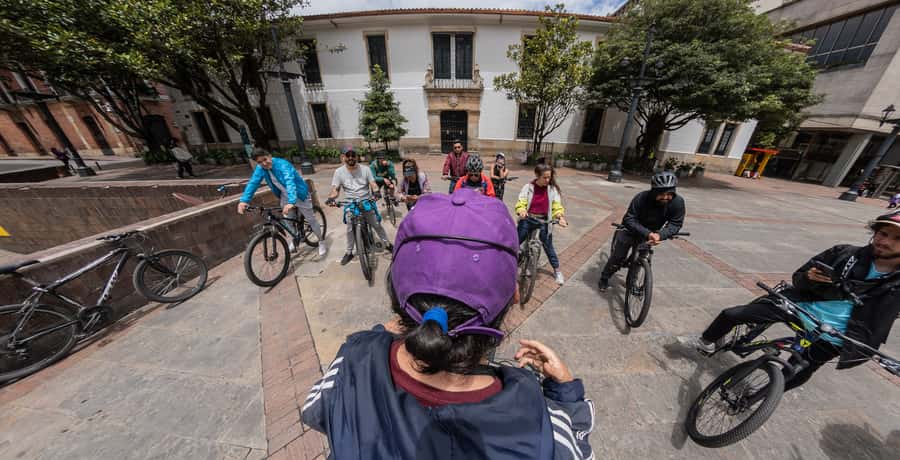
The meeting point is easy to identify: the big red wall at Carrera 3 #12-52 in La Candelaria. Look for a guide wearing a purple hoodie or cap, or carrying a purple umbrella. That small detail matters in a busy historic district where several streets can look alike.
La Candelaria is a fitting place to begin. It is the old center of Bogotá, and the tour starts by placing urban art beside the city’s older buildings and narrow streets. You are not simply looking at painted walls as isolated objects. You are seeing how newer artistic work shares space with older architecture, changing neighborhoods, and public life.
Before setting off, make sure you have sports shoes. The tour information specifically says not to bring backpacks or valuables, so pack lightly and plan around that rule. The route uses city bike lanes, which gives the ride a practical purpose: you can cover ground quickly while staying close to the streets and walls that define the city.
More bike days:
- Bogotá: Shared Bike Tour
★ 4.6 · 83 reviews - Bogotá Private Bike Tour with Transportation
★ 5.0 · 65 reviews - Bogotá Private Bike Tour with Transportation
★ 4.6 · 14 reviews
Why Bogotá Works So Well by Bicycle
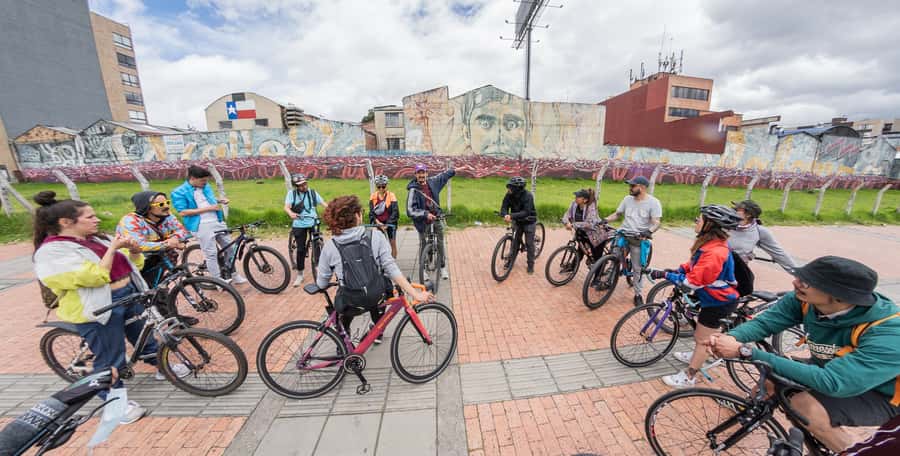
Bogotá is closely associated with both bicycles and graffiti, and this tour brings those two parts of city life together. A bicycle is fast enough to carry you from one district to another, yet slow enough for you to notice painted shutters, corner walls, building details, and smaller pieces between the major stops.
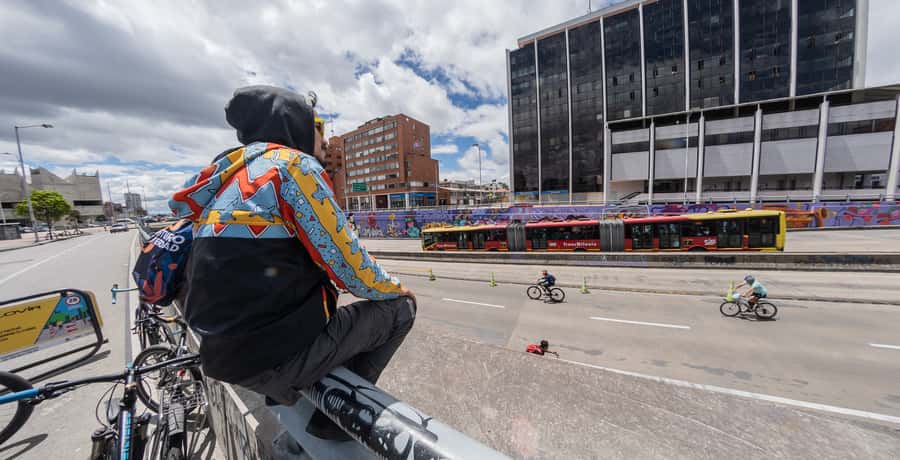
The Sunday version can be especially appealing. Bogotá’s Ciclovía opens more routes to cyclists on Sunday mornings and adds cultural activity to the city streets. If your timing matches, you get a more open cycling setting and a direct look at how the city makes room for bicycles.
The ride is not only about convenience. The changing scenery helps explain how urban art responds to its surroundings. A wall in the historic center can speak differently from a huge mural farther along the route. As you move from one neighborhood to the next, the guide connects the art to urbanization, architecture, politics, and local communities.
Four Neighborhoods, Four Views of the City
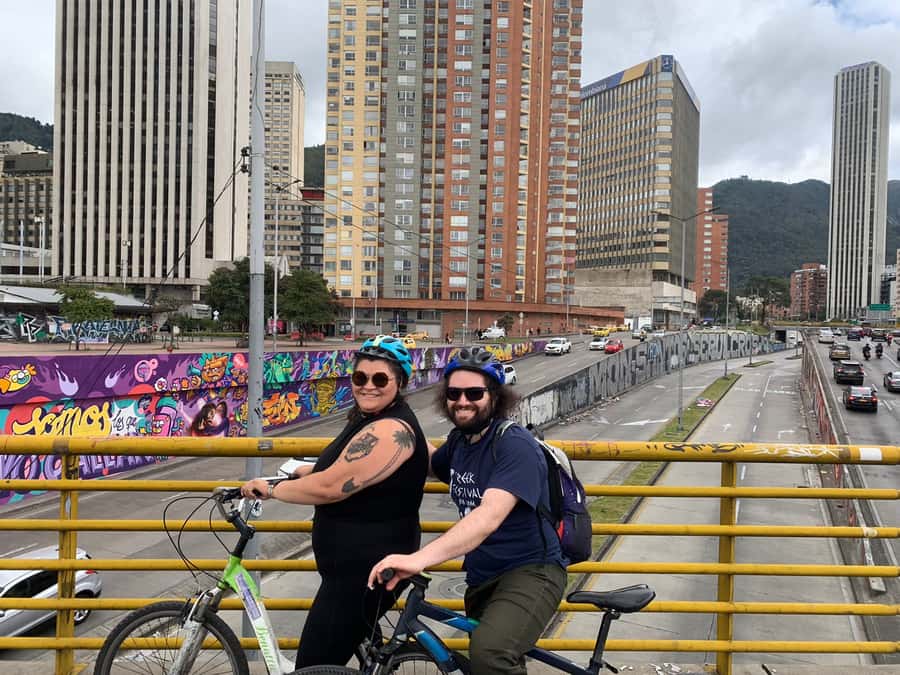
The route passes through Centro, Teusaquillo, Santa Fe, and La Macarena. The advertised itinerary does not assign a separate named attraction to every district, so you should think of the neighborhoods as parts of one connected story rather than four formal museum stops.
Centro gives you the strongest link between Bogotá’s older urban fabric and its graffiti movement. Here, the contrast is the point. Historic streets and newer wall paintings sit side by side, showing how public art can challenge, reinterpret, or simply brighten the built environment.
Teusaquillo adds another layer to the ride. Moving through a different neighborhood helps you see how murals function outside the most obvious tourist core. The guide discusses architecture and urban development along the way, so the ride becomes a lesson in how Bogotá has grown and changed.
Santa Fe is tied to the city’s creative and social energy. Here you can expect politically charged images and artwork that reflects Colombia’s struggles. The important thing is not just the color or scale of the murals. It is the context the guide gives you, including why certain images matter and how artists use public space to address difficult subjects.
La Macarena completes the route with another shift in atmosphere. By this point, the ride has shown you how different neighborhoods use walls in different ways. The tour’s value comes from comparing them, not from treating graffiti as one uniform style.
The route includes some of Bogotá’s giant murals, but it also includes smaller works and repeated stops for explanation. That makes this a better choice for someone who wants interpretation rather than a quick photo session.
Female Artists and the Wider Street Art Movement
One of the most useful features is the attention given to illustrations by female artists. Street art tours can easily focus on famous names or large-scale pieces while leaving out the broader range of people shaping the scene. This tour makes room for women’s work and gives you a way to consider how different artists represent the city.
Your guide explains the history, methods, and meanings behind the pieces. That is important because graffiti can be hard to read from a photograph alone. A portrait, symbol, or abstract form may carry a political reference or local meaning that is not obvious at first glance.
The tour also recognizes Bogotá’s wider street art movement. You learn how public walls became a place for creative expression and social discussion. The experience is strongest when the guide connects the art to everyday city life rather than treating each mural as a decorative object.
A guide who is also a practicing urban artist can add useful perspective. Diego, named in one of the written experiences, was praised for explaining art, graffiti, and history across several districts. That combination of local knowledge and artistic experience is one of the main reasons to choose this tour instead of simply following a self-guided mural map.
A few more trips worth weighing up before you book
- Bogota: Bicycle City Tour
★ 4.9 · 2,156 reviews - Zipaquirá: Salt Cathedral Group Tour with Pickup
★ 4.8 · 1,606 reviews - Bogotá: Guided La Candelaria Walking Tour
★ 4.8 · 1,229 reviews - Bogotá: Private City Tour, Monserrate, Emerald and Botero
★ 4.9 · 798 reviews
Murals About Peace and Colombia’s Post-Conflict Period
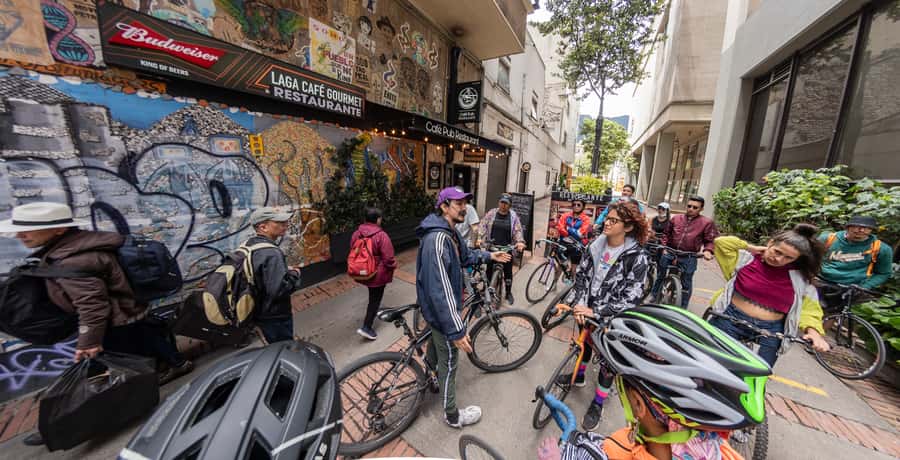
The tour includes a mural symbolizing peace and post-conflict Colombia. This is more than a brief political reference. Colombia’s move away from decades of armed conflict has shaped public conversation, community work, and artistic expression.
The guide presents Colombia as a social laboratory for peace and social innovation. That phrase points to the tour’s larger purpose: using art to discuss how a society responds to conflict, memory, reconciliation, and change.
You should not expect a full academic course on the peace process in three hours. You can expect selected stories and explanations tied to particular walls. The setting helps because public art makes abstract issues visible. A mural can show hope, pain, protest, or a desire for unity in a form you can see and discuss.
This subject may make the ride feel more serious than a standard sightseeing loop. That is a benefit if you want to understand Colombia beyond its food, scenery, and colonial center. It may feel heavy at times, but the tour’s mix of color, movement, and conversation keeps it from becoming a purely solemn history lesson.
The Coffee Factory Adds a Welcome Change of Pace
A stop at a coffee factory breaks up the cycling and mural viewing. The information provided does not specify the factory’s name, tasting format, or how long you stay, so you should not book this expecting a full coffee workshop.
Still, the stop makes sense in the context of Bogotá. It brings the tour back to a familiar part of Colombian culture while showing another kind of work happening in the city. After several art explanations and urban observations, a production stop gives you a physical place and process to focus on.
The coffee visit is best viewed as an extra dimension, not the main reason to book. If coffee is your top interest, you may want a separate specialty coffee experience. If you want a varied morning that combines murals, neighborhoods, and a local factory, this stop helps the three-hour route feel less repetitive.
The Guide Makes the Difference
The guide’s role is central. You are not just being led between walls. The guide explains artistic techniques, the meaning of images, the history of the street art scene, and the social issues represented in the work.
This is where the tour can rise above a basic bicycle rental. Without explanation, you might notice colors, faces, and large painted surfaces but miss the references that give the works their force. A guide who is also an urban artist can point out choices in style and method that a general city guide might not discuss.
The feedback connected with Diego is particularly encouraging. Anne from Germany described an exciting ride through several districts with explanations of art, graffiti, and history. Geraldo from the United States praised the guide’s local involvement and the way the tour introduced the people and communities that make the central neighborhoods distinctive.
The small-group or private option is worth considering if you want to ask questions or discuss political themes at length. A larger group may be less personal, though the available details do not specify a standard maximum size. Check the group format before paying if personal attention is important to you.
Price, Pace, and Practical Value at $62
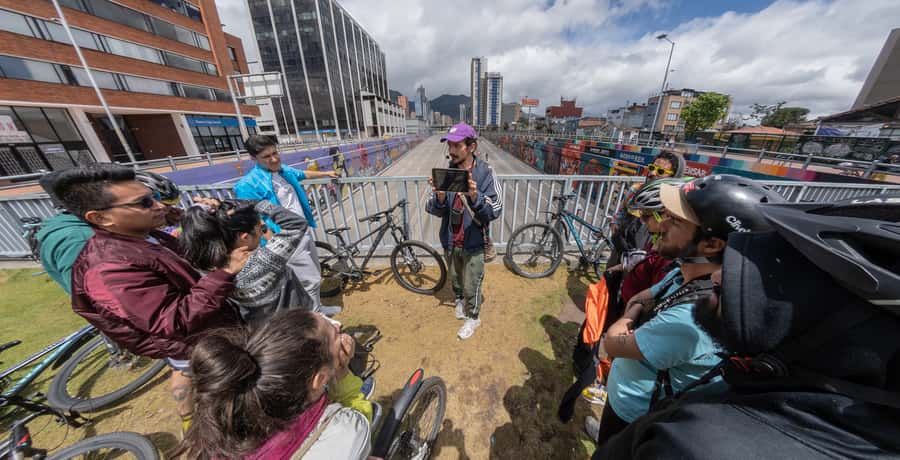
At $62 per person, the tour costs more than renting a bicycle and riding around on your own. The price is easier to justify if you value the guide’s interpretation, the planned route, the four neighborhoods, and the convenience of reaching major murals without working out the route yourself.
You are paying for three hours of guided activity and 13 kilometers of cycling. The tour also includes access to a selected set of murals, a coffee factory stop, and discussion of Colombia’s social and political context. For a first visit to Bogotá, that combination can give you a useful orientation to the city.
The value depends on your expectations. If you mainly want exercise, a rental bike costs less. If you want to understand why the art matters and how the districts connect, the guided format earns its price.
The activity has a 3.2 rating based on four submitted ratings, so I would book with sensible expectations rather than assuming every departure will be perfect. The two detailed written accounts are strongly positive, especially about the guide and the local context, but the small number of ratings does not provide a broad performance record.
Rain, Clothing, and What to Leave Behind
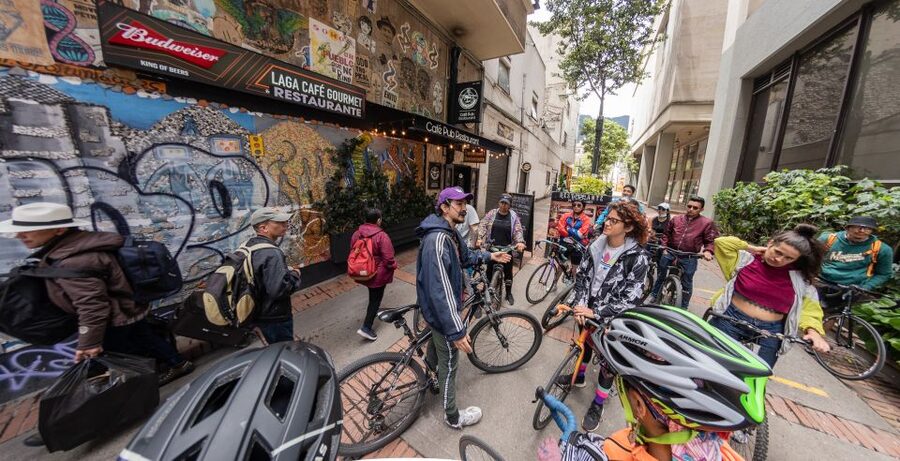
The tour operates rain or shine. A rain poncho is offered, but you should still wear practical clothing and shoes that handle three hours of movement. Bogotá’s weather can change, so the poncho is useful protection rather than a sign that poor weather automatically cancels the ride.
Sports shoes are the one specific item listed as essential. The route is active, and you will be getting on and off the bike during several stops.
Do not bring a backpack or valuables. That restriction is important, especially if you normally carry camera equipment, extra clothing, or a large water bottle. Bring only what the operator allows, and check the final instructions before setting out.
The tour offers free cancellation up to 24 hours before departure, and you can reserve now and pay later. Those policies make it easier to hold a place while your Bogotá schedule is still taking shape.
Who Will Enjoy This Ride Most
I would recommend this experience to you if you want more than a checklist of famous sights. It suits people who enjoy public art, urban history, cycling, and conversations about social change.
It is also a good fit if you want to see several parts of central Bogotá in one morning. The bicycle lets you cover more ground than a walking tour, while the stops keep the experience from becoming a fast ride with no time to look around.
Families with older children may enjoy it if everyone can manage the cycling distance and follow the no-backpack rule. Art students, photographers, and people interested in Colombia’s post-conflict period should find plenty to discuss.
I would be more cautious if you dislike cycling, need to carry personal belongings, or want a relaxed indoor activity. The route runs in all weather, and the tour’s subject matter includes political and social struggles. That makes it rewarding, but it is not simply a light ride through colorful streets.
Should You Book the Urban Art Bike Tour?
Book it if you want Bogotá explained through its walls, neighborhoods, and bicycle culture. The strongest reasons are the artist-guide perspective, the focus on female muralists, the peace-themed work, and the chance to connect four districts in one carefully planned ride.
At $62, it is fair value for a guided three-hour route with 13 kilometers of cycling, provided you care about the stories behind the art. Go prepared with sports shoes, no backpack, and a tolerance for changing weather. If you prefer independent sightseeing or a slower walking pace, choose another format. If you want a colorful but thoughtful introduction to Bogotá’s street art and social questions, this is a worthwhile choice.
FAQ
How long is the Urban Art Bike Tour?
The tour lasts three hours.
How far does the tour travel?
The route covers 13 kilometers of bike trails.
Which Bogotá neighborhoods does the tour visit?
The tour passes through Centro, Teusaquillo, Santa Fe, and La Macarena, beginning in La Candelaria.
Where is the meeting point?
Meet in front of the big red wall at Carrera 3 #12-52 in La Candelaria. Look for the guide with a purple hoodie, cap, or umbrella.
What languages are available?
The live tour guide is available in English, Spanish, French, German, and Italian.
Does the tour run on Sundays?
The tour can use Bogotá’s Ciclovía routes on Sunday mornings, when the city opens additional bike routes and offers cultural activities.
What should I bring?
Bring sports shoes. You should not bring a backpack or valuables.
What happens if it rains?
The tour takes place rain or shine, and a rain poncho is offered.
Can I cancel or pay later?
You can cancel up to 24 hours in advance for a full refund. You can also reserve your place and pay later.
Just added around Bogota
- Zipaquirá: Private Salt Cathedral Mine and Walking Tour★ 4.8 · 3 reviews
- Walking tour José Celestino Mutis Botanical Garden 3 hrs★ 5.0 · 3 reviews
- Bogota: East Hills Mountain Hike★ 4.2 · 3 reviews
- Fun Graffiti Workshop: The Art of Aerosol and Color★ 5.0 · 3 reviews
- Bogota: Explore the forest and bird watching at Chicaque Natural Park★ 5.0 · 3 reviews
- Bogota: Downtown City and Monserrate Hill Private Tour★ 3.7 · 3 reviews
- Bogotá: La Candelaria Food Tour with Tastings★ 4.2 · 3 reviews
- Bogotá: Candelaria Tour with Cacao and Coffee Workshop★ 5.0 · 3 reviews
Cycling Tours, compared.
History & Local Life Essentials Tour on an E-Bike
Read our review →
E-Bike City Tour Medellin with Local beer and Snacks
Read our review →
Browse the lists this tour appears in