
Reviewed · BOGOTá TOURS
Breaking Borders: Bogota Gansters Story
Bogotá’s hardest stories come with hopeful endings. Breaking Borders takes you from Chorro de Quevedo into Barrio Egipto, a hillside neighborhood where former gang members now work to change their community’s future. I like the honest personal accounts from guides such as Harold, Monkey, and Gildardo Arango, along with the way murals explain the neighborhood’s past. I also like that your money supports a local social-change project rather than another standard city sightseeing route.
The main consideration is emotional weight. This is not a light stroll through colorful La Candelaria. You will hear about violence, drugs, poverty, gangs, and lost opportunities, then climb steep streets in Egipto. The tour costs $91 per person, so it offers good value if you want context and human connection, but less value if you are mainly looking for famous landmarks.
In This Review
- Key points to know before booking
- Why this Bogotá tour feels different
- Starting at Chorro de Quevedo
- Reading Egipto through its murals
- Walking uphill through Barrio Egipto
- The people who give the tour its power
- What the $91 price includes
- Safety, comfort, and respectful conduct
- Who should book Breaking Borders
- Should you book this tour?
- FAQ
- How long does the Breaking Borders tour last?
- Where does the tour begin?
- Where does the tour end?
- Is private transportation included?
- Is the tour offered in English?
- What food or drink is included?
- Can I cancel for a full refund?
Key points to know before booking
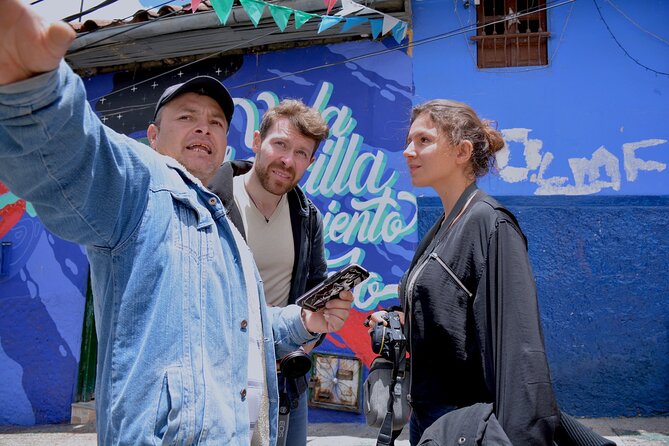
- Former gang members lead the community visit: You hear personal accounts from people who lived through gang life and chose another path.
- The tour begins at Bogotá’s founding place: Chorro de Quevedo provides a useful starting point before you walk toward Barrio Egipto.
- Murals tell the neighborhood’s story: Your guide explains the graffiti rather than treating it as simple decoration.
- You climb into Egipto: Comfortable shoes matter, and the route may feel demanding if you are not used to Bogotá’s hills.
- The community football field represents change: The field gives young people a safer place and shows how local projects can alter daily life.
- Transport and language options vary: A bilingual English and Spanish guide is included, while private hotel transport is available only with the transportation option.
Why this Bogotá tour feels different
Most first visits to Bogotá focus on La Candelaria’s colonial streets, museums, churches, and gold displays. Breaking Borders starts in that familiar center, then moves into a part of the city many people would not visit on their own.
That change in setting is the point. You are not simply looking at old buildings or taking photos of street art. You are learning how a neighborhood shaped by crime and poverty is trying to rewrite its future through tourism, youth programs, storytelling, and local work.
I appreciate the directness of the experience. The guides do not present Egipto as a problem to be observed from a safe distance. They explain their own lives and the forces that shaped the area. Harold, Monkey, and other former gang members have spoken about how they entered gang life, what they experienced, and why they decided to leave it.
The strongest part is the balance between painful history and practical hope. You hear about violence and drug activity, but you also meet people who are trying to create choices for the next generation. One personal story described Friday nights once marked by drinking, drugs, and violence becoming family movie nights for the neighborhood. That small change says more than a polished slogan ever could.
A few more trips worth weighing up before you book
- Bogota: Bicycle City Tour
★ 4.9 · 2,156 reviews - Zipaquirá: Salt Cathedral Group Tour with Pickup
★ 4.8 · 1,606 reviews - Bogotá: Guided La Candelaria Walking Tour
★ 4.8 · 1,229 reviews
Starting at Chorro de Quevedo
Your meeting point is Plazoleta Chorro de Quevedo, at Cl. 12b #2-98 in La Candelaria. This square is widely associated with the founding of Bogotá, making it a fitting place to begin a tour about how the city has grown and changed.
The first hour includes a walk through the streets toward Nuestra Señora de Egipto, the church at the entrance to Barrio Egipto. The church is also connected with the neighborhood’s January 6 festivities, so it carries both religious and community importance.
Here, your guide introduces the Breaking Borders initiative and gives you the basic context needed for the rest of the visit. That opening matters. Without it, the walk into Egipto could feel like a sudden shift from a tourist district into an unfamiliar residential area. With the background, you understand why the route was chosen and what the project is trying to do.
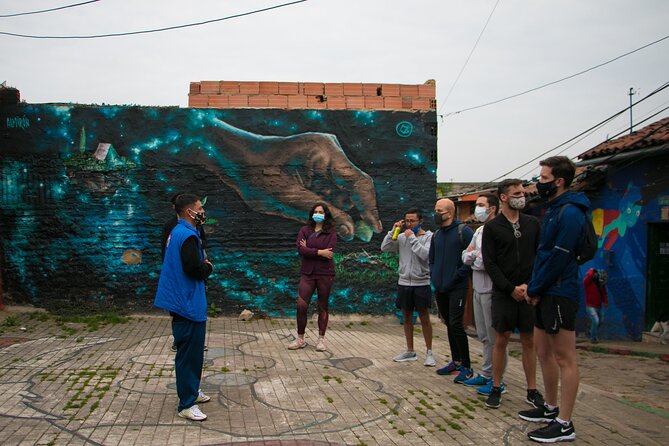
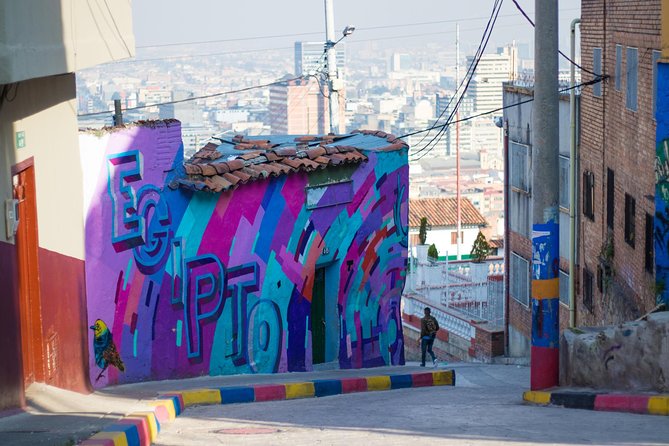
The walk also introduces the neighborhood through graffiti. The murals illustrate local people, conflicts, memories, and hopes. Your guide explains their meanings, helping you read the walls as a record of community life.
I would allow extra time before the tour to find the square and get settled. One practical point from the experience is that the walk may include a steep climb from the plaza toward the church and neighborhood. If stairs and hills are difficult for you, the route may require some thought before booking.
Reading Egipto through its murals
The graffiti is more than a colorful backdrop. It gives the tour a visual thread, showing how residents represent the neighborhood and its past.
You might see images tied to violence, local identity, community members, and the effort to move forward. The guide fills in the meaning behind those images, which is why this tour is more useful than simply walking through Egipto with a camera.
This part also helps break down stereotypes. Barrio Egipto has a difficult past, but the tour does not reduce it to crime statistics or poverty. The murals present residents as people with memories, talents, losses, and plans.
That human focus is one of the tour’s best features. I like experiences that make you slow down and ask better questions. Here, you may find yourself thinking less about what a neighborhood looks like and more about who lives there, what shaped it, and what support can actually help.
Still, you should come with respect. This is a working residential community, not an outdoor set built for sightseeing. Listen carefully, ask questions politely, and avoid treating personal stories or private homes as photo opportunities.
Walking uphill through Barrio Egipto
The second part lasts about two hours and takes you farther into Egipto. You climb the hills, visit Iglesia de Egipto, and see the new community football field.
The climb is physically modest compared with a full-day mountain outing, but it is not a flat city walk. Bogotá’s altitude and the incline can make a short hill feel longer than expected. Wear comfortable shoes and clothes, and carry water if you normally need it during walks.
The football field is an important stop because it shows change in a practical form. It is not just a symbol placed on a brochure. It gives young people a place connected with sport, routine, and community life. The project’s wider goal is to provide more options for children and teenagers who might otherwise face limited education and employment choices.
This is where the tour moves from personal history to community action. You learn about former gang members changing their own lives, then see how the neighborhood is trying to create better conditions for younger residents.
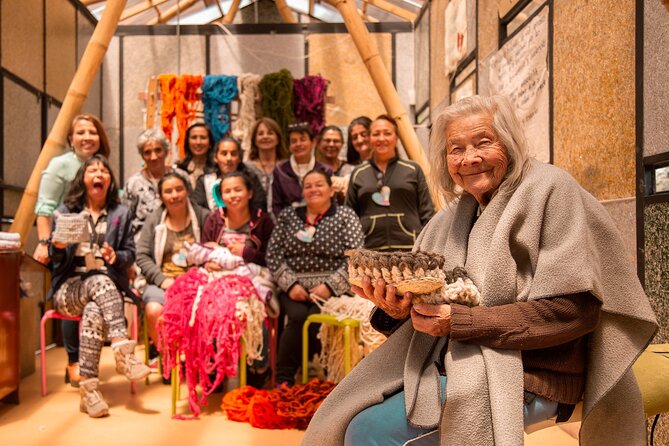
The experience can also include contact with local craftspeople. One account described a weaving workshop where visitors could buy a hand-loomed rug and pay the women who made it. This stop was described as rushed, so do not assume you will have a long shopping session. If it is part of your visit, it offers a direct way to support local work, but keep your expectations flexible.
A completely different kind of day out around Bogota:
- Bogotá: Private City Tour, Monserrate, Emerald and Botero
★ 4.9 · 798 reviews - Bogotá´s Barrios: El Paraíso Favela Tour with Cable Car
★ 4.8 · 731 reviews - Bogota: Guatavita and Salt Cathedral Daily Group Tour
★ 4.7 · 615 reviews - Bogotá City Tour with Monserrate, Gold and Botero Museums
★ 4.9 · 584 reviews
The people who give the tour its power
The guides are the heart of Breaking Borders. An English-speaking guide provides translation and wider context, while a personal guide from Egipto helps you understand the area from inside the community.
Several named guides have received strong praise for their warmth and storytelling. Gildardo Arango, also called Gigio, has guided visitors through the neighborhood and helped connect their questions with the community’s larger story. Raul has also been praised for providing clear English explanations and useful Bogotá advice.
Former gang members such as Harold and Monkey share experiences that a conventional city guide could not provide. One former gang leader known as Mr. Pumpkin was described as animated, upbeat, and open about his life in the barrio.
The value here is not simply access. It is perspective. You hear why people joined gangs, what gang control meant in daily life, and what made it possible to leave. You also hear about the continuing challenges. The tour does not pretend that one project has solved every social or economic problem.
At times, personal accounts may feel intense. That is not a flaw, but it is something to expect. If you want a detached academic lecture, this may not be the right choice. If you want to listen to people explaining their own experiences, this is where the tour earns its price.
Some visits have included a freestyle rap for the group. That detail shows the creative side of the project and adds a lighter moment after difficult stories. It also reminds you that the neighborhood is not defined only by what happened in the past.
What the $91 price includes
At $91 per person, this tour costs more than a basic walking tour of La Candelaria. The price makes more sense when you consider what you are paying for: a private experience, bilingual guidance, community access, local storytelling, a snack, traditional chicha, and the work of a social-change initiative.
Private transport to and from your hotel is included if you select the transportation option. That can make the tour easier, especially if you are unfamiliar with Bogotá or prefer not to arrange your own route. Without that option, you meet at Chorro de Quevedo and return there at the end.
The tour is private, meaning only your group participates. That gives you more room to ask questions and adjust the conversation to your interests. It may be particularly useful for families, couples, or small groups who want a quieter and more personal experience.
The cost feels less attractive for solo visitors because a private activity can make the per-person price feel high. One solo participant paid more than expected because of the booking structure and still felt the experience was worthwhile, but noted that the displayed price was not perfectly clear for one person. Check the final amount carefully before paying.
Bring extra Colombian pesos for personal expenses and possible tips. Alcoholic drinks are not included, and lunch is not provided. The included chicha and snack are a taste of local hospitality, not a full meal.
Safety, comfort, and respectful conduct
The experience is designed for most participants, and service animals are allowed. Children must be accompanied by an adult.
A private guide and a local community guide accompany the visit, which provides structure as you move through the neighborhood. Several accounts described feeling safe during the walk. That said, this is still an urban community visit in an area with a history of violence, so use normal city awareness and follow the guides’ instructions.
Avoid flashy displays of valuables, keep your belongings secure, and ask before taking close-up photographs of people. You are entering a real community, not passing through an attraction built solely for visitors.
The tour is near public transportation, but the exact transport arrangement depends on the option you choose. If you select hotel pick-up and drop-off, confirm that this option appears in your booking. Otherwise, plan to reach Chorro de Quevedo yourself.
The meeting point is also the ending point. That makes it easy to continue exploring La Candelaria afterward, but it means you should not plan the tour as a one-way transfer to another part of Bogotá.
Free cancellation is available up to 24 hours before the start time. Changes or cancellations made less than 24 hours before the experience are not accepted for a refund.
Who should book Breaking Borders
I would recommend this tour to you if you want to understand Bogotá beyond its museums and postcard streets. It suits people who value social projects, personal storytelling, and local perspectives more than a long list of monuments.
It can work well for couples, families with older children, and small groups. The personal format gives children a direct lesson in social change, but adults should decide if the themes of gangs, drugs, and violence are suitable for their children.
You should also book it if you want to support a project in a concrete way. Your participation helps bring attention and income to people working to change the image of their neighborhood. Buying local crafts, tipping guides, and listening with respect can add to that support.
I would hesitate to recommend it if you want a relaxed, flat, food-focused outing. The walk includes hills, the subject matter is serious, and lunch is not included. You may also find parts of the experience emotionally demanding.
Should you book this tour?
Book Breaking Borders if you want one of Bogotá’s most personal introductions to social change. The visit to Barrio Egipto, the murals, the football field, the chicha, and the stories from former gang members create an experience you are unlikely to get from a standard city tour.
The $91 price is reasonable for a private, bilingual, community-based visit, especially if hotel transport is useful to you. Solo visitors should check the final price closely, and everyone should bring cash for tips and personal purchases.
This tour will not show you the whole of Bogotá. It will show you one neighborhood’s effort to face its past and build more choices for its young people. If that is the kind of travel you value, Breaking Borders is a strong choice.
FAQ
How long does the Breaking Borders tour last?
The experience lasts approximately three hours. About one hour is spent walking from Chorro de Quevedo toward Barrio Egipto, followed by about two hours exploring Egipto.
Where does the tour begin?
The meeting point is Plazoleta Chorro de Quevedo at Cl. 12b #2-98 in La Candelaria, Bogotá.
Where does the tour end?
The activity ends back at the meeting point at Chorro de Quevedo.
Is private transportation included?
Private transportation to and from your hotel is included when you select the transportation option. The standard meeting point is Chorro de Quevedo.
Is the tour offered in English?
Yes. A bilingual English and Spanish guide is included.
What food or drink is included?
A local snack and a traditional chicha drink are included. Lunch and other food and drinks are not included, and alcoholic drinks are available to purchase separately.
Can I cancel for a full refund?
Yes. You can cancel at least 24 hours before the experience start time for a full refund. Cancellations or changes made less than 24 hours in advance are not accepted.
Just added around Bogota
- Zipaquirá: Private Salt Cathedral Mine and Walking Tour★ 4.8 · 3 reviews
- Walking tour José Celestino Mutis Botanical Garden 3 hrs★ 5.0 · 3 reviews
- Bogota: East Hills Mountain Hike★ 4.2 · 3 reviews
- Fun Graffiti Workshop: The Art of Aerosol and Color★ 5.0 · 3 reviews
- Bogota: Explore the forest and bird watching at Chicaque Natural Park★ 5.0 · 3 reviews
- Bogota: Downtown City and Monserrate Hill Private Tour★ 3.7 · 3 reviews
- Bogotá: La Candelaria Food Tour with Tastings★ 4.2 · 3 reviews
- Bogotá: Candelaria Tour with Cacao and Coffee Workshop★ 5.0 · 3 reviews
Bogotá Tours, compared.
Private City Tour, Monserrate, Emerald and Botero
Read our review →
Bogotá´s Barrios: El Paraíso Favela Tour with Cable Car
Read our review →
Bogotá City Tour with Monserrate, Gold and Botero Museums
Read our review →
Zipaquirá Salt Cathedral and Lake Guatavita Day Tour
Read our review →Browse the lists this tour appears in