
Reviewed · BOGOTá TOURS
Shared Tour Colombian Conflict War, Drug Trafficking & Peace
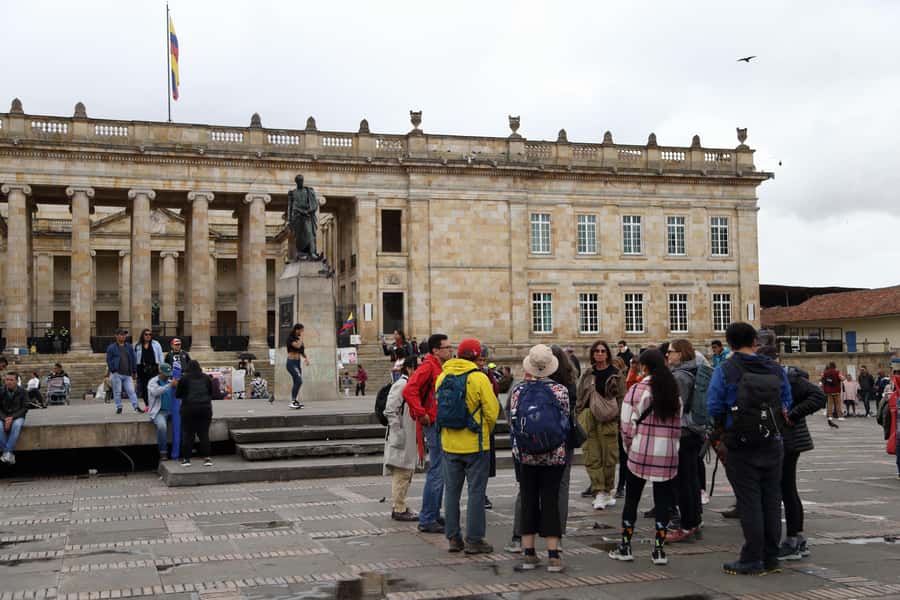
History is still visible on Bogotá’s streets. This $13 walking tour connects the Colombian conflict to the political struggles, armed groups, drug trade, and peace process that shaped the country. I like its clear focus on difficult subjects, and I like that the guides aim to explain competing viewpoints rather than promote one political line.
The main drawback is the amount of ground covered. You may walk about 9 kilometers over roughly 150 minutes to three hours, with stops to listen. That is a lot of history and a lot of pavement, and one recent booking found the discussion of present-day politics less complete than expected.
In This Review
- Key points to know before you book
- Starting at the Museo del Oro
- The road to Colombia’s Violence Era
- Bogotá’s 1948 Bogotazo
- From political rivalry to guerrilla movements
- Drug trafficking and the power behind the violence
- Guerrillas, paramilitaries, and an unfinished conflict
- The FARC peace agreement and Colombia today
- A long city walk, not a bus tour
- Why the $13 price is good value
- How the guides shape the experience
- Who should book this Bogotá history walk?
- Should you book it?
- FAQ
- Where does the Colombian conflict tour meet?
- How long does the tour last?
- What language is the tour conducted in?
- How much walking is involved?
- Does the price include museum entry or other tickets?
- What should I bring?
- Is the tour suitable for children?
- Can I cancel the reservation?
Key points to know before you book
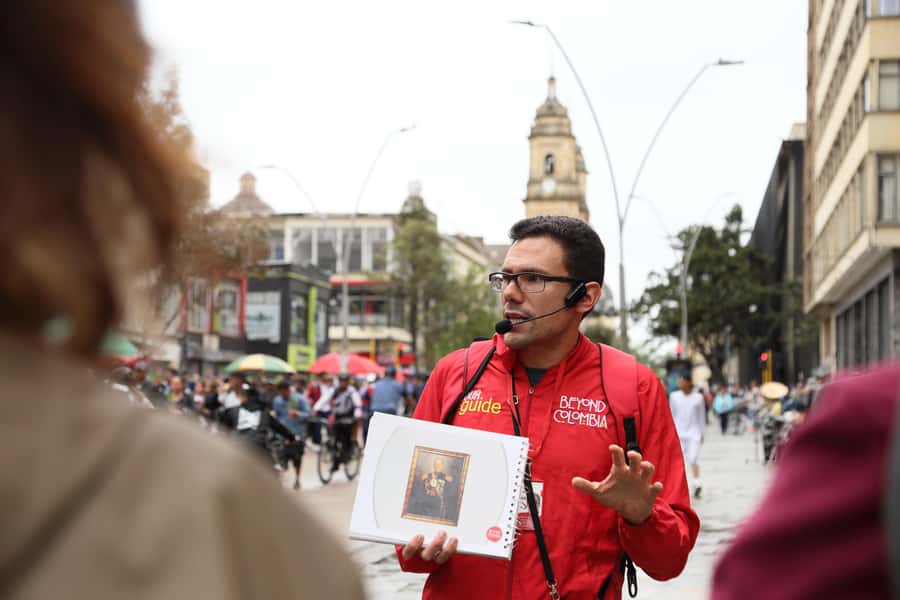
- Meet by the Museo del Oro: Look for Beyond Colombia’s red umbrellas in front of the Gold Museum.
- A serious subject for curious adults: The route covers the Bogotazo, political rivalry, guerrilla groups, paramilitaries, drug trafficking, and the FARC peace agreement.
- Expect a long walk: Comfortable shoes, water, sunscreen, and rain protection are essential for the roughly 9-kilometer route.
- Guides make a major difference: Lorenzo, Hector, Santi, and Daniel have all received especially warm praise for clear explanations, humor, and patient answers.
- Good value at $13: You get an English-speaking guide, historic-center sightseeing, and recommendations for further reading without extra entrance fees.
- Current politics may receive less detail: The tour explains the background well, but the present political scene can be harder to cover fully in one shared outing.
Starting at the Museo del Oro
The meeting point is easy to identify: stand in front of the Museo del Oro and look for the red umbrellas marked Beyond Colombia. This is a sensible place to begin because you are already near Bogotá’s historic center, where many of the city’s political memories are concentrated.
The tour does not include entry to the Gold Museum. That is worth knowing before you arrive. You are meeting outside it, not taking a museum visit as part of the experience.
From here, your guide sets the tone. This is not a cheerful introduction to Colombia’s food, architecture, or nightlife. It is a serious attempt to explain why a country known for warm people and lively cities has also carried such a damaging international reputation.
I appreciate that the tour starts with causes rather than simply listing atrocities. You first get the political background, including the struggle between Liberals and Conservatives and the contest for national power. Without that foundation, later discussions of armed groups and drug trafficking can sound like disconnected events.
Because this is a shared tour, expect other people’s questions, different levels of background knowledge, and a pace set by the group. That can help make a difficult subject more conversational, but it also means you cannot expect a private seminar tailored entirely to your interests.
A few more trips worth weighing up before you book
- Bogota: Bicycle City Tour
★ 4.9 · 2,156 reviews - Zipaquirá: Salt Cathedral Group Tour with Pickup
★ 4.8 · 1,606 reviews - Bogotá: Guided La Candelaria Walking Tour
★ 4.8 · 1,229 reviews
The road to Colombia’s Violence Era
The opening historical material covers the independence process and the early political divisions that helped shape modern Colombia. The key idea is that the conflict did not appear suddenly with the drug cartels. It grew from long-running fights over power, land, social order, and the direction of the state.
Your guide frames the so-called Colombian Violence Era as a period when Liberal and Conservative conflict became brutally physical. This part matters because it gives you a way to understand later guerrilla movements. Armed groups did not develop in a vacuum, and political exclusion helped create conditions in which some people turned to rebellion.
I like this part of the tour because it asks you to think in terms of causes and consequences. You are not simply told who the good side was. The promise of accurate, objective information is useful here, especially for people who know Colombia mainly through headlines about cocaine and kidnappings.
Still, two and a half to three hours is not enough to explain every regional difference. Colombia’s conflict unfolded differently across the country, and a walking route through Bogotá can only offer a national framework. If you want detailed rural history, land policy, or regional case studies, you will need books or other material after the tour.
Bogotá’s 1948 Bogotazo
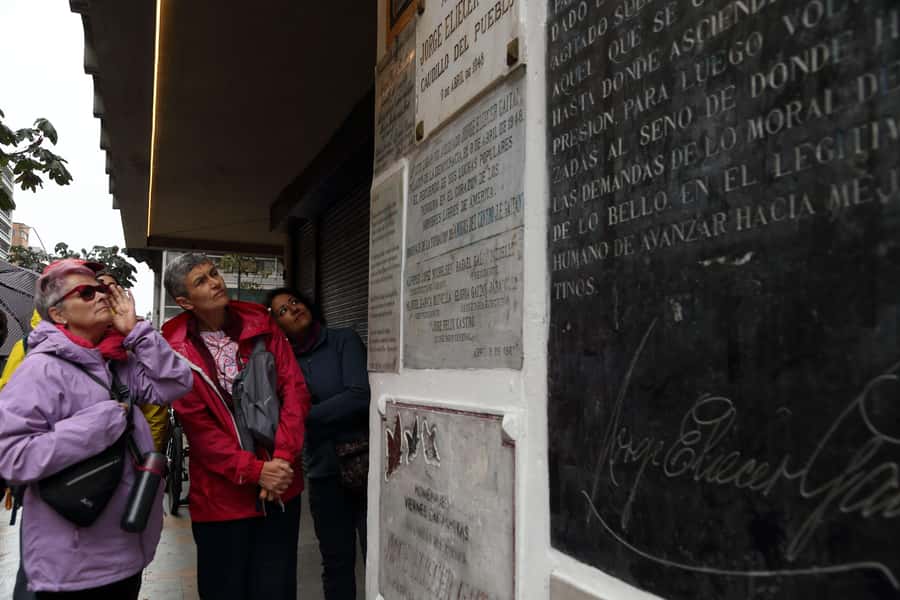
The 1948 Bogotazo is the central event on this route. The assassination of Liberal political leader Jorge Eliécer Gaitán triggered riots and widespread destruction in Bogotá. The event is often treated as the beginning of a new and more violent phase in Colombian history.
As you move through the historic center, the guide links the city’s streets to this upheaval. The value is not just seeing old buildings. It is understanding how a political killing became a national crisis, how public anger exploded, and why the event remains such a strong part of Bogotá’s memory.
This is one of the tour’s most useful features. The city becomes a teaching tool. Instead of hearing a list of dates in a classroom, you connect political history with the places where public life, government, protest, and violence collided.
The subject can be emotionally heavy. If you prefer light sightseeing, this is not the right walk. If you want to understand why Bogotá’s center carries so many political memories, the Bogotazo section gives the rest of the tour a firm anchor.
From political rivalry to guerrilla movements
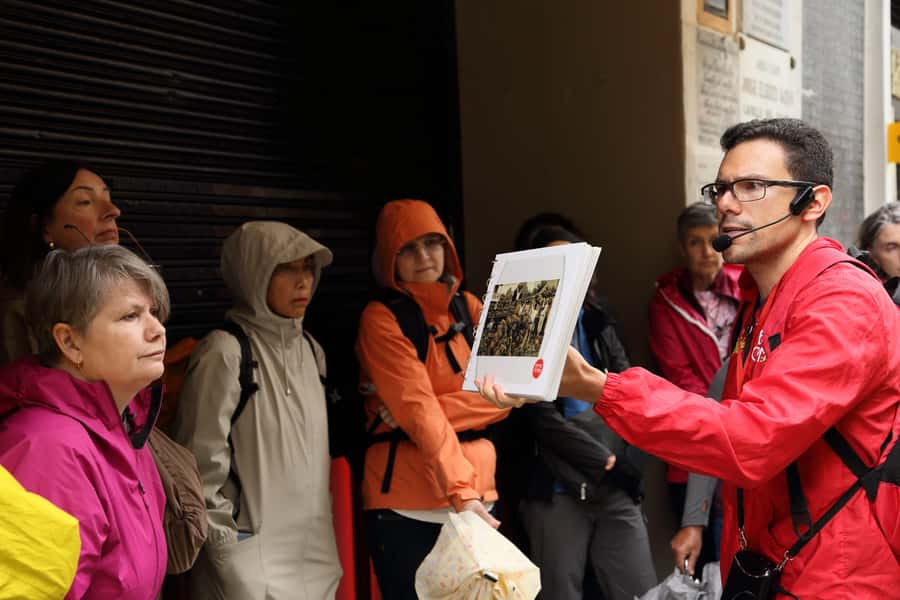
The tour then turns toward the creation of armed groups, including FARC, ELN, and M-19. Your guide explains the reasons these organizations formed and how their goals, methods, and political backgrounds differed.
That distinction is important. It is easy to treat every armed group as one indistinguishable threat, but the tour aims to show how Colombia’s conflict involved different actors with different origins. Political ideology, rural inequality, government weakness, and resistance to established power all enter the discussion.
The route also covers the military dictatorship. This adds another layer to the story by showing how the state responded to unrest and opposition. You get a sense of the cycle that kept repeating: political conflict led to armed resistance, armed resistance brought military action, and heavy-handed responses produced more anger and mistrust.
I would listen closely to the guide’s wording here. This is one part where a strong guide can make the material understandable without reducing it to slogans. Daniel has been praised for handling the difficult subject with extensive knowledge, while Hector has received particular credit for answering questions in a friendly and patient way.
In a shared group, you may not receive every detail about every organization. The advantage is a broad explanation that keeps the story moving. The tradeoff is that a question about one group may receive only a short answer before the tour needs to continue.
A completely different kind of day out around Bogota:
- Bogotá: Private City Tour, Monserrate, Emerald and Botero
★ 4.9 · 798 reviews - Bogotá´s Barrios: El Paraíso Favela Tour with Cable Car
★ 4.8 · 731 reviews - Bogota: Guatavita and Salt Cathedral Daily Group Tour
★ 4.7 · 615 reviews - Bogotá City Tour with Monserrate, Gold and Botero Museums
★ 4.9 · 584 reviews
Drug trafficking and the power behind the violence
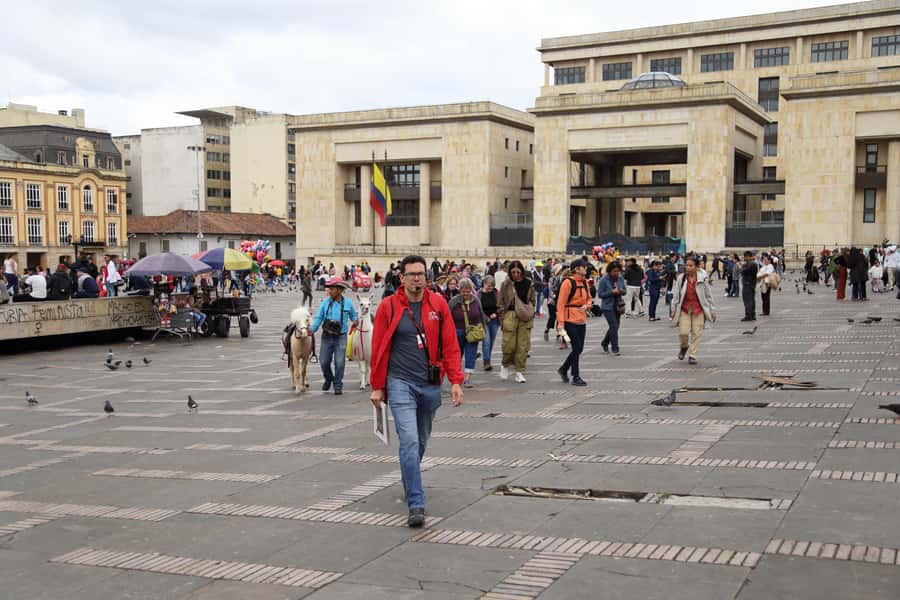
Drug trafficking is treated as part of the larger conflict, not as the entire explanation for it. That is a sensible approach. The illegal drug trade brought money, weapons, international pressure, corruption, and new power struggles, but it operated within a conflict that already had political and social roots.
The tour examines the fight against national and international drug trafficking and discusses the people and institutions connected to that struggle. The promotional material uses a playful reference to You know who, but you should expect a historical discussion rather than a glorification of famous cartel figures.
This section is especially useful if Colombia’s reputation has been shaped by crime dramas. Television often turns the drug trade into a story of larger-than-life villains. A history walk can help you replace that narrow picture with a wider one involving communities, government forces, guerrillas, paramilitaries, and outside governments.
You should also keep your expectations measured. A walking tour cannot provide a full account of production, trafficking routes, international policy, or the long-term social cost of the drug trade. What it can do is show how narcotics money intensified an already complicated war.
Guerrillas, paramilitaries, and an unfinished conflict
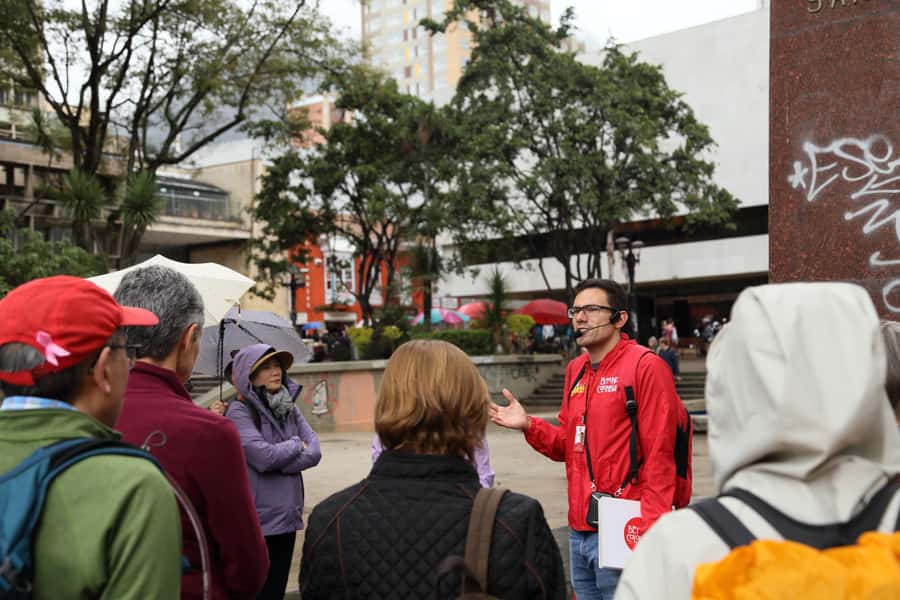
The discussion of guerrilla and paramilitary groups focuses on why they fought and how their aims intersected with broader struggles over territory and power. This is necessary context because the conflict was not a simple battle between the government and one rebel organization.
You will hear about the ongoing reasons behind fighting among guerrillas, paramilitaries, and state forces. The guide’s task is difficult: explain motives without excusing abuses. The stated goal of neutrality is valuable, but neutrality should not mean pretending every action or actor had equal responsibility for every crime.
This is where the quality of the guide matters most. Santi has been praised for strong subject knowledge, and Lorenzo for explaining important connections while drawing the group into the discussion with questions and humor. Those qualities can make grim material easier to follow without making it feel trivial.
The walking format also helps you understand that conflict affected ordinary urban life, even when much of the fighting took place away from central Bogotá. The historic center provides the setting for discussions of national decisions, public fear, political symbolism, and the way violence shaped Colombia’s identity.
The FARC peace agreement and Colombia today
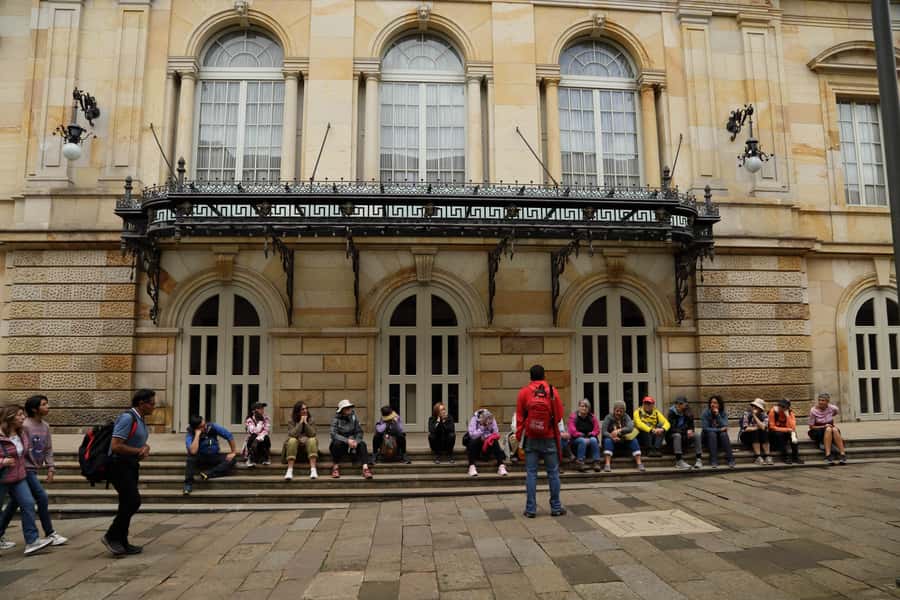
The final major topic is the peace process and the agreement signed with FARC. This section brings the story into the present and asks what peace means after decades of armed conflict.
You should not expect a full political briefing on every current party, policy, or armed group. One recent booking found that the current political context was not explained clearly enough and felt more like prompts than a full account. That is the most important criticism to keep in mind if present-day politics is your main reason for booking.
For most people, the peace section works best as a starting point. You learn how the agreement fits into the longer conflict, why peace remains controversial, and why signing an agreement does not instantly erase armed groups, political mistrust, or social problems.
The tour also addresses current guerrilla and paramilitary fighting reasons. That helps prevent a common misunderstanding: the FARC agreement did not end every form of armed violence in Colombia. The guide can give you a framework, but you may want to read more if you need a detailed account of post-agreement developments.
The supplied recommendations for further material are a helpful touch. I would use them after the walk, while the names, groups, and dates are still fresh.
A long city walk, not a bus tour
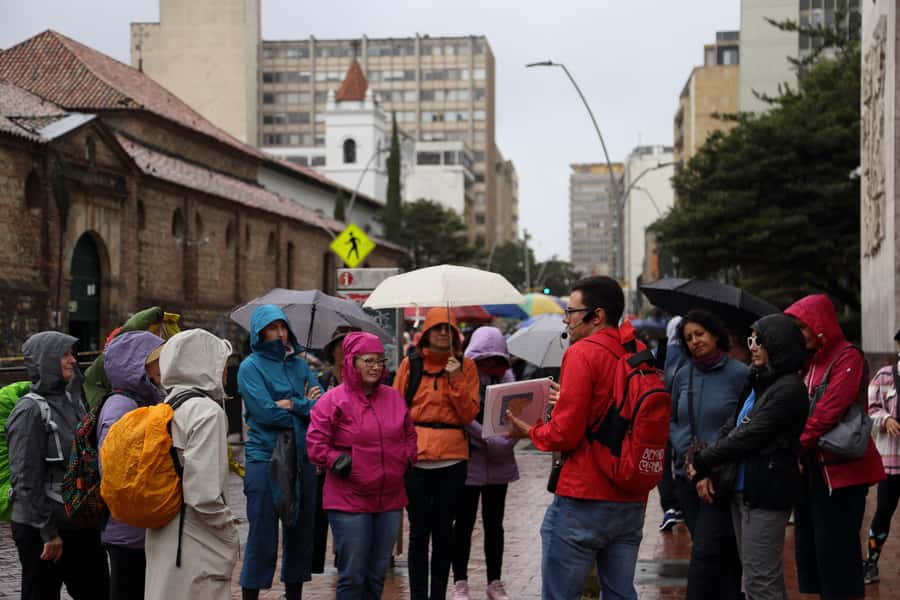
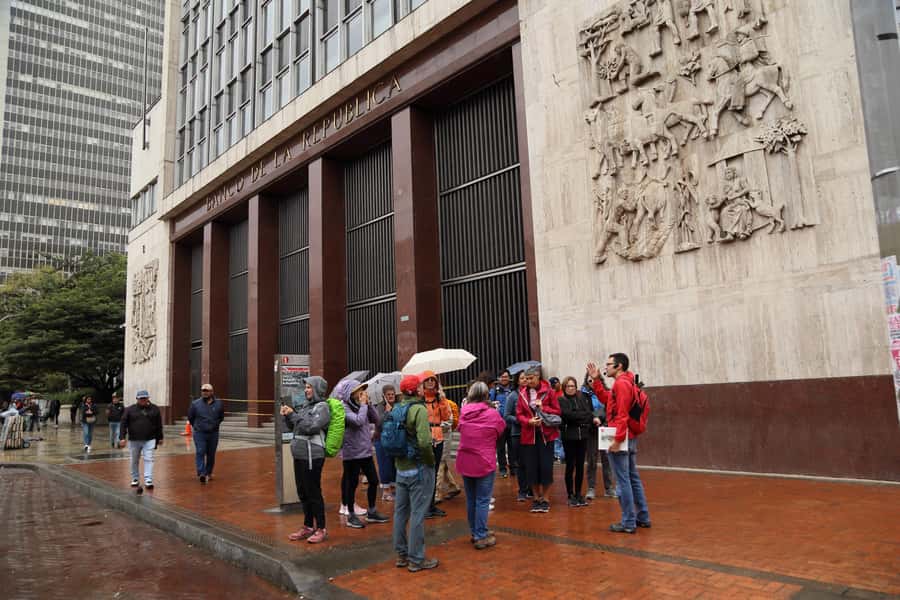
This is an active experience. You will walk about 9 kilometers, stop often to listen, and spend much of the time outdoors. There is no hotel pickup, no included transport, and no included food or drink.
The walking pace is broken up by resting stops, but you still need comfortable shoes. Bring water, sunscreen, a hat, and a camera if you want one. Bogotá’s weather can change, so pack a rainproof coat or umbrella rather than trusting the morning forecast.
Crowded areas are part of city walking. Keep your belongings close and use sensible street awareness. The local advice not to give papaya means do not make it easy for someone to take advantage of you. Keep your phone and wallet secure, particularly when the group pauses.
The listing says the experience is wheelchair accessible, but it also says it is not suitable for wheelchair users or people with mobility impairments. That is a clear contradiction. Since the walk covers about 9 kilometers and includes crowded streets, anyone with mobility concerns should contact the operator before reserving rather than rely on the accessibility label.
Children under five are not suitable for this tour. That makes sense given the length, seriousness, and subject matter.
Why the $13 price is good value
At $13 per person, this is a low-cost way to get a structured introduction to a complicated part of Colombia. You receive an English-speaking guide, a route through essential historic-center locations, and explanations that connect politics, armed conflict, and drug trafficking.
There are no surprise entrance charges because the tour does not take you into ticketed attractions. You will need to pay for your own food, drinks, and transport to the meeting point, but those costs are easy to plan for.
The main value is not the number of stops. It is the guide’s ability to connect them. When Lorenzo uses questions and humor, or when Hector takes time to answer the group, the experience becomes more than a memorized timeline.
The price also makes it easier to accept the tour’s limits. You are not paying for a private historian or a specialist political briefing. You are paying for a shared introduction with a strong local focus.
How the guides shape the experience
Beyond Colombia has operated since 2013 and offers several original walking tours in the country. The company also promotes international recognition and strong placement on major booking platforms, but the practical question is simpler: can the individual guide explain difficult material clearly?
The strongest names associated with this experience are Lorenzo, Hector, Santi, and Daniel. Lorenzo is especially good at making connections and involving the group with questions, while humor helps keep the discussion from becoming a nonstop list of grim facts. Hector has been praised for his friendly manner and willingness to answer questions.
Santi is noted for strong subject knowledge, and Daniel for handling a difficult topic with extensive preparation. You should remember that shared tours can vary by guide, group, and day. The company’s structure gives you a useful format, but the individual person leading the walk shapes its tone.
I would ask questions as you go. This tour is designed to be interactive, and you will get more from it if you speak up when a date, group, or political term is unclear.
Who should book this Bogotá history walk?
I recommend it to you if you want the political background behind Colombia’s modern image. It suits adults and older children who can handle a serious subject, walk for several hours, and listen outdoors.
It is also a good first-day or early-stay activity if you want context for later visits around Bogotá. You will leave with a clearer sense of why the country’s conflict cannot be reduced to Pablo Escobar, cocaine, or one guerrilla group.
You may want a different experience if you prefer art, food, architecture, or a gentle introduction to the city. You should also think twice if you have limited mobility, dislike long walks, or want a detailed account of current Colombian politics.
Should you book it?
Book this tour if you want a low-cost, serious introduction to Colombia’s conflict and are willing to walk. The best guides make the subject approachable, connect the political dots, and welcome questions.
Skip it if you need a private, highly specialized account of present-day politics or if 9 kilometers on foot sounds exhausting. For most curious visitors, though, the price is fair, the subject is important, and the historic-center setting gives you a useful way to understand Bogotá beyond its postcard sights.
FAQ
Where does the Colombian conflict tour meet?
The meeting point is in front of the Museo del Oro in Bogotá. Look for the red umbrellas marked Beyond Colombia.
How long does the tour last?
The stated duration is 150 minutes, or about two and a half hours. The description also says to expect approximately three hours, so you should allow some flexibility.
What language is the tour conducted in?
The live tour guide speaks English.
How much walking is involved?
You will walk about 9 kilometers, with stops to rest and listen to the guide.
Does the price include museum entry or other tickets?
No. The tour does not include food, drinks, souvenirs, transportation, or entrance tickets. It is designed to visit places where no sudden extra charges apply.
What should I bring?
Bring comfortable shoes, water or another drink, sunscreen, a hat, a camera if desired, and a rainproof coat or umbrella.
Is the tour suitable for children?
Children under five are not suitable for the experience. The serious subject and long walking distance also make it better suited to older children and adults.
Can I cancel the reservation?
Yes. You can cancel up to 24 hours before the tour for a full refund. You can also reserve now and pay later.
Just added around Bogota
- Zipaquirá: Private Salt Cathedral Mine and Walking Tour★ 4.8 · 3 reviews
- Walking tour José Celestino Mutis Botanical Garden 3 hrs★ 5.0 · 3 reviews
- Bogota: East Hills Mountain Hike★ 4.2 · 3 reviews
- Bogota: Explore the forest and bird watching at Chicaque Natural Park★ 5.0 · 3 reviews
- Fun Graffiti Workshop: The Art of Aerosol and Color★ 5.0 · 3 reviews
- Bogota: Downtown City and Monserrate Hill Private Tour★ 3.7 · 3 reviews
- Bogotá: La Candelaria Food Tour with Tastings★ 4.2 · 3 reviews
- Bogotá: Candelaria Tour with Cacao and Coffee Workshop★ 5.0 · 3 reviews
Bogotá Tours, compared.
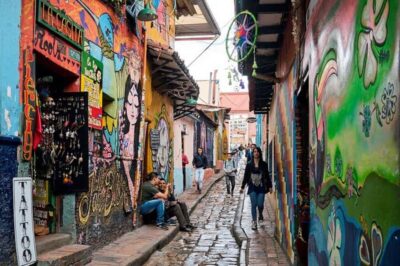
Private City Tour, Monserrate, Emerald and Botero
Read our review →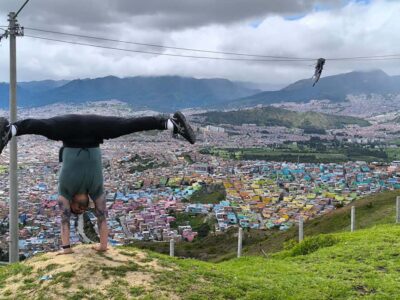
Bogotá´s Barrios: El Paraíso Favela Tour with Cable Car
Read our review →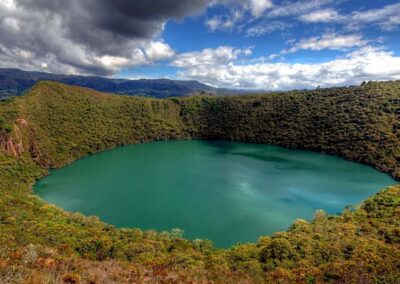
Bogotá City Tour with Monserrate, Gold and Botero Museums
Read our review →
Zipaquirá Salt Cathedral and Lake Guatavita Day Tour
Read our review →Browse the lists this tour appears in