
Reviewed · CITY TOURS
Bogota Walking Tour Teusaquillo a different part of the city
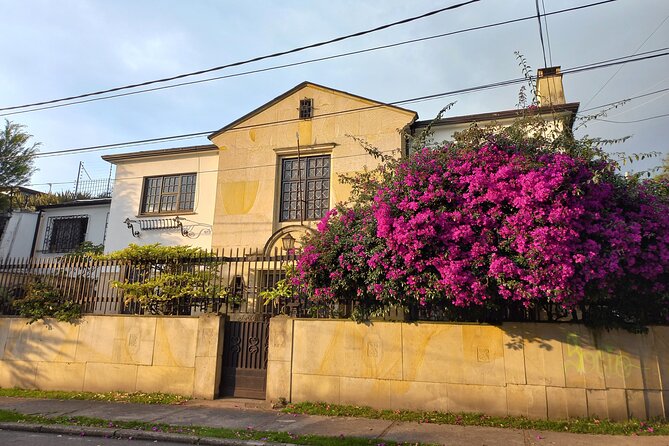
Teusaquillo tells Bogotá’s story on foot. This three-hour walk leaves the usual tourist circuit behind and brings you through a district where political history, old houses, street art, independent shops, cafés, and pubs sit close together. I like the mix of architecture and local culture, and I like that coffee, chocolate, arepas, chicha, and beer are part of the experience rather than an afterthought.
The tour also has a useful sense of place. Buildings and public spaces help explain Colombia’s path from independence in 1819 to the 2016 peace agreement. The main drawback is reliability: one verified booking reported that no guide appeared, even though the tour had not been canceled. That appears to be an isolated but serious warning, so I would confirm the appointment before setting out.
In This Review
- Key things to know before you go
- Why Teusaquillo is worth three hours
- Starting at the National Museum
- Bavaria Central Park and Casa Celo
- Nunciatura Apostólica and Público Park
- Jorge Eliécer Gaitán and the political story
- Casa de Betty La Fea and local popular culture
- Independent shops at El Parche
- Visaje Graffiti and Bogotá’s creative side
- Books and ideas at Prosa del Mundo
- ParkWay, Bogotá’s social spine
- Coffee, chocolate, chicha, arepas, and beer
- Guides, languages, and the one serious concern
- Is $19 a fair price?
- Who should book this Teusaquillo walk?
- Final verdict: book it for context, not checklist sightseeing
- FAQ
- How long does the Bogotá Teusaquillo walking tour last?
- How much does the tour cost?
- Where does the tour begin?
- How will I recognize the guide?
- Where does the tour finish?
- Which languages are available?
- What tastings are included?
- Is the tour wheelchair accessible?
- Can I cancel or pay later?
Key things to know before you go
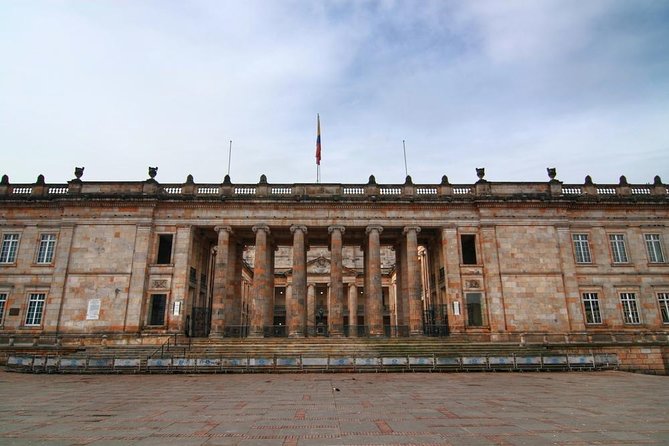
- Teusaquillo beyond the center: Walk through a district many short Bogotá visits skip, with historic streets, cultural houses, galleries, and ParkWay.
- History told through buildings: The route links architecture with Colombia’s political formation, from independence to the modern peace process.
- Small local tastes: Coffee or craft beer, chocolate, and a sticker are included, with food and drink stops along the way.
- Strong guide feedback: Luis Bonilla received special praise for his clear account of the neighborhood and Bogotá’s past.
- Street art and independent projects: Visaje Graffiti, El Parche Ropa y Accesorios, and Prosa del Mundo add a creative, local feel.
- Private and accessible: The tour is offered as a private group experience, with English, Portuguese, and Spanish guides, and wheelchair access.
Why Teusaquillo is worth three hours
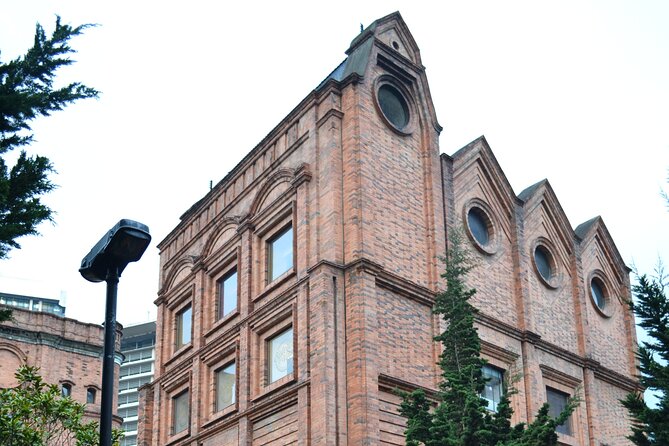
Bogotá can feel like several cities pressed together. The grand museums and colonial streets draw most first-time visitors, while districts such as Teusaquillo offer a closer look at how people live, work, create, and socialize now. This route is built around that contrast.
You begin at the National Museum of Colombia, a useful meeting point because it gives the walk a clear landmark and a serious historical frame. From there, the route moves into streets and public places where the story becomes less formal. You are not simply looking at monuments. You are reading the city through houses, parks, shops, murals, and gathering places.
The tour runs for about three hours. That is long enough to cover a lot of ground without turning into an all-day march. The schedule gives most stops about ten minutes, with twenty minutes at Visaje Graffiti and thirty minutes at Lubianka Pub. Expect a steady walking pace with regular pauses for photographs, explanations, shopping, and tastings.
Because the tour is private, you should have more room to ask questions or adjust the emphasis. The available information does not state the maximum number of people, so do not assume this means a one-on-one walk. It does mean the booking is designed for a private group rather than a large open departure.
More City Tours in Bogotá
- Bogota: Bicycle City Tour
★ 4.9 · 2,156 reviews - Bogotá: Private City Tour, Monserrate, Emerald and Botero
★ 4.9 · 798 reviews - Bogotá City Tour with Monserrate, Gold and Botero Museums
★ 4.9 · 584 reviews
Starting at the National Museum
Meet in front of the National Museum entrance. The guide should be easy to identify by a red hat and red umbrella marked with the company logo. That is a helpful detail in a city where a busy meeting point can otherwise cause confusion.
The museum itself is not listed as an interior visit, so do not plan on a museum tour as part of this experience. Instead, it works as the starting marker for a walk that quickly shifts toward Teusaquillo’s streets and public spaces.
Your guide provides the thread connecting the stops. The best part of this route is not any one building. It is the way the pieces fit together, showing how Bogotá developed through politics, neighborhoods, public life, and cultural change.
Bavaria Central Park and Casa Celo
The first substantial stop is Bavaria Central Park. You receive a guided explanation and time for photographs, with about ten minutes assigned to each portion of the visit. The park gives you an early sense of how old industrial and urban spaces have been adapted into places for people to gather.
This is also a good moment to settle into the walking rhythm. You can ask your guide what to watch for in the architecture before the route becomes more detailed. The stop is short, so expect an introduction rather than an extended visit.
Casa Celo follows, with another brief guided walk and sightseeing pause. Cultural houses such as this help show the independent side of Teusaquillo. Instead of only seeing official institutions, you get a look at projects that support art, community activity, and local expression.
The schedule is tight here. If you enjoy examining facades or taking careful photographs, you may want to move promptly when the guide calls the group onward.
Nunciatura Apostólica and Público Park
The route then passes the Nunciatura Apostólica. This stop combines a guided explanation with a walk-by, so it is more about context and exterior observation than a long interior visit. The building gives the guide another way to explain the country’s institutions and the role of public and religious spaces in Bogotá.
Next comes Público Park, used for a visit and photo stop. Parks matter on a neighborhood walk because they show how residents use the district between its formal landmarks. You get a change of pace here, with open space and a chance to take in the surroundings.
The tour’s historical focus is strongest when your guide links these places to Colombia’s political development. The stated time span, from independence in 1819 through the 2016 peace agreement, is broad. You should expect a guided overview rather than a detailed academic lecture on every period.
More Walking Tours in Bogotá
- Bogotá: Guided La Candelaria Walking Tour
★ 4.8 · 1,229 reviews - Zipaquirá Salt Cathedral Private Tour + Walking Tour
★ 5.0 · 66 reviews - La Candelaria Walking Private Tour (3 Hrs.)
★ 5.0 · 51 reviews - Bogota Walking Tour Teusaquillo, a different part of the city
★ 5.0 · 41 reviews
Jorge Eliécer Gaitán and the political story
The Jorge Eliécer Gaitán Museum is one of the most meaningful stops on the route. Gaitán remains a major figure in Colombia’s twentieth-century political story, and the museum gives the walk a more direct connection to the country’s conflicts, hopes, and public memory.
The schedule lists a guided visit and sightseeing pass of roughly ten minutes. That is not enough for a slow museum examination, but it does allow the guide to place Gaitán within Bogotá’s modern history. This stop is especially valuable if you want more than pretty streets and café stops.
The tour’s larger claim is that buildings can tell the story of Colombia’s political formation. Here, that idea becomes concrete. You are not only looking at architecture. You are being asked to consider how national events shaped the city and its neighborhoods.
Casa de Betty La Fea and local popular culture
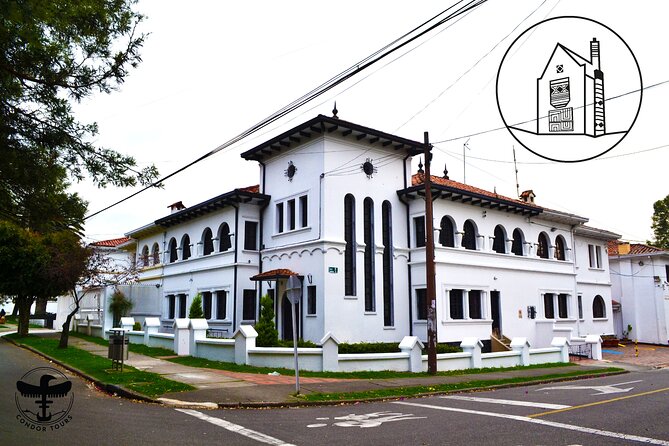
Casa de Betty La Fea adds a lighter, more familiar note. The stop connects the district with the popular television world of Yo soy Betty, la fea, which has a large audience across Latin America and beyond.
The visit lasts about ten minutes. It is best understood as a piece of Bogotá’s popular culture rather than a major historic attraction. If you know the series, you will likely get more from the stop. If you do not, it still shows how a local place can become part of a much wider cultural conversation.
I like this change in tone. A walking tour that only discusses presidents, conflicts, and architecture can become heavy. The television connection gives you a more everyday view of how Bogotá is represented and remembered.
Independent shops at El Parche
At El Parche Ropa y Accesorios, the route turns toward local design and small-scale commerce. You have time to visit, browse clothing and accessories, and look at arts and crafts.
This is a useful stop for anyone who wants a small purchase with a local connection, though the experience is not primarily a shopping tour. The ten-minute window suggests browsing rather than a long buying session. Keep your expectations practical: you may find something appealing, but the schedule is not built around extended retail time.
The shop also supports the tour’s wider purpose. Teusaquillo is presented through independent projects, not only through famous institutions. That gives you a better feel for the district as a living neighborhood.
Visaje Graffiti and Bogotá’s creative side
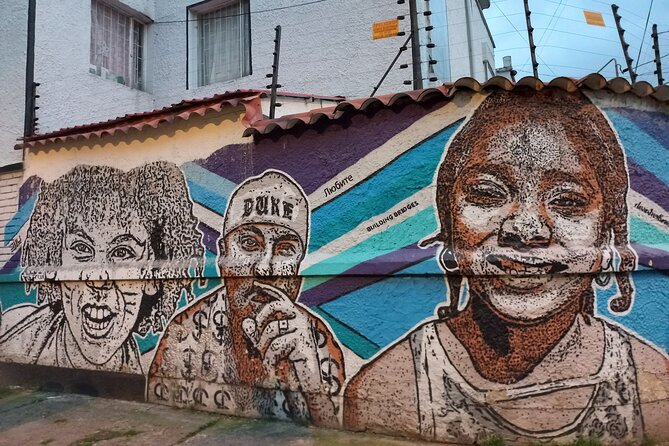
Visaje Graffiti receives the longest scheduled cultural stop, about twenty minutes. There is time for photographs, a guided explanation, an arts and crafts market visit, and a workshop.
Street art is one of Bogotá’s most visible creative forms, but a good explanation makes a major difference. Your guide can help you look beyond color and design toward the ideas, messages, and local setting behind the work. The workshop element should make this more active than a simple mural photo stop.
Coffee and graffiti are specifically part of the tour’s theme, and this is likely where the creative and social sides of the walk come together most clearly. You may also find small handmade goods or art to browse.
Because this is a city walk, conditions can affect the experience. The tour is listed as wheelchair accessible, but the provided details do not explain the exact surfaces or access arrangements at every stop. If you use a wheelchair, confirm the route details directly before booking, especially for the gallery, workshop, and pub portions.
Books and ideas at Prosa del Mundo
Prosa del Mundo Librería brings the tour into the world of books and independent cultural spaces. You have about ten minutes for a visit, guided explanation, shopping, and a look at arts and crafts.
Bookshops reveal a city in a different way than monuments do. They show what people read, discuss, publish, and support. This stop should appeal to you if you enjoy local cultural projects and prefer neighborhood businesses to souvenir chains.
Again, ten minutes passes quickly. If you want to browse seriously, you may need to choose between looking at the books and examining the crafts. The stop works best as a short introduction to the place and its role in the district.
ParkWay, Bogotá’s social spine
ParkWay is both a stop and the ending point. You visit, take photographs, hear a guided explanation, and walk along the area before finishing near the same corridor.
The repeated appearance of ParkWay gives the walk a satisfying sense of place. It is not just a point on a map. It functions as a public setting where cafés, shops, cultural activity, and daily neighborhood life meet. The route’s earlier stops make more sense by the time you arrive here because you have already seen several parts of Teusaquillo’s cultural character.
ParkWay is also practical for continuing your day. The tour does not return you to the National Museum. You finish at ParkWay, so plan your next stop from there rather than assuming you will end where you started.
Coffee, chocolate, chicha, arepas, and beer
Food and drink give this walk some welcome flavor. The tour includes a coffee or craft beer tasting, chocolate tasting, and a sticker. The wider experience also mentions arepas, chicha, and beer as part of the district’s food and drink culture.
The exact portion sizes and tasting format are not specified, so think of these as introductions rather than a full meal. If you arrive hungry, eat beforehand or plan food after the walk. The tasting stops are there to connect you with local habits, not replace lunch.
The final stop is Lubianka Pub, where about thirty minutes are set aside for beer. This is the longest single pause on the route and gives you time to relax after the walking and historical explanations. It also lets the tour end socially rather than with one last rushed building.
You should check whether the beer tasting is the included craft beer tasting or an additional drink beyond it, since the provided details do not spell out the exact arrangement. The same practical point applies to the food references: arepas and other items are mentioned as part of the route, but only coffee or craft beer and chocolate are clearly listed as included tastings.
Guides, languages, and the one serious concern
The tour is offered in English, Portuguese, and Spanish. That makes it useful for a wide range of visitors, and the guide’s role matters here because the route depends on explanation more than on headline attractions.
Luis Bonilla received particularly warm praise for his account of the area and its details. Other high scores describe the guide as friendly and well informed about the region and Bogotá’s past. One memorable departure included Appa, a sweet and friendly dog, which suggests that the guiding team may sometimes include a canine companion, though you should not book expecting one.
The overall score is 4.2 from 26 reviews, with several strong ratings and one major service complaint. A January 2026 booking reported that the guide did not appear and the tour was not canceled. That is not a small inconvenience. Before leaving your hotel, I would confirm the meeting time and watch for the red hat and red umbrella at the museum.
Is $19 a fair price?
At $19 per person, the tour offers good value if you want a guided introduction to Teusaquillo rather than a standard central Bogotá walk. You are paying for three hours, a private-group format, a live guide, access to galleries and cultural houses, and at least some tastings.
The value improves if you care about context. A self-guided walk could show you ParkWay, murals, and attractive streets, but it would not automatically explain the link between the buildings and Colombia’s political history. The guide is the main product.
The price is less compelling if you want long museum visits, extensive shopping, or a full meal. The schedule moves quickly, with many ten-minute stops. You are getting breadth and local context, not leisurely time at each venue.
Free cancellation up to 24 hours before the start and the option to reserve now and pay later reduce the financial risk. Still, the no-show complaint means I would not treat flexible booking as a substitute for confirming the appointment.
Who should book this Teusaquillo walk?
I would choose this experience if you have already seen Bogotá’s best-known sights and want a district-level view of the city. It also suits a first-time visitor who prefers architecture, political history, street art, independent shops, and cafés to a list of major monuments.
It is a good match for you if you enjoy asking questions and following a guide’s explanation. The private-group setup should make that easier than a large public departure.
I would hesitate if you have limited mobility and need precise information about every surface, since the tour is labeled accessible but provides no detailed access notes. I would also hesitate if you dislike frequent stops, short visits, or beer-focused endings.
Final verdict: book it for context, not checklist sightseeing
Book this walk if you want Bogotá to feel like a lived-in city rather than a string of famous addresses. The strongest parts are the district focus, the political connections, the independent cultural stops, and the mix of coffee, art, books, and beer.
At $19, it is a sensible buy for a three-hour introduction to Teusaquillo. Confirm the meeting details in advance, arrive at the National Museum with time to find the red hat and umbrella, and remember that ParkWay is the finishing point. If you do that, this tour offers a friendly, flavorful change from Bogotá’s main tourist route.
FAQ
How long does the Bogotá Teusaquillo walking tour last?
The tour lasts three hours.
How much does the tour cost?
The listed price is $19 per person.
Where does the tour begin?
It begins in front of the entrance to the National Museum of Colombia.
How will I recognize the guide?
The guide should be wearing a red hat and carrying a red umbrella with the company logo.
Where does the tour finish?
The tour finishes at ParkWay.
Which languages are available?
Live guides are available in English, Portuguese, and Spanish.
What tastings are included?
Coffee or craft beer tasting and chocolate tasting are included. A sticker is also included.
Is the tour wheelchair accessible?
Yes, the activity is listed as wheelchair accessible.
Can I cancel or pay later?
You can cancel up to 24 hours in advance for a full refund. You can also reserve now and pay later.
More Walking Tours
- Bogotá: Private Candelaria Walking Tour and Gold Museum
★ 5.0 · 17 reviews - Bogotá: Private Candelaria Walking Tour with Gold Museum
★ 5.0 · 11 reviews - Bogota: La Candelaria Highlights Walking Tour
★ 5.0 · 7 reviews - Free Walking Tour Bogotá: Arte, Historia y Café
★ 4.3 · 7 reviews
Just added around Bogota
- Zipaquirá: Private Salt Cathedral Mine and Walking Tour★ 4.8 · 3 reviews
- Walking tour José Celestino Mutis Botanical Garden 3 hrs★ 5.0 · 3 reviews
- Bogota: East Hills Mountain Hike★ 4.2 · 3 reviews
- Fun Graffiti Workshop: The Art of Aerosol and Color★ 5.0 · 3 reviews
- Bogota: Explore the forest and bird watching at Chicaque Natural Park★ 5.0 · 3 reviews
- Bogota: Downtown City and Monserrate Hill Private Tour★ 3.7 · 3 reviews
- Bogotá: La Candelaria Food Tour with Tastings★ 4.2 · 3 reviews
- Bogotá: Candelaria Tour with Cacao and Coffee Workshop★ 5.0 · 3 reviews
City Tours, compared.
Private City Tour, Monserrate, Emerald and Botero
Read our review →
City Sightseeing Hop-On Hop-Off Bus Tour & Extras
Read our review →
Bogotá City Tour with Monserrate, Gold and Botero Museums
Read our review →
BILINGUAL CITYTOUR + SAN FELIPE CASTLE & Old city
Read our review →
Private City Tour with Metrocable and Comuna 13
Read our review →Browse the lists this tour appears in