
Reviewed · CITY TOURS
Bogota Walking Tour Teusaquillo, a different part of the city
Bogotá has more than its old center. This 2.5-hour walk takes you through Teusaquillo, a district shaped by politics, industry, art, and the modern city. I like its focus on a less familiar part of Bogotá, and I like the useful finish in Parkway, where you can continue with food or coffee. The main drawback is simple: it is entirely on foot, and lunch is not included.
You begin at Museo Nacional and finish at Parkway, moving through museums, old industrial buildings, politically important homes, murals, cafés, and architecture from Bogotá’s 1950s. Guide Daniel has earned special praise for explaining not only what you see, but also the social and political forces behind it. If you want a polished checklist of famous sights, this may not be your tour. If you want context and local character, it makes a strong case for your time.
In This Review
- Key points of the Teusaquillo walk
- Why Teusaquillo makes a better walk than another central-city circuit
- Starting at Museo Nacional and Colombia’s modern story
- Cavas and Falcas, where beer meets city growth
- A politically important house and the beginning of conflict
- Bogotá’s street art as a public gallery
- Parkway, a 1950s finish with cafés and independent projects
- Coffee and craft beer add value to the $28 price
- Who will get the most from this Bogotá walk
- Timing, meeting point, and cancellation rules
- Should you book the Teusaquillo experience?
- FAQ
- Where does the Bogotá Teusaquillo walking tour start?
- Where does the tour end?
- How long does the tour last?
- How much does the tour cost?
- What is included in the tour?
- Is lunch included?
- How large can the group be?
- Can I cancel for a full refund?
Key points of the Teusaquillo walk
- Museo Nacional sets the historical frame: Begin with Colombia’s story from independence to recent times, along with art and a building tied to the country’s political past.
- Cavas and Falcas reveal Bogotá’s industrial shift: Learn how an early national beer company connected to the city’s growth and modern urban expansion.
- A politically important home adds serious context: One residence marks the start of Colombia’s political conflict and sits among some of Bogotá’s finest architecture.
- Street art becomes an outdoor gallery: The route highlights major Colombian artists rather than treating murals as simple decoration.
- Parkway gives the tour a useful finish: The walk ends among restaurants, cafés, bars, artists, and independent projects.
- Coffee and craft beer are included: These small tastings give the tour a social finish without adding lunch to the price.
Why Teusaquillo makes a better walk than another central-city circuit
I understand why many people head straight for Bogotá’s best-known historic streets. But a city is more than its postcard center. Teusaquillo gives you a look at how Bogotá changed as it moved from colonial and early republican roots toward industry, political struggle, planned neighborhoods, modern urban life, and independent culture.
That mix is the reason I find this route appealing. You are not simply moving from one attractive building to another. The walk connects architecture to events, businesses to urban growth, and public art to the people shaping the city now.
The tour lasts about two hours and 30 minutes. That is long enough for a real story, but short enough to fit into a day of sightseeing. You should still wear comfortable shoes. The route is a walking experience, and no vehicle transfer is listed between its stops.
The group can reach a maximum of 20 people. That is not an intimate private tour, but it is small enough to keep a guide-led walk manageable. The experience is also described as suitable for most people, with service animals allowed and public transportation nearby.
More City Tours in Bogotá
- Bogota: Bicycle City Tour
★ 4.9 · 2,156 reviews - Bogotá: Private City Tour, Monserrate, Emerald and Botero
★ 4.9 · 798 reviews - Bogotá City Tour with Monserrate, Gold and Botero Museums
★ 4.9 · 584 reviews
Starting at Museo Nacional and Colombia’s modern story
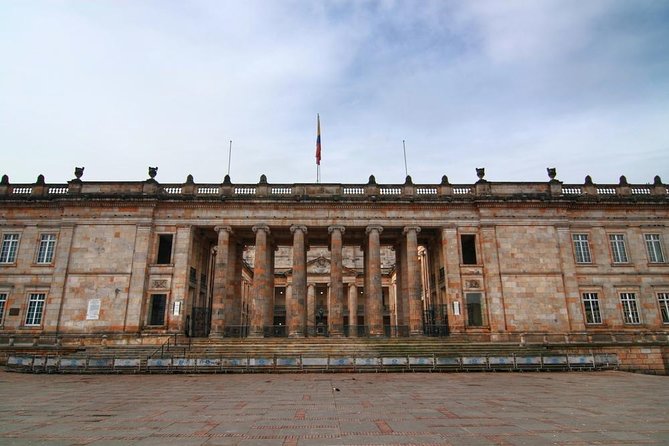
The meeting point is Museo Nacional in the Santa Fe area of Bogotá. The museum gives the walk an intelligent opening because its subject reaches from independence through the country’s most recent periods.
That time span matters. It lets you place the rest of the tour inside a national story rather than seeing Teusaquillo as a collection of pretty streets. You begin with the political and cultural forces that shaped Colombia, then carry that context into the neighborhood.
The museum also contains works by some of the country’s leading artists. Its building itself carries political meaning in both its architecture and its walls. That makes the first stop useful for two reasons: you get art and national history, but you also begin thinking about how buildings can preserve power, conflict, and public memory.
The available details do not state how much time you spend inside the museum or whether admission is part of the $28 price. I would confirm that point before booking if museum entry matters to your budget. Even so, the museum’s role in the route is clear: it is the foundation for everything that follows.
Cavas and Falcas, where beer meets city growth
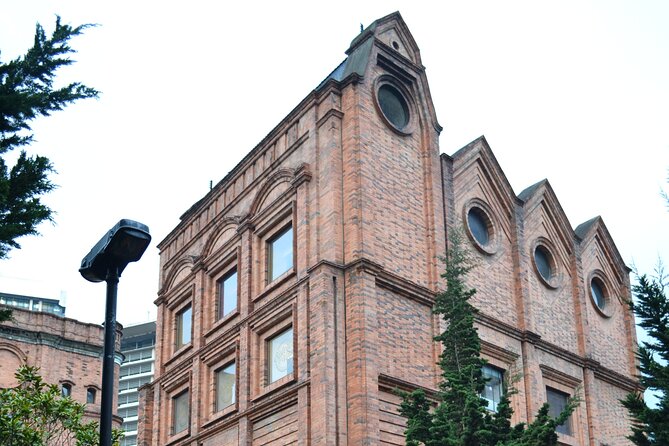
The stop at Cavas and Falcas shifts the focus from national politics to business and urban change. These buildings were once connected to the first beer company in Colombia, giving the stop a practical way into the country’s industrialization.
That is a smart choice. Industrial history can sound dry in a classroom, but an old brewing site makes the subject tangible. Beer production points to factories, workers, transport, customers, capital, and a city growing beyond its older core. You see how a business could help shape the direction of Bogotá.
The guide also explains how the city expanded into modern urbanizations. This is one of the places where the tour’s route becomes more than a neighborhood stroll. You are looking at physical buildings, but the real subject is change: how Bogotá developed new areas and how industry helped push that growth.
The stop should appeal to you if you like urban history and architecture. It may be less satisfying if you only want major monuments or a food-focused outing. The included craft beer helps bring the subject to life, but this is still an interpretive stop, not a brewery visit built around extensive tasting.
A politically important house and the beginning of conflict
One of the most serious moments on the route comes at the home of a person who changed Colombia’s history and marked the beginning of the country’s political conflict. The information provided does not name that figure, so you should ask the guide for the full story during the walk.
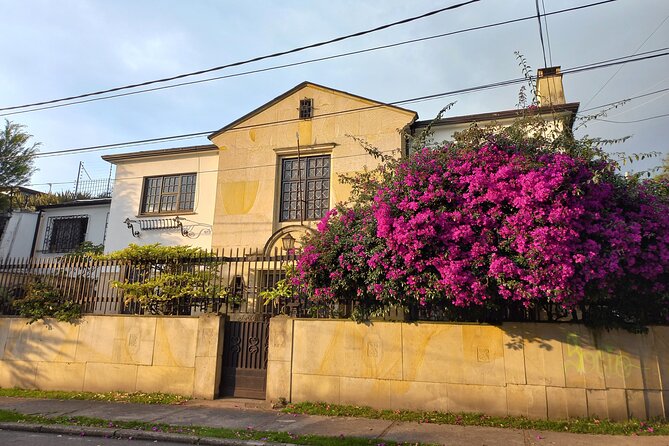
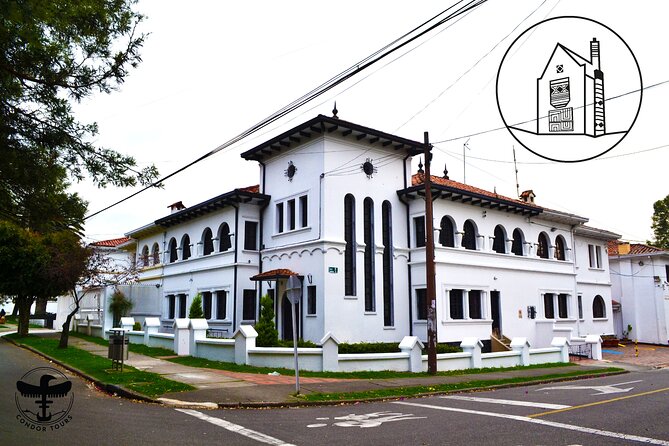
What makes the stop valuable is the setting. The house is surrounded by some of Bogotá’s most attractive architecture, so the conversation combines a major political turning point with the built character of Teusaquillo.
I appreciate that the tour does not treat political history as a list of dates. A house gives the story a physical location. You can connect national events to an actual street and neighborhood, then see how the surrounding buildings reflect the era in which Bogotá was changing.
This portion may feel heavier than the coffee and beer stops. That is not a flaw, but it is worth knowing before you book. The tour deals with political conflict, and that context may be more demanding than a standard sightseeing walk. For me, that seriousness is part of the value. A city tour should help you understand difficult chapters, not just point out attractive façades.
More Walking Tours in Bogotá
- Bogotá: Guided La Candelaria Walking Tour
★ 4.8 · 1,229 reviews - Zipaquirá Salt Cathedral Private Tour + Walking Tour
★ 5.0 · 66 reviews - La Candelaria Walking Private Tour (3 Hrs.)
★ 5.0 · 51 reviews - Bogota Walking Tour Teusaquillo a different part of the city
★ 4.2 · 26 reviews
Bogotá’s street art as a public gallery
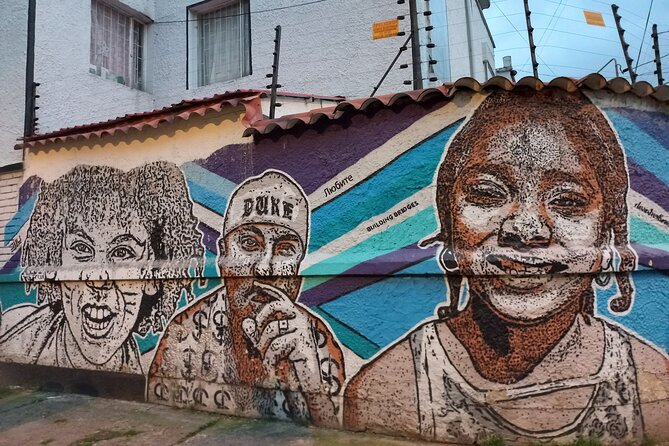
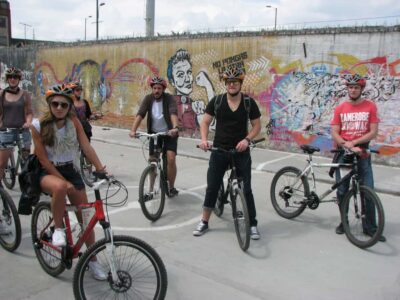
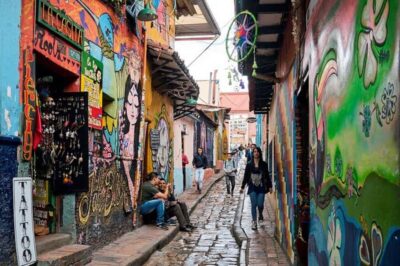
The street art stop brings the tour into the present. Here, the route works like an outdoor gallery, with murals by some of Colombia’s leading artists.
The value is not only visual. Street art can change how you read a neighborhood. Walls become places where artists, residents, and independent projects express ideas in public. The tour places that art within the wider story of Bogotá instead of treating it as a quick photo stop.
You should expect this section to depend on what is visible on the day. Street art changes, and the supplied details do not promise specific murals or artist names. Still, the focus on Colombian artists gives the stop a clear local purpose.
This is also a good point for anyone who wants a less formal cultural experience. Museums explain a country through selected objects and buildings. Street art shows how the city speaks in open view. The two forms of culture work well together on this route, especially after the opening stop at Museo Nacional.
Parkway, a 1950s finish with cafés and independent projects
The walk ends in the Parkway zone, one of Bogotá’s recognizable meeting places for artists, restaurants, cafés, bars, and independent projects. Its architecture reflects Bogotá in the 1950s, while its bohemian spirit gives the area a social energy that feels different from a formal museum district.
This ending is especially practical. You do not finish beside an isolated landmark with nowhere to go. You finish in an area where you can stop for lunch, order coffee, visit a bar, or continue looking around on your own.
Lunch is not included, so plan to eat after the tour or budget separately. That is not necessarily a weakness. It gives you freedom to choose the kind of meal you want, and Parkway is designed for that kind of choice.
The supplied details do not identify a particular restaurant or café, so I would not book this tour expecting a planned meal. Think of Parkway as a useful launch point for your next stop. The tour ends at Cl. 39a in the Parkway area, and the listed endpoint specifically notes restaurants, coffee shops, and bars nearby.
Coffee and craft beer add value to the $28 price
At $28 per person, the experience includes a Condor Tours guide, a coffee tasting, and craft beer. Lunch is separate.
The price looks reasonable if you value explanation rather than transportation or a large number of admissions. You are paying for a guided connection between national history, industry, architecture, politics, street art, and neighborhood life. The coffee and beer give the experience two small but welcome social pauses.
The value depends on what you want from Bogotá. If you only need a quick orientation, a free self-guided walk may cover some of the same streets. But you would lose the guide’s interpretation, especially around the industrial buildings and the politically important house. The tour’s strongest feature is not the number of stops. It is the link between them.
The current score is 5 out of 5 from 41 ratings, with 100 percent recommending it. One particularly positive assessment singled out Daniel’s ability to explain the political and social meaning of Teusaquillo, not just its sights. Another rating described the walk as an excellent way to see different architectural styles and stages in Bogotá’s development, while praising the guide for being attentive and entertaining.
Those comments point to the right expectation. This is a guide-led conversation about a district, not a hurried march from landmark to landmark.
Who will get the most from this Bogotá walk
I would choose this tour if you want:
- A side of Bogotá beyond the most familiar central sights
- Architecture tied to political and social change
- A guide who explains why places matter
- Street art by Colombian artists
- A short activity that fits into a larger Bogotá schedule
- A finish near cafés, restaurants, bars, and independent projects
- Included coffee and craft beer
It suits first-time visitors who want a broader sense of the city, but it also has something for people who already know the main center. The route gives you a different neighborhood and a more modern urban story.
You should think twice if you dislike walking, want a full meal included, or prefer a tour built around one major museum. The experience covers several subjects, so it is broad in theme even though the route stays within one part of Bogotá.
Because the group can include up to 20 people, the guide may need to manage a mixed pace. The details say most people can participate, but they do not describe the exact walking distance, number of stairs, or surface conditions. If mobility is a concern, ask Condor Tours for those specifics before you reserve.
Timing, meeting point, and cancellation rules
The tour begins at Museo Nacional Santa Fe in Bogotá and ends in Parkway at Cl. 39a. Public transportation is nearby, which makes both the start and finish easier to reach without arranging a private transfer.
Confirmation is provided at booking. Service animals are allowed. The activity is commonly reserved about 18 days ahead, so booking earlier may help if your schedule is fixed, especially since the group has a maximum of 20 people.
You can cancel for a full refund if you do so at least 24 hours before the start time. Inside that 24-hour window, the amount paid is not refunded, and changes are not accepted. The cut-off follows Bogotá local time.
Should you book the Teusaquillo experience?
I would book it if you want to understand Bogotá through its neighborhoods, not just collect famous addresses. The route has a strong shape: national history at Museo Nacional, industrial growth at Cavas and Falcas, political conflict at an important home, contemporary expression through street art, and a social finish in Parkway.
The main question is your preferred travel style. You will enjoy this most if you like walking, architecture, politics, art, and conversation. The $28 price is fair for that mix, especially with coffee and craft beer included. If you want lunch, museum admission, or a bus-based tour, plan for extra cost or choose another experience.
For a different side of Bogotá, this is an easy recommendation. It gives you a neighborhood story with enough local detail to make the city feel larger, more complicated, and more interesting than the usual sightseeing circuit.
FAQ
Where does the Bogotá Teusaquillo walking tour start?
It starts at Museo Nacional Santa Fe in Bogotá, Colombia.
Where does the tour end?
The tour ends in the Parkway zone at Cl. 39a, Bogotá. Restaurants, coffee shops, and bars are nearby.
How long does the tour last?
The walking tour lasts approximately two hours and 30 minutes.
How much does the tour cost?
The listed price is $28 per person.
What is included in the tour?
The experience includes a Condor Tours guide, a coffee tasting, and craft beer.
Is lunch included?
No. Lunch is not included.
How large can the group be?
The tour can have a maximum of 20 participants.
Can I cancel for a full refund?
Yes. You can receive a full refund if you cancel at least 24 hours before the experience start time. Cancellations or changes made within 24 hours are not accepted for a refund.
More Walking Tours
- Bogotá: Private Candelaria Walking Tour and Gold Museum
★ 5.0 · 17 reviews - Bogotá: Private Candelaria Walking Tour with Gold Museum
★ 5.0 · 11 reviews - Bogota: La Candelaria Highlights Walking Tour
★ 5.0 · 7 reviews - Free Walking Tour Bogotá: Arte, Historia y Café
★ 4.3 · 7 reviews
Just added around Bogota
- Zipaquirá: Private Salt Cathedral Mine and Walking Tour★ 4.8 · 3 reviews
- Walking tour José Celestino Mutis Botanical Garden 3 hrs★ 5.0 · 3 reviews
- Bogota: East Hills Mountain Hike★ 4.2 · 3 reviews
- Fun Graffiti Workshop: The Art of Aerosol and Color★ 5.0 · 3 reviews
- Bogota: Explore the forest and bird watching at Chicaque Natural Park★ 5.0 · 3 reviews
- Bogota: Downtown City and Monserrate Hill Private Tour★ 3.7 · 3 reviews
- Bogotá: La Candelaria Food Tour with Tastings★ 4.2 · 3 reviews
- Bogotá: Candelaria Tour with Cacao and Coffee Workshop★ 5.0 · 3 reviews
City Tours, compared.
Private City Tour, Monserrate, Emerald and Botero
Read our review →
City Sightseeing Hop-On Hop-Off Bus Tour & Extras
Read our review →
Bogotá City Tour with Monserrate, Gold and Botero Museums
Read our review →
BILINGUAL CITYTOUR + SAN FELIPE CASTLE & Old city
Read our review →
Private City Tour with Metrocable and Comuna 13
Read our review →Browse the lists this tour appears in