
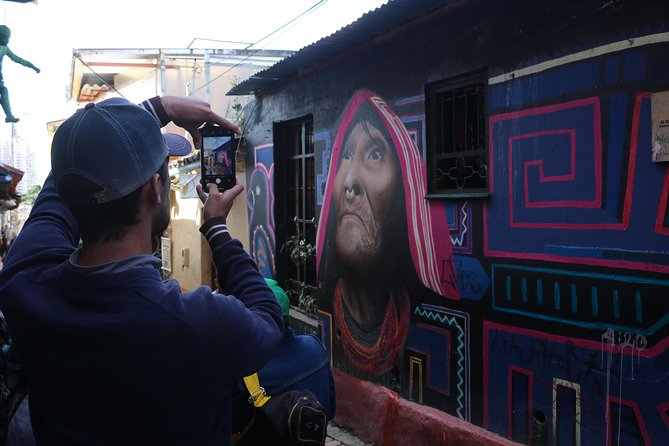
Reviewed · COMUNA 13 & STREET ART TOURS
Graffiti Tour in La Candelaria Bogotá with Transportation
Street art tells Bogotá’s story. This three-hour private tour through La Candelaria goes well beyond quick photo stops, connecting murals to Indigenous ancestry, politics, women artists, downtown life, and the city’s changing identity. At $48 per person, it is especially appealing if you want a guide who can explain what you are seeing rather than simply point at painted walls.
I like the strong focus on meaning and context, and I like the convenience of hotel pickup, private transport, and drop-off. The tour also includes a coca leaf tea tasting, a small but memorable local touch. One point to consider is timing: the experience is advertised at three hours, but one booking lasted closer to two, and one traveler found the driving a little aggressive.
In This Review
- Key Points Before You Book
- Why La Candelaria Is the Right Place for Street Art
- Starting at Chorro de Quevedo Square
- The Narrow Street That Tells an Indigenous Story
- La Concordia Market and the Ideas of Downtown Bogotá
- Following the Murals by Women Artists
- Journalists Park and the Literary Side of the City
- Ending at Café Herencia
- What the Private Transportation Adds
- How the Guides Shape the Experience
- Timing, Weather, and Practical Comfort
- Who Will Get the Most From This Tour?
- Should You Book It?
- FAQ
- Where does the tour take place?
- How long does the tour last?
- Is hotel pickup included?
- Is this a private tour?
- Which languages are available?
- What artists might I see?
- Is lunch included?
- Does the tour run in bad weather?
- Can I cancel for a full refund?
Key Points Before You Book
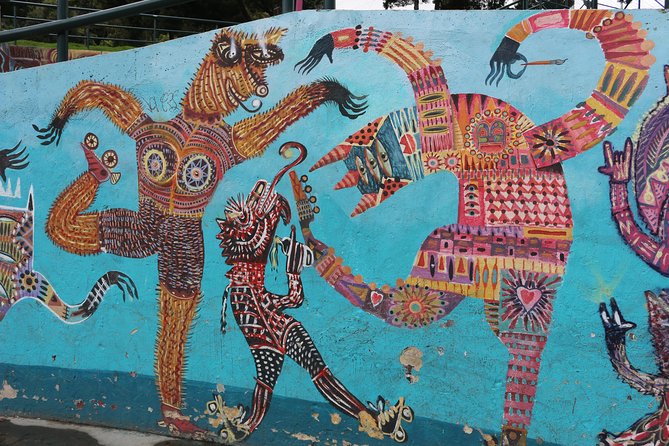
- Artists with distinct voices: Look for work by Ledania, 3 Manos, Wosnan, Ocio4, Carlos Trilleras, Bastardilla, Vera, and Erre.
- A tour about ideas, not just paint: Your guide explains the social and political forces behind Bogotá’s street art.
- Private transport included: Hotel pickup and drop-off make this easier than arranging taxis around central Bogotá.
- Women artists receive real attention: The route highlights murals by Bastardilla, Vera, Ledania, and Erre.
- A compact downtown route: Chorro de Quevedo, La Concordia, Journalists Park, and Bolívar Square help connect art with city history.
- Plan for weather: The tour runs rain or shine, and lunch is not included.
Why La Candelaria Is the Right Place for Street Art
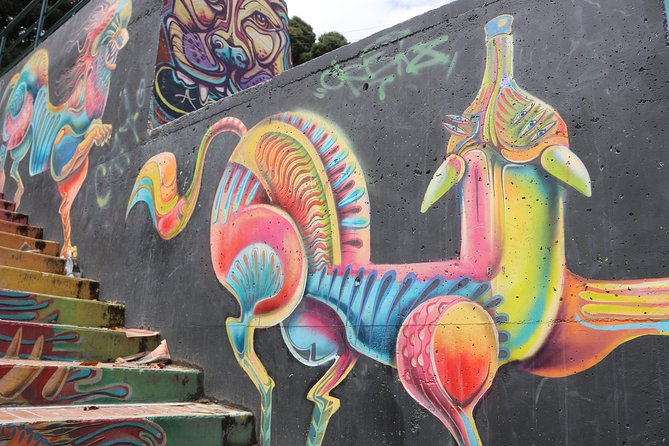
La Candelaria is one of the best parts of Bogotá for seeing how old city streets and modern public art meet. The route moves through narrow lanes, squares, markets, and streets where murals are part of daily life rather than sealed away in a gallery.
That setting matters. A painting here may respond to Indigenous identity, inequality, political conflict, gender, or the history of downtown. You are not only looking at color and technique. You are seeing how artists use walls to make an argument, preserve memory, or claim space.
Your guide is the key to the experience. English and Spanish tours are available, and the group is private, so you can ask questions without holding up a large crowd. Past guides have included Lenora, Luis, Gerald, Lorena, Natalie, and Christian. The strongest feedback consistently centers on guides who explain symbolism, artistic influences, and the meaning behind each image in clear terms.
More Comuna 13 and street art walks:
- Bogotá: La Candelaria Graffiti & Urban Art Guided Tour
★ 4.7 · 250 reviews - Fun Graffiti Workshop: The Art of Aerosol and Color
★ 5.0 · 73 reviews - Graffiti Tour in La Candelaria Bogotá with Transportation
★ 5.0 · 68 reviews
Starting at Chorro de Quevedo Square
The tour begins in or around Bogotá with pickup, then heads to Chorro de Quevedo Square, a useful starting point for understanding La Candelaria. The square is tied to the city’s early story, but the surrounding streets also show how Bogotá’s past and present sit side by side.
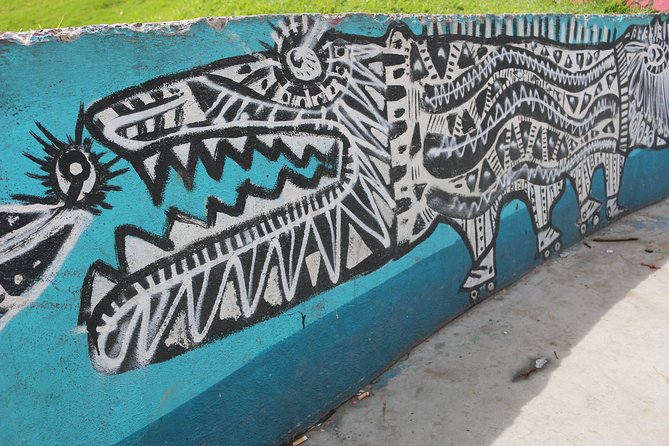
Here you begin learning about the relationship between the city’s art scene and graffiti. Works by artists such as Ledania, 3 Manos, Wosnan, and Ocio4 introduce several different approaches to public art. Your guide helps you look for more than the obvious image: facial expressions, symbols, repeated patterns, political references, and the way each work uses the wall itself.
This is a good place to ask questions early. If you want to know how artists gain permission, how the city treats graffiti, or how a particular artist’s style developed, ask directly. The tour is strongest when you treat it as a conversation rather than a fixed lecture.
Chorro de Quevedo is also a practical place to get your bearings. The walking portions use city streets, so wear comfortable shoes and keep your phone or camera secure. You should also bring water, since the tour includes several stops and lunch is not part of the price.
The Narrow Street That Tells an Indigenous Story
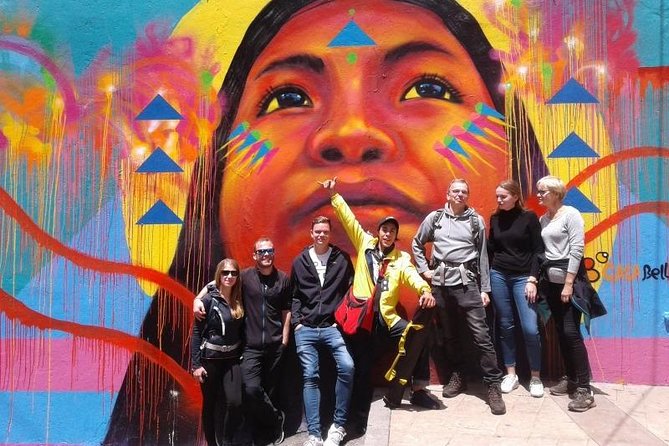
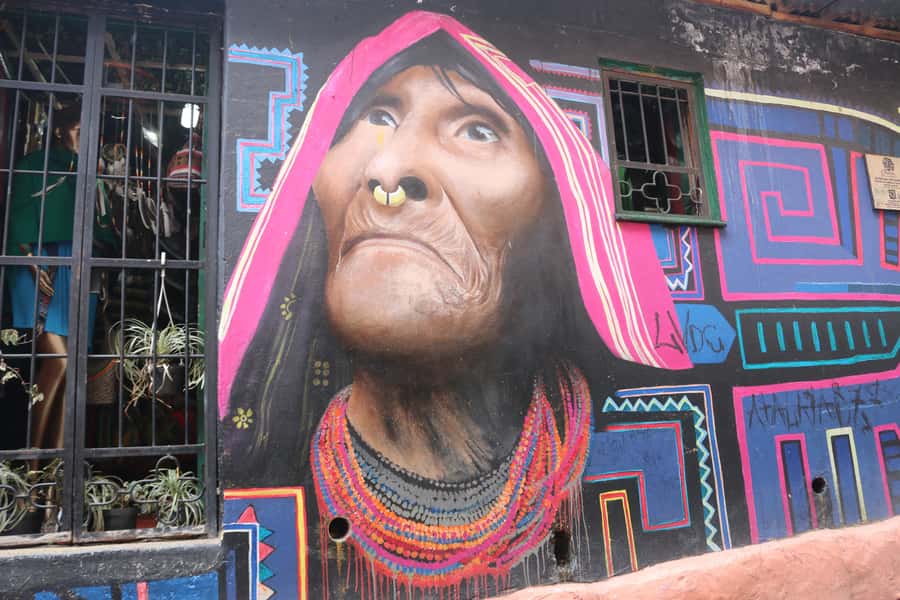
One of the more interesting stops is a narrow street filled with graffiti about the Indigenous ancestry of the city. This section gives the tour a clear purpose: Bogotá’s story did not begin with colonial buildings or modern political movements.
The walls create a visual account of identity and memory. Instead of seeing unrelated pieces, you begin to notice how a group of murals can work together. This is where a guide adds real value, explaining the themes and helping you connect the imagery to the city’s past.
The route includes work by Carlos Trilleras, along with murals by Wosnan and Ocio4. Their pieces give you a chance to compare different styles and ways of handling public space. Some works may draw you in through detail, while others make their point through scale, color, or a direct human figure.
Do not rush this part for a quick photograph. Narrow streets can make it harder to step back from a wall, so listen first and then look at the details your guide points out. The physical limits of the street are part of the experience.
La Concordia Market and the Ideas of Downtown Bogotá
The tour continues to Park of La Concordia and the La Concordia marketplace, an important meeting point in central Bogotá. This area is presented as a place where different ideas, influences, and communities have met over time.
The market adds a useful change of pace. You are no longer looking only at individual walls. You are seeing street art in relation to commerce, conversation, movement, and everyday city life. That makes the art easier to understand as part of a living neighborhood.
This is also one of the places where the tour’s social context becomes especially useful. The guide can explain why downtown areas often become pressure points for public expression. A mural may be decorative, but it can also reflect local tensions or represent a community’s view of what the city should remember.
I like this stop because it avoids treating La Candelaria as an outdoor art museum. You see the art where people work, meet, shop, and pass through. That setting makes the tour feel more connected to Bogotá itself.
More La Candelaria wanders:
- Bogotá: Guided La Candelaria Walking Tour
★ 4.8 · 1,229 reviews - Shared Tour of Bogota’s Historic Downtown (La Candelaria)
★ 4.7 · 100 reviews - VIP Bogota City Tour: Farmers Market, Monserrate, Candelaria, 9hr
★ 5.0 · 66 reviews - Food Tour in La Candelaria Bogotá
★ 5.0 · 63 reviews
Following the Murals by Women Artists
As you continue through picturesque streets, the route gives special attention to women artists. You see work associated with Bastardilla, Vera, Ledania, and Erre, and learn about their role in spreading graffiti and street art in Bogotá.
This is more than a quick mention of names. The tour gives women artists a clear place in the story of the city’s public art. Their work helps broaden the picture of who gets to speak on a wall and what subjects deserve public attention.
Ledania appears earlier in the route as well, which lets you see her work in more than one context. Bastardilla, Vera, and Erre add other perspectives and styles to the walk. Your guide can help you compare their use of figures, symbols, and color rather than treating all graffiti as one art form.
This part will appeal to you if you enjoy art with a social point of view. It also makes the tour more balanced than a route built only around the biggest or most photographed murals.
Journalists Park and the Literary Side of the City
The promenade leads toward Journalists Park, a place associated with journalists, poets, and writers who gathered there in the 1960s. The stop links Bogotá’s street culture with its literary and political life.
That connection is easy to miss if you explore La Candelaria alone. You might notice the park, take a photograph, and continue. With a guide, the place becomes part of a larger story about how writers, artists, and public thinkers have shaped downtown Bogotá.
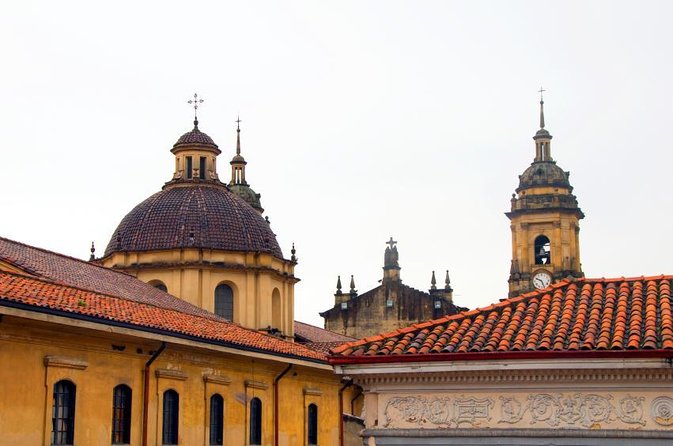
The tour itinerary also identifies Bolívar Square as a sightseeing stop. Its inclusion helps broaden the route beyond graffiti alone, placing the murals within the historic center. The walk is not a full architectural tour, but it gives you a useful sense of how public art shares space with important civic areas.
Expect the pace to be steady rather than strenuous. The main activity is walking, with the full La Candelaria segment listed at about two hours and shorter stops at places such as Chorro de Quevedo and Bolívar Square.
Ending at Café Herencia
The final stop is Café Herencia, where you can see more work by Carlos Trilleras. Ending indoors or at a café gives the route a natural finish after the streets and markets.
The café stop also provides another chance to ask about artists you have seen earlier. If you are taking photographs, this is a good time to review them while the themes are fresh. A guide may also help you remember which artist made a particular piece, since murals can change or disappear as buildings are repainted.
The included coca leaf tea tasting adds a local detail to the ending. It is not a meal, and it does not replace lunch, but it gives you a small taste of a traditional drink connected to the region. If you need food after the tour, plan for a separate stop.
One guide, Gerald, also sent restaurant suggestions after the tour. That kind of help can be useful if you are still exploring Bogotá and want practical advice beyond the three-hour walk.
What the Private Transportation Adds
The $48 price becomes easier to judge when you consider what is included. You receive a guide, hotel pickup and drop-off, private transportation, insurance, and the coca tea tasting.
For a private group, that is a solid package. You do not need to arrange separate transportation to central Bogotá, and you can keep the experience focused on your own party. This may be particularly helpful if you are staying outside La Candelaria or prefer not to manage taxis before and after a walking tour.
The tradeoff is that transportation quality can affect your impression. One person found the driver’s road behavior too aggressive, although that same person still enjoyed the tour overall. I would treat this as a point to keep in mind, not a reason to dismiss the experience. If you feel uncomfortable, speak up and ask the driver to slow down.
The driving portion is not the main attraction. The murals and the guide’s explanations are. Still, a private vehicle is useful at the beginning and end, and it removes some of the practical friction from visiting the historic center.
How the Guides Shape the Experience
The best part of this tour is the guide’s ability to put names, stories, and symbols together. Luis was praised for explaining both Bogotá and the meaning of graffiti. Christian was noted for explaining the history of the art and the ideas behind individual paintings. Natalie was described as an excellent guide for exploring La Candelaria.
Lorena and Lenora also received strong marks for being friendly and informative. Gerald added personal touches by taking photographs and sending them afterward, then providing restaurant suggestions. Those details matter because a private tour gives the guide room to respond to what interests you.
Guiding styles can differ, of course. Some guides may focus more on history, others on visual art or politics. At the start, tell your guide what you want from the walk. You can ask for more information on Indigenous themes, women artists, artistic technique, or the political context of graffiti.
The tour is available in English or Spanish. If you want the richest conversation, choose the language in which you can ask detailed questions easily.
Timing, Weather, and Practical Comfort
The advertised duration is three hours, but the route includes several walking sections and may not always run to the full length. One booking lasted about two hours, so you should avoid scheduling an important appointment immediately afterward.
The experience takes place rain or shine. Bogotá weather can change, so bring a light rain layer and shoes that can handle wet pavement. The tour is not described as a strenuous hike, but comfortable footwear will make the narrow streets and extended walk easier.
Lunch is not included. Have something to eat before pickup or plan a meal afterward. The coca leaf tea tasting is a pleasant extra, but it is only a tasting.
Cancellation is flexible up to 24 hours before the start for a full refund, and you can reserve now and pay later. Those terms are helpful if your Bogotá plans are still shifting, but they should not replace checking the exact starting time when you book.
Who Will Get the Most From This Tour?
I would choose this tour if you want to understand why Bogotá has such a strong street art identity, not just photograph colorful walls. It suits first-time visitors who want a guided introduction to La Candelaria, as well as returning visitors who want to see the district through its artists.
It is also a good fit for people interested in politics, Indigenous identity, women’s art, and the relationship between public space and local culture. The private format works well for couples, families, or friends who want to ask questions freely.
You may prefer a different experience if you want a fast photo walk with little explanation. The tour spends time on background and interpretation. It also may not suit you if you need a guaranteed three-hour schedule or dislike walking in rain.
Should You Book It?
Book this tour if you value clear explanations, local context, and private transport. The route covers more than famous walls, moving through Chorro de Quevedo, the Indigenous-themed lane, La Concordia, women-led street art, Journalists Park, and Café Herencia.
At $48 per person, the cost is reasonable for a private three-hour outing with hotel pickup, transportation, insurance, a guide, and tea. Just allow some flexibility in the finish time, bring rain protection, and remember that lunch is separate. If you want Bogotá’s graffiti to make sense as part of the city’s culture and politics, this is a strong choice.
FAQ
Where does the tour take place?
The tour takes place in Bogotá, mainly in the La Candelaria district and nearby central areas.
How long does the tour last?
The advertised duration is three hours. The main La Candelaria walking portion is listed at about two hours, with shorter guided stops at Chorro de Quevedo Plaza and Bolívar Square.
Is hotel pickup included?
Yes. Hotel pickup and drop-off in Bogotá are included, along with private transportation.
Is this a private tour?
Yes. The experience is offered for a private group.
Which languages are available?
You can take the tour with a live guide in English or Spanish.
What artists might I see?
The route includes work by Ledania, 3 Manos, Wosnan, Ocio4, Carlos Trilleras, Bastardilla, Vera, and Erre.
Is lunch included?
No. Lunch is not included.
Does the tour run in bad weather?
Yes. The tour takes place rain or shine.
Can I cancel for a full refund?
Yes. You can cancel up to 24 hours in advance for a full refund. You can also reserve now and pay later.
Just added around Bogota
- Zipaquirá: Private Salt Cathedral Mine and Walking Tour★ 4.8 · 3 reviews
- Walking tour José Celestino Mutis Botanical Garden 3 hrs★ 5.0 · 3 reviews
- Bogota: East Hills Mountain Hike★ 4.2 · 3 reviews
- Fun Graffiti Workshop: The Art of Aerosol and Color★ 5.0 · 3 reviews
- Bogota: Explore the forest and bird watching at Chicaque Natural Park★ 5.0 · 3 reviews
- Bogota: Downtown City and Monserrate Hill Private Tour★ 3.7 · 3 reviews
- Bogotá: La Candelaria Food Tour with Tastings★ 4.2 · 3 reviews
- Bogotá: Candelaria Tour with Cacao and Coffee Workshop★ 5.0 · 3 reviews
Comuna 13 & Street Art Tours, compared.
Comuna 13 Graffiti Tour, Cable Car & Street Food
Read our review →
Private City Tour with Metrocable and Comuna 13
Read our review →
Comuna 13 Tour with Snacks And Your Own Graffiti
Read our review →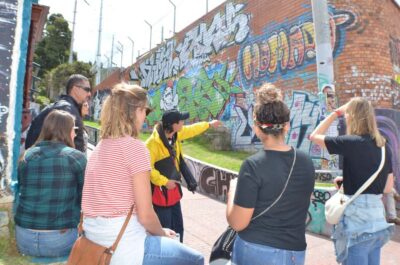
Comuna 13 and Graffiti Guided Tour with a Local
Read our review →
Browse the lists this tour appears in