
Reviewed · PABLO ESCOBAR TOURS
Pablo Escobar tour
Medellín’s past is not a simple tourist story. This private tour connects Pablo Escobar’s former home, grave, memorial, and neighborhood to the political violence, poverty, and social damage that shaped the city. I especially like the private vehicle, which limits walking between widely separated sites, and the chance to ask direct questions with a guide such as Cesar, Mateo, or Juan. The main drawback is the subject itself: parts of the tour are grim, and anyone seeking a light sightseeing outing may find the focus too heavy.
The tour lasts about three to five hours and costs $121.22 per person. That is not a bargain for a short half-day outing, but the price covers private transport, hotel pickup and drop-off from designated meeting points, a professional guide, bottled water, and all taxes and handling charges. I also like the morning start at 9:00 a.m., since it leaves much of your day free for Medellín’s other sights.
In This Review
- Key points before you book
- Why this tour matters in Medellín
- The rooftop in Los Olivos where Escobar died
- Jardines Montesacro Cemetery and the many versions of Escobar
- Inflexión Memorial Park, where a former home became a public memory
- Barrio Pablo Escobar and the hard question of charity
- Private transport makes a serious tour easier
- Is $121.22 per person fair value?
- The guides set the tone
- Who should book this Medellín tour?
- FAQ
- How long does the Pablo Escobar tour last?
- How much does the tour cost?
- Is the tour private?
- What time does the tour start?
- Does the tour include hotel pickup and drop-off?
- Are meals included?
- Can I cancel for a full refund?
- Should you book the Pablo Escobar tour?
Key points before you book
- The rooftop where Escobar died provides the tour’s most direct link to the final chapter of his life.
- Jardines Montesacro Cemetery shifts the focus from legend to competing views of Escobar’s character and upbringing.
- Inflexión Memorial Park replaces his former residence with a public memorial built to remember victims and damage.
- Barrio Pablo Escobar brings the discussion back to poverty, opportunity, and the people who accepted housing from him.
- Private, air-conditioned transport makes the route easier and gives your group room for questions.
- Guides including Cesar, Mateo, and Juan are praised for clear explanations, care, and a balanced approach.
Why this tour matters in Medellín
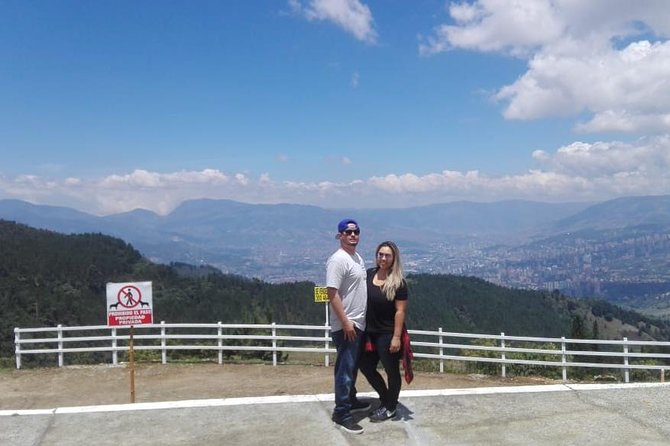
Pablo Escobar tours can easily become shallow. A few famous addresses, a dramatic tale, and a guide who treats a violent criminal like a pop star do not tell you much about Medellín.
This experience takes a better route. It links Escobar’s personal story with the city’s political and economic crisis, then asks what his name still means to people who lived through the violence. You hear about his rise, his political ambitions, his public image, and the thousands of victims affected by bombings, assassinations, intimidation, and the drug trade.
That context is the reason to book. You are not simply collecting photographs of places connected to a notorious figure. You are trying to understand how a man could gain support in poor communities while causing enormous suffering across Colombia.
The tone also appears more serious than sensational. Cesar is praised for his insight and engaging manner. Mateo is described as objective and careful, while Juan is praised for explaining the period and pointing out local sights along the way. Those differences matter because a private tour depends heavily on the person behind the wheel and the conversation.
Still, you should set the right expectations. The experience does not erase the grim parts of Medellín’s past, and it should not. You may hear accounts that are painful or unsettling. The tour works best when you approach it as a history and social context lesson, not as a fan trip.
More narco-history tours:
- Medellín: The Real Pablo Escobar Tour
★ 4.8 · 3,205 reviews - Medellín: Pablo Escobar Tour with beer included
★ 4.7 · 612 reviews - Medellin: Guatapé Day Trip & Boat to Pablo Escobar’s Estate
★ 4.7 · 365 reviews
The rooftop in Los Olivos where Escobar died
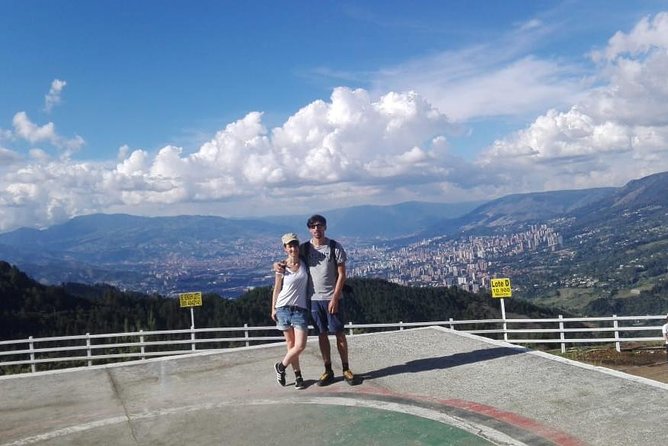
The first stop is in Los Olivos Antioquia, at the house and rooftop associated with Escobar’s death. You spend about two hours here discussing the political and economic setting of one of the world’s most violent countries during that period.
This is the longest stop, and that makes sense. The rooftop is not valuable only because of the final pursuit. It gives the guide a place to explain how Escobar’s life ended, why the confrontation mattered, and how his death affected Colombia.
You can expect the conversation to cover the forces that allowed Escobar to gain influence, his connection to politics, and the violence that followed his rise. The guide also addresses the way his legacy continues to affect Colombian culture and daily life.
The location may feel stark rather than polished. That is part of its value. You are looking at a real place tied to an event that has been retold in television, books, and popular culture. The guide’s job is to separate the dramatic version from the wider reality.
Two hours is a long time at one location, especially if you are mainly interested in quick photographs. I would treat this stop as the central classroom of the tour. Ask questions, listen closely, and expect less sightseeing than explanation.
The private format helps here. You are not trying to hear a guide over a large crowd, and you can ask about points that interest you. If you want a brisk route with little discussion, the length may test your patience. If you want context, it gives the subject room to breathe.
Jardines Montesacro Cemetery and the many versions of Escobar
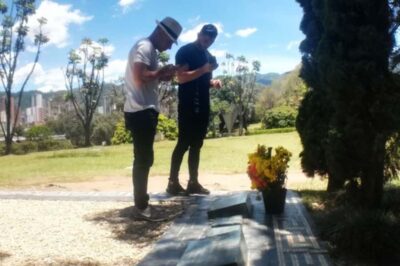
At Cementerio Jardines Montesacro, the focus turns to Escobar’s burial place and the different ways people interpret his life. This stop lasts about one hour.
A cemetery is a useful setting for this conversation because it strips away some of the glamour surrounding his name. The guide discusses how Escobar grew up, how his personality developed, and why he became the kind of person he was. That does not excuse his crimes. It helps explain the conditions and choices behind them.
You may hear conflicting views. Some people remember Escobar as a violent trafficker responsible for major suffering. Others, especially people who benefited from his gifts or housing projects, remember his donations and personal generosity. Both ideas can exist at the same time, but they are not morally equal.
The strongest part of this stop is the refusal to turn the story into a simple good-versus-evil cartoon. Medellín’s social problems created openings for people who could provide money, homes, or jobs. Escobar used that support to build power. The result was a dangerous relationship between charity, loyalty, fear, and political ambition.
The cemetery is also a place where you should show respect. This is not a stage set. Keep your behavior quiet and considerate, and listen to the guide’s explanation of how different people remember the past.
If you prefer political history, this stop may be more useful than the grave itself. If you are mainly interested in crime stories, you may find the discussion less dramatic. That is a strength, not a weakness, if your goal is to understand Medellín instead of simply repeat familiar Escobar facts.
Inflexión Memorial Park, where a former home became a public memory
The third stop is Inflexión Memorial Park, visited for about 30 minutes. The site was once connected to Escobar’s residence. The government demolished the former building and created a memorial square in its place.
That change carries a clear message. The city is not preserving the old house as a shrine. It is replacing a symbol of Escobar’s power with a public space meant to remember the damage caused by violence and honor the many people affected.
The guide explains the meaning behind the memorial and the effort to preserve memory without celebrating the man who caused so much harm. This gives you a chance to think about how cities decide what to keep, what to remove, and how to mark painful events.
Thirty minutes is enough for a focused explanation and a look around. It is not a long park visit. The stop works best when you pay attention to the contrast between the former private residence and the current public memorial.
I find this part especially important because it brings the story into the present. The tour is not only asking what Escobar did. It is also asking how Medellín wants future generations to understand that period.
You may notice that the site offers fewer obvious thrills than the rooftop or cemetery. That is deliberate. The memorial asks for reflection rather than spectacle. It also helps prevent the tour from becoming a collection of criminal landmarks.
A few more trips worth weighing up before you book
- Medellin: Comuna 13 Graffiti Tour, Cable Car & Street Food
★ 4.8 · 9,046 reviews - Medellín: Comuna 13 True Story and Street Food Tour
★ 4.9 · 1,779 reviews - Medellín: Comuna 13 District Tour with Cable Car Ride
★ 4.8 · 1,467 reviews - Medellin: Coffee Tour with Transport, Snacks and Tastings
★ 4.7 · 1,357 reviews
Barrio Pablo Escobar and the hard question of charity
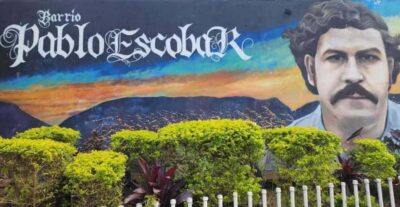
The final stop is Barrio Pablo Escobar, a neighborhood he donated before attempting to enter Congress. The visit lasts about 20 minutes, making it the shortest stop on the route.
Here, the conversation centers on young people who grew up with few opportunities and saw drugs as one of the only ways to improve their lives. The neighborhood opens a difficult discussion: what does it mean when a criminal provides homes or assistance that official institutions failed to provide?
You can understand why some residents felt gratitude. You can also understand why the same man’s actions caused suffering elsewhere. The tour does not need to choose one version and discard the other. It can show how poverty, weak institutions, ambition, and violence fed into one another.
The guide also connects the neighborhood to education and social change. That gives the stop a more forward-looking purpose. You are not left with the idea that Medellín’s story ended with Escobar’s death. Instead, you see how the city still works through the effects of those decades.
Twenty minutes is brief, so do not expect a full neighborhood walking tour or a long community visit. The location serves mainly as a final case study. It ties together the themes raised at the other stops: power, poverty, generosity, manipulation, and the cost of violence.
This is also a place where respectful conduct matters. You are entering a living neighborhood, not a movie set. Follow your guide’s instructions and avoid treating residents as part of the attraction.
Private transport makes a serious tour easier
The tour uses a private vehicle with air conditioning, and that is a meaningful benefit in Medellín. The four stops are spread across the city, so moving by car saves time and reduces the amount of walking between locations.
Hotel pickup and drop-off from designated meeting points remove another common travel headache. You do not need to find an unfamiliar starting point or arrange separate transport back to your hotel. The tour begins at 9:00 a.m., with morning or afternoon start options noted as available, although the listed meeting information specifies 9:00 a.m.
The private format means only your group participates. That changes the rhythm of the day. You can ask questions without holding up a busload of people, and the guide can spend more time on subjects that matter to you.
Air conditioning is welcome, but this is not a no-walking experience. You will still move around at each stop. Wear comfortable clothes, bring a good attitude, and use the supplied bottled water. Food, lunch, and other drinks are not included, so plan around the half-day timing.
Most people can participate, and service animals are allowed. If you have specific mobility concerns, ask the provider before booking, since the available information does not describe every surface or access detail at each stop.
Is $121.22 per person fair value?
At $121.22 per person, this tour is priced as a private guided experience rather than a basic group excursion. You are paying for the guide’s time, the vehicle, hotel transfers, water, and the ability to shape the conversation around your group’s questions.
The value is strongest for two or more people who want a focused history lesson without arranging taxis between sites. The private vehicle would cost more than a shared bus, but you gain comfort, privacy, and a more flexible exchange with the guide.
The price is harder to justify if you only want to see the famous locations quickly. The total duration is about three to five hours, and admission to the listed stops is free. In that case, much of the cost is for transport and interpretation, not entrance tickets.
That is not a criticism. With this subject, interpretation is the main product. A poor guide could reduce the tour to a string of familiar stories. A strong guide can help you understand how Escobar’s power affected politics, poor communities, victims, and Medellín’s efforts to change its public memory.
The 100 percent recommendation rate and five-star score from 56 ratings suggest a strong record, but I would still book for the content, not for the score alone. The experience has value when you want balanced explanation and a private setting.
The guides set the tone
The most praised part of this experience is the guiding. Cesar is praised for being engaging, kind, and clear while explaining the subject in detail. Mateo is praised for an objective presentation, safe driving, and helpful suggestions for other things to do in Medellín.
Juan receives particular praise for making the experience useful during the first hours in the city. He explained the era, pointed out local sights beyond the main stops, and offered continued help with questions after the tour.
These details suggest a service built around conversation rather than a fixed speech. That matters because Escobar’s story attracts strong opinions. A guide who can explain the full picture without praising the criminal or flattening the social context will give you a much better experience.
You should feel free to ask about the political setting, Medellín’s victims, the role of poverty, or the meaning of the memorial. The private format gives you the chance to guide some of the discussion.
Who should book this Medellín tour?
I would recommend it to you if you want to understand Medellín’s recent past through specific places. It suits people interested in Colombian politics, organized crime, social change, and the way cities remember violence.
It also works well for a first morning in Medellín. Pickup, air-conditioned transport, and a guide who can suggest other activities make it a useful orientation to a complicated city.
You may want to skip it if you dislike tours focused on criminals, graves, and violent history. It is also not ideal if you want a relaxed food, art, or architecture outing. The mood is serious, and some stories may be upsetting.
Free cancellation is available if you cancel at least 24 hours before the local start time. Changes or cancellations inside that window are not refunded, and the activity may be rescheduled or fully refunded if its minimum number is not reached.
FAQ
How long does the Pablo Escobar tour last?
The tour lasts approximately three to five hours.
How much does the tour cost?
The price is $121.22 per person.
Is the tour private?
Yes. Only your group participates in the activity.
What time does the tour start?
The listed start time is 9:00 a.m. Morning or afternoon start options are also noted as available.
Does the tour include hotel pickup and drop-off?
Yes. Pickup and drop-off from designated meeting points are included.
Are meals included?
No. Food, lunch, drinks, and other food and drinks unless specified are not included. Bottled water is included.
Can I cancel for a full refund?
Yes, if you cancel at least 24 hours before the experience’s start time. Cancellations made less than 24 hours beforehand are not refunded.
Should you book the Pablo Escobar tour?
Book it if you want a serious, place-based explanation of Medellín’s past, not a glamorous crime story. The rooftop, cemetery, memorial park, and neighborhood each show a different part of Escobar’s influence, while the private vehicle and hotel transfers keep the half-day practical.
The strongest reason to go is the guide. Cesar, Mateo, and Juan are praised for clarity, care, objectivity, and useful local advice. At $121.22, the tour is not cheap, but it offers better value when you want private transport and a thoughtful conversation rather than a quick photo stop.
I would choose this experience for context, respectful storytelling, and a clearer understanding of how Medellín moved beyond a violent era. I would pass if you want a cheerful sightseeing day. This tour asks you to pay attention, and that is exactly why it can be worthwhile.
Just added around Medellin
- Medellin: 4-Hour Zip-Line Adventure★ 5.0 · 3 reviews
- Medellin: Tour to The Cathedral – History of Pablo Escobar and his Impact★ 5.0 · 3 reviews
- Medellin: waterfalls and naturals poolls tour★ 3.7 · 3 reviews
- Guatapé & Coffee Farm, all in one day★ 5.0 · 3 reviews
- Comuna 13: Recorrido de Arte Urbano, Cultura y Resiliencia★ 5.0 · 3 reviews
- Shared Tour Medellin’s Violence & Post-conflict after Pablo★ 4.1 · 3 reviews
- Medellin: Coffee Farm Tour & Spa with Overnight Glamping★ 4.5 · 3 reviews
- Colombia: Official Pablo Escobar Meet the Family Museum Tour★ 5.0 · 3 reviews
Pablo Escobar Tours, compared.

Guatapé Day Trip & Boat to Pablo Escobar’s Estate
Read our review →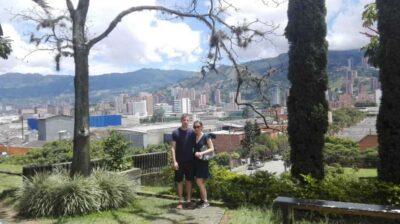

(Private Guatapé) Mansion Pablo Escobar+Paintball+Cuatrimoto+Boat
Read our review →Browse the lists this tour appears in