
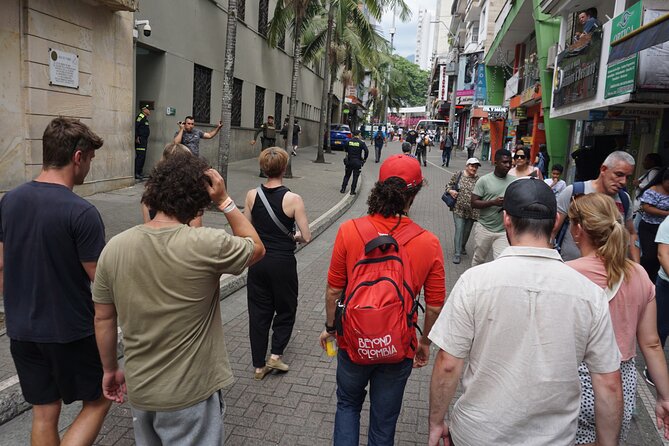
Reviewed · MEDELLíN TOURS
Post-conflict Shared Tour (Paul) and Violence Medellin
Medellín’s past is written in its plazas. This three-hour walking tour connects public spaces, education, art, architecture, and human rights to explain how the city has faced violence and worked toward peace. I like the small group of up to 10 people, and I like the focus on places you could easily pass without understanding. The main drawback is that the stops are mostly open public spaces, so the tour depends heavily on the guide’s storytelling.
At $14, this is an unusually good-value introduction to Medellín’s recent past. Paul, Miguel, Daniel, Alejandro, Sebastian, and Manuel are among the guides praised for clear and passionate explanations, but the experience has one serious concern: two accounts describe a guide failing to appear without communication. Confirm your meeting details and keep the cancellation deadline in mind.
In This Review
- Key points to know before you book
- Why this Medellín tour is worth your afternoon
- Starting at Parque San Antonio
- Education and public life at San Ignacio
- Comfama San Ignacio and the social fabric
- Torres de Bomboná and the meaning of architecture
- Murals and public memory at Pasaje Cervantes
- A pause for reflection at Boston Park
- Simona Duque Park and the human rights story
- Ending at Bicentenario Park and the Memory House Museum
- What the guide quality means for your experience
- Walking demands, timing, and what to bring
- Is $14 a fair price?
- Who should book this walking tour?
- Cancellation and booking details worth noting
- Should you book it?
- FAQ
- How much does the Post-conflict Shared Tour cost?
- How long does the tour last?
- What time does the tour begin?
- Where does the tour begin?
- Where does the tour end?
- How many people can join the tour?
- Is food included?
- Can I cancel for a full refund?
Key points to know before you book
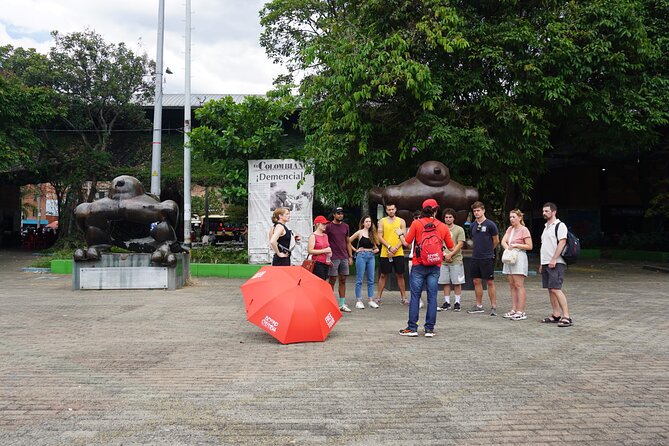
- Eight central Medellín stops connect parks, plazas, murals, architecture, and the Memory House Museum.
- The guide makes the difference, with Paul, Miguel, Daniel, Alejandro, Sebastian, and Manuel praised for clear explanations and strong English.
- The tour treats violence through social change, education, urban design, human rights, and the continuing path toward peace.
- The $14 price functions as a suggested guide tip, paid in advance through Viator, with part retained as commission.
- The route lasts about three hours, begins at 2:00 pm in Parque San Antonio, and ends at the Memory House Museum.
- Come ready to walk and listen, since the itinerary gives each stop about 22 minutes and includes no food or refreshments.
Why this Medellín tour is worth your afternoon
Medellín is easy to admire from a cable car or a rooftop. It is harder, and more useful, to understand how ordinary public places reflect the city’s violent past and its efforts to change.
That is the purpose of this walking tour. It does not rely on a single museum visit or a long lecture in one room. Instead, it moves through central Medellín, using parks, a school-related square, a cultural center, apartment towers, murals, and memorial spaces as talking points.
I like that approach because it connects big subjects to visible places. You are not only hearing about conflict, politics, and peacebuilding in the abstract. You are being asked to look at the city itself and consider how public space can carry memory, create opportunity, or signal change.
The experience is also modestly priced. The $14 payment is described as the suggested tip for the guide’s work, rather than a conventional admission fee. Since the guide receives the amount after Viator’s commission, the value depends on the quality of the person leading your group. Based on the strongest feedback, a good guide can make this one of the most useful walking tours in Medellín.
Still, I would set realistic expectations. The buildings and parks may not impress you on their own. One especially useful assessment is that the places can seem ordinary, but the stories make them worthwhile. If you want grand monuments and photo stops every few minutes, this may feel slow. If you want context, it is a strong choice.
A few more trips worth weighing up before you book
- Medellin: Comuna 13 Graffiti Tour, Cable Car & Street Food
★ 4.8 · 9,046 reviews - Medellín: The Real Pablo Escobar Tour
★ 4.8 · 3,205 reviews - Medellín: Comuna 13 True Story and Street Food Tour
★ 4.9 · 1,779 reviews
Starting at Parque San Antonio
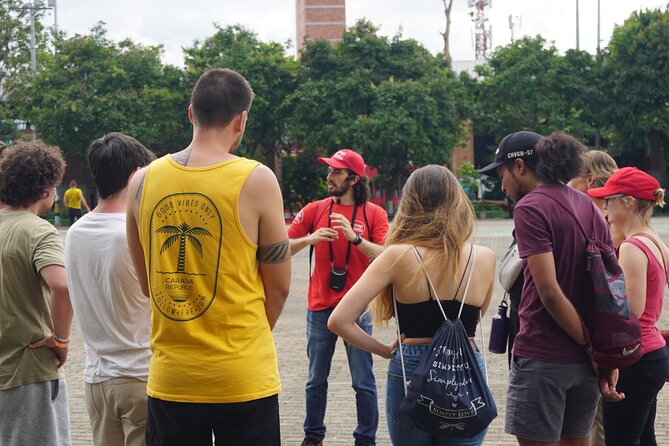
The tour begins at Parque San Antonio, at Cl 44 #50 in La Candelaria, at 2:00 pm. This is a fitting starting point because the park is presented as an emblematic part of Medellín, with a history tied to the city’s changing identity.
You will spend about 22 minutes here. The guide explains the park’s importance to local people and points out how it has changed over time. That gives you the first central idea of the tour: Medellín is not a fixed story. Its public places have been altered by conflict, redevelopment, memory, and new hopes for city life.
There is no admission charge at this stop. You should treat the opening talk as an orientation to the rest of the route, not as a quick photo opportunity. Listen for the way the guide frames transformation, because the same theme returns in the later discussions of education, art, architecture, and peace.
Education and public life at San Ignacio
The second stop, Plazuela San Ignacio, shifts the focus from physical change to education. The guide discusses the development of education in Medellín and its role in peacebuilding.
This is one of the tour’s more important ideas. A walking tour about violence can become a grim list of dates and armed groups. Here, the story also asks how a city can create better options for its people. Education is treated as part of that process, giving the discussion a practical and forward-looking direction.
Again, the planned visit lasts about 22 minutes and admission is free. The square itself may not provide a dramatic visual payoff, so you will get the most from this stop by paying attention to the explanation rather than expecting a formal exhibit.
Comfama San Ignacio and the social fabric
At Comfama San Ignacio, you visit a cultural center focused on art, culture, and education. The discussion turns to programs designed to strengthen social ties and encourage peaceful coexistence.
This stop helps explain how peacebuilding can operate in daily life. It is not only about government policy or formal agreements. Cultural programs, learning opportunities, and shared public activities can also help people build trust and occupy city spaces in constructive ways.
I find this a useful part of the route because it brings the subject closer to ordinary routines. You may not remember every program name, but you should come away with a clearer sense of why cultural institutions matter in a city recovering from violence.
The visit is listed as free and lasts around 22 minutes. Since the tour includes several stops with similar timing, the guide needs to keep the group moving. If you want long visits inside each place, ask about the format before booking.
A completely different kind of day out around Medellin:
- Medellín: Comuna 13 District Tour with Cable Car Ride
★ 4.8 · 1,467 reviews - Medellin: Coffee Tour with Transport, Snacks and Tastings
★ 4.7 · 1,357 reviews - From Medellín: Paragliding Tour with GoPro Photos & Videos
★ 4.9 · 1,210 reviews - Tour Guatapé
★ 5.0 · 865 reviews
Torres de Bomboná and the meaning of architecture
The Torres de Bomboná provide a change of subject and scenery. These towers are discussed as examples of modern architecture and as references within Medellín.
The guide also asks you to think about architecture’s role in urban transformation. That is a worthwhile angle. Buildings are not neutral backdrops. Their design, location, and relationship to public space can influence how a city is used and how it presents itself.
This stop lasts about 22 minutes and has no admission charge. Do not expect a conventional architectural tour with technical detail about every material or designer. The emphasis is broader, linking the towers to the changing city and to ideas about modernization.
For me, the appeal is the connection between structure and society. You are encouraged to look beyond the surface of the towers and consider what urban development means after a period of violence.
Murals and public memory at Pasaje Cervantes
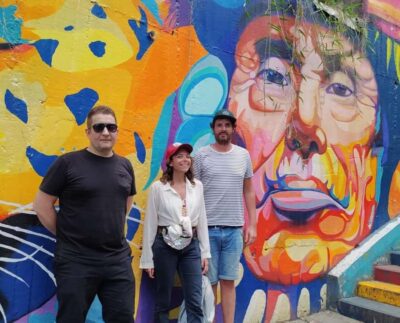
Pasaje Cervantes offers the tour’s clearest art-focused stop. The passage contains colorful murals, and the guide explains the artists and the messages behind the work.
Public art can change how people see a space. A passage that might otherwise be treated as a simple route becomes a place for expression, memory, and conversation. That makes the stop useful in a tour about post-conflict Medellín, since murals can communicate ideas in a direct way without requiring a museum ticket or a formal ceremony.
You will have roughly 22 minutes here. The murals may be the most immediately engaging visuals on the route, especially after the more discussion-based stops. Bring your camera if you like taking pictures, but give the guide time to explain the images. The point is not only their color. It is also the message and the role of the artists.
A pause for reflection at Boston Park
Boston Park is described as a place to rest and reflect. The guide invites the group to share thoughts about what it has seen and learned.
That pause is important. The subject matter can be heavy, and a short conversation gives you room to organize the information. You may find that questions arise only after the first several stops, once the links between education, public space, violence, and urban change become clearer.
This is another free stop, planned for about 22 minutes. It is also a reminder that this is a shared walking experience, not a private lecture. If you prefer to listen quietly, you can do so. If you have questions, this is a natural time to raise them.
The group size is capped at 10, which should make discussion more manageable than on a large city tour. A small group also matters here because the topic benefits from a calm setting where the guide can respond to individual questions.
Simona Duque Park and the human rights story
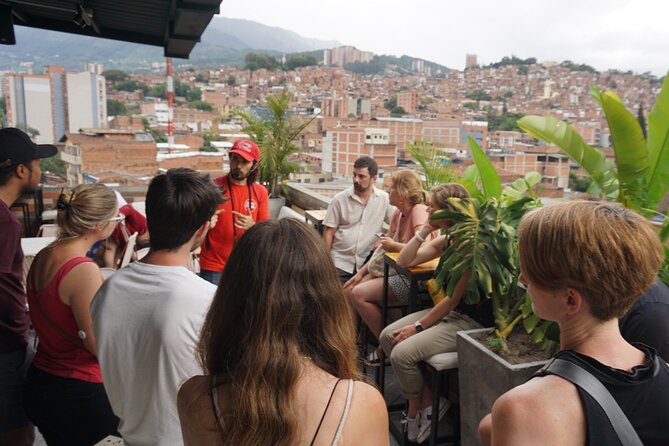
The route continues to Simona Duque Park, a tribute to a woman associated with the fight for human rights. The guide tells her story and discusses her legacy.
This stop broadens the tour beyond the city’s physical development. Medellín’s past is not presented only through buildings, parks, and political events. Individual lives and acts of courage are part of the account too.
The stop is listed as about 22 minutes. An admission ticket is not included, so you should allow for that possibility when planning your budget. The supplied information does not state the ticket price, so I would not assume that the $14 covers every cost connected with the route.
The park’s role is also symbolic. By including a named person and a human rights focus, the tour gives a human face to a subject that can otherwise feel distant or overly political.
Ending at Bicentenario Park and the Memory House Museum
The final stop is Bicentenario Park, a modern and sustainable public space near the Memory House Museum at Parque Bicentenario, Cl. 51 #36-66. The tour ends here after about 22 minutes at the park.
The guide uses the closing section to discuss Medellín’s future, including the challenges and opportunities involved in continuing toward peace. This creates a clear arc: the tour begins with a city shaped by change and ends by asking what change still needs to happen.
The Memory House Museum is given as the endpoint, but the supplied details do not say that museum admission or a full museum visit is included. You should not assume that you will receive an indoor museum tour. Think of the ending as a chance to continue exploring on your own if the subject has caught your interest.
The location is practical for extending your afternoon in central Medellín. It also gives the tour a thoughtful finish rather than ending at a random street corner.
What the guide quality means for your experience
The strongest part of this experience is the guide. Alejandro is praised for answering questions about the conflict. Sebastian is described as bringing a warm tone to the stories. Miguel receives repeated praise for clear explanations, strong English, and a firm grasp of both local and national struggles.
Daniel is singled out for being honest, authentic, and insightful. Manuel is praised for making politics, history, and the continuing path toward peace interesting and approachable. Paul is described as especially strong on the complex history of Medellín and Colombia, with the added ability to point out places that a visitor might otherwise miss.
These comments point to an important booking reality: the route is set, but the tone and depth can vary with the guide. You should expect a certified guide, but not a scripted performance. The best version of this tour will leave room for questions and connect the stops to one another.
There is also a serious service warning. Two separate accounts describe a guide who did not show up and did not make contact. That is not a minor inconvenience, especially for a 2:00 pm appointment. I would save the confirmation, check your messages before leaving, and arrive at Parque San Antonio early enough to identify the meeting point.
Walking demands, timing, and what to bring
The tour lasts approximately three hours and includes eight stops. Each stop is allocated about 22 minutes, which accounts for nearly the full duration once walking time is considered.
The provider says you should have a strong level of physical fitness. No detailed distance or elevation figure is provided, so you should prepare for a sustained city walk rather than a gentle park stroll. Wear comfortable shoes, carry water, and bring protection from the sun or rain as needed.
There is no lunch, snack, or tip included. The prepaid $14 is described as the suggested tip, but food and drinks are your responsibility. Since the tour begins at 2:00 pm, eat beforehand or plan something afterward.
The route is near public transportation, and service animals are allowed. The maximum group size is 10, a useful limit for a discussion-heavy experience.
Is $14 a fair price?
Yes, if you value explanation more than admission attractions. You are paying for a certified guide and a three-hour route through central Medellín, with no entrance fees at most listed stops.
The price is also transparent in an unusual way. It is the same suggested tip per person for the guide’s work, paid ahead through Viator, with Viator taking a commission. You should think of it as a low-cost guided conversation rather than a ticket to a collection of attractions.
That distinction matters. If you judge tours by the number of paid sights or spectacular views, the value may seem modest. If you want a local framework for understanding Medellín’s conflict, politics, urban change, and peace efforts, $14 is a sensible outlay.
Who should book this walking tour?
I would recommend it to you if you are interested in modern Colombian history, social change, public art, human rights, or the connection between city planning and peacebuilding.
It also suits people who have already taken a general downtown tour and want more context. One guide’s strong explanation of the national and local struggles is exactly the sort of added background that can make the rest of your time in Medellín more meaningful.
You may want to skip it if you dislike serious discussion, cannot manage three hours of walking, or mainly want beautiful viewpoints and famous buildings. The route’s visual appeal is uneven. Its value comes from the story attached to each place.
The tour is also a good fit for independent visitors who want an introduction before visiting the Memory House Museum. It can help you approach that subject with better questions, though you should not assume the museum entry is included.
Cancellation and booking details worth noting
You can cancel for a full refund up to 24 hours before the local start time. Changes or cancellations made less than 24 hours in advance are not accepted for a refund.
The experience requires a minimum number of participants. If that minimum is not reached and the tour is canceled, you will be offered another date or experience, or a full refund.
Because of the reports of a missed meeting, I would not book this with an extremely tight schedule. Give yourself time to confirm the start point at Parque San Antonio and keep the provider’s contact information handy.
Should you book it?
Book this tour if you want Medellín explained, not merely photographed. The route uses ordinary public spaces to tell a difficult story about violence, education, art, human rights, and the city’s ongoing effort to build peace.
The guide is the deciding factor, and the best accounts describe Paul, Miguel, Daniel, Alejandro, Sebastian, and Manuel as clear, thoughtful, and engaging. The no-show reports are a real blemish, so take sensible precautions before setting out.
For $14, a small group, and three hours in central Medellín, I think the potential value is high. Just arrive prepared for a serious walking conversation, not a parade of grand sights.
FAQ
How much does the Post-conflict Shared Tour cost?
The listed price is $14 per person. This amount is described as the suggested tip for the guide’s work and is paid in advance through Viator, minus the Viator commission.
How long does the tour last?
The experience lasts approximately three hours.
What time does the tour begin?
The tour starts at 2:00 pm local time.
Where does the tour begin?
The meeting point is Parque San Antonio, Cl 44 #50, La Candelaria, Medellín.
Where does the tour end?
The route ends at the Memory House Museum near Parque Bicentenario, Cl. 51 #36-66, La Candelaria, Medellín.
How many people can join the tour?
The maximum group size is 10 participants.
Is food included?
No. Snacks, lunch, and tips are not included. The prepaid amount is described as the suggested guide tip.
Can I cancel for a full refund?
Yes. You must cancel at least 24 hours before the experience’s start time for a full refund. Changes or cancellations made less than 24 hours before the start are not accepted.
Just added around Medellin
- Medellin: 4-Hour Zip-Line Adventure★ 5.0 · 3 reviews
- Medellin: waterfalls and naturals poolls tour★ 3.7 · 3 reviews
- Medellin: Tour to The Cathedral – History of Pablo Escobar and his Impact★ 5.0 · 3 reviews
- Guatapé & Coffee Farm, all in one day★ 5.0 · 3 reviews
- Comuna 13: Recorrido de Arte Urbano, Cultura y Resiliencia★ 5.0 · 3 reviews
- Shared Tour Medellin’s Violence & Post-conflict after Pablo★ 4.1 · 3 reviews
- Medellin: Coffee Farm Tour & Spa with Overnight Glamping★ 4.5 · 3 reviews
- Colombia: Official Pablo Escobar Meet the Family Museum Tour★ 5.0 · 3 reviews
Medellín Tours, compared.
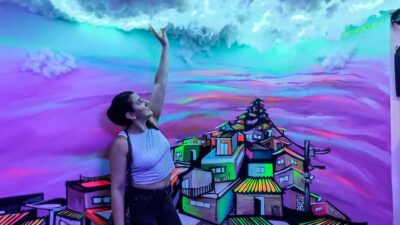
Comuna 13 Graffiti Tour, Cable Car & Street Food
Read our review →
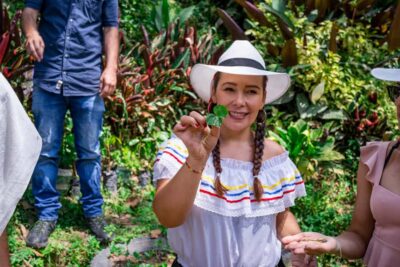
Coffee Tour with Transport, Snacks and Tastings
Read our review →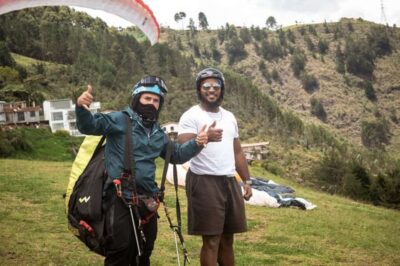
Browse the lists this tour appears in