
Reviewed · MEDELLíN TOURS
Shared Medellín Downtown Tour with Wireless Audio
Medellín’s center tells a complicated story. I like the way this three-hour walking tour connects Botero’s art, Paisa culture, railroads, and the city’s troubled 1980s and 1990s instead of reducing Medellín to a drug-trafficking tale. I also like the wireless audio system, which lets you hear your guide while taking photos or moving through noisy streets. The main drawback is the length: you may walk about 8 kilometers, and the crowded downtown streets can feel tiring or uncomfortable.
The tour is led by local guides such as Miguel, Santiago, Carolina, Deisy, Daniel, and Sebastian, who are repeatedly praised for clear explanations, warm personalities, and strong knowledge of local affairs. You should also expect an honest look at present-day Medellín, including poverty, pushy street solicitation, and the city’s unfinished work. At $13 per person, this is an excellent-value introduction, especially if you take it near the start of your stay.
In This Review
- Key points to know before you go
- Starting with Botero’s larger-than-life art in Plaza Botero
- Reading Medellín through Paisa culture and industry
- Crossing Junín Street and the downtown passages
- Understanding the 1980s and 1990s without a narcos-only script
- La Alpujarra and the railroad story
- How the wireless audio system changes the walk
- What the guides add to the experience
- What you get for $13
- Who should book this Medellín city walk
- Should you book the Beyond Colombia downtown tour?
- FAQ
- Where does the Medellín downtown tour meet?
- How long does the tour last?
- How far will I walk?
- Is transportation included?
- What languages are available?
- Is the wireless audio system suitable for children?
- What happens if it rains?
- Can I cancel for a full refund?
Key points to know before you go
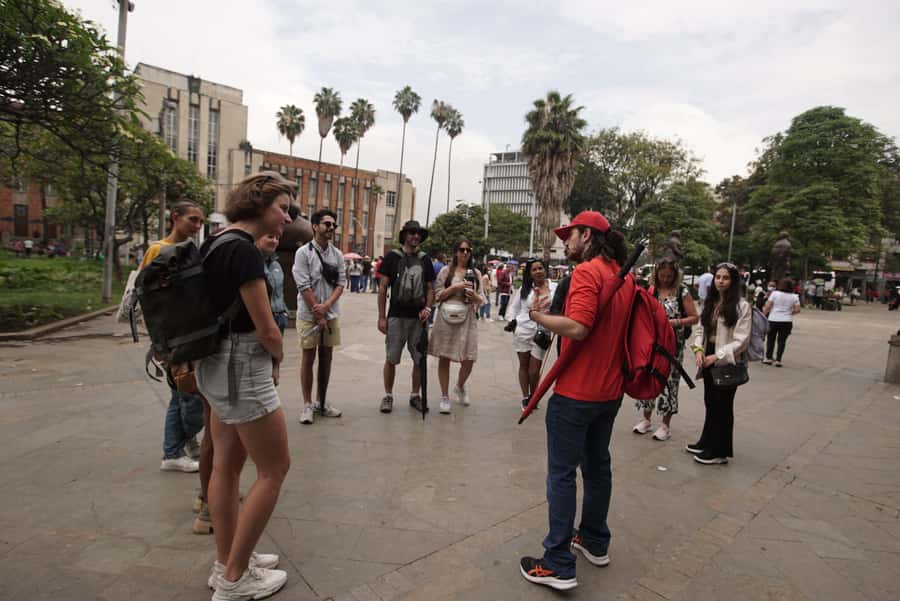
- About 8 kilometers on foot: This is an active city walk with listening stops, not a short plaza stroll.
- Botero Plaza is the starting point: Meet by Museo de Antioquia under Beyond Colombia’s red umbrellas.
- History without the usual shortcuts: The route covers industry, railways, conflict, public investment, art, and social change.
- Wireless receivers improve the experience: You can hear the guide clearly on noisy streets, but the equipment is not for children under 15 or safe in rain.
- A strong first-day orientation: Guides offer practical suggestions for coffee, lunch, souvenirs, and other places to visit.
- Downtown requires awareness: Keep your belongings close in crowded areas and bring water, comfortable shoes, and rain protection.
Starting with Botero’s larger-than-life art in Plaza Botero
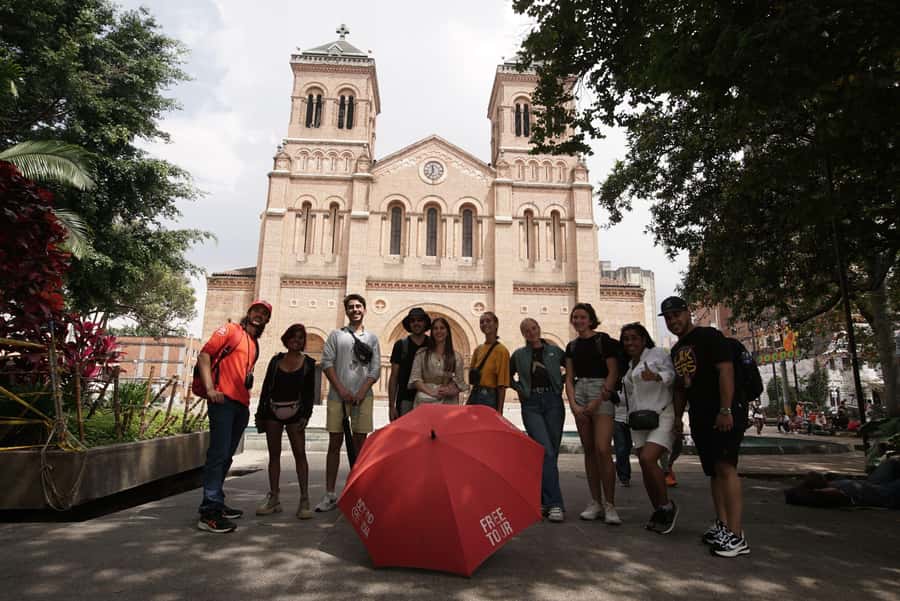
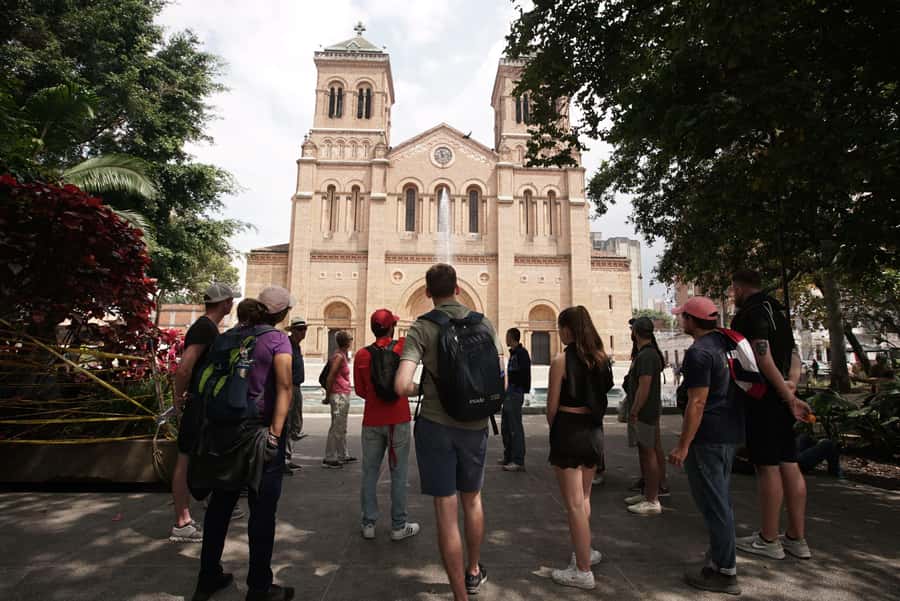
The meeting point is easy to find: go to Botero Plaza, directly in front of Museo de Antioquia, and look for the red umbrellas marked Beyond Colombia. This is a useful beginning because the square puts art, public space, and Medellín’s urban identity in the same frame.
The plaza is filled with the rounded bronze figures of Fernando Botero, one of Colombia’s best-known artists. Your guide explains more than the basic facts about Botero’s style. You get context about his connection to Medellín, his artistic contribution, and why these works matter so much in the city center.
I like this opening because it gives you something visual to focus on before the tour turns toward harder subjects. The statues are playful and easy to photograph, but the conversation can also lead to questions about public art, access to culture, and the way Medellín has used central spaces to shape its public image.
Do not expect a museum visit built around long indoor stops. The tour is primarily outdoors, and the value comes from the guide’s explanations at the places you see. If you want a detailed visit inside Museo de Antioquia, plan that separately.
A few more trips worth weighing up before you book
- Chiva Private Cultural Tour with Audio Guide in Buga
★ 5.0 · 49 reviews - Shared Cartagena Old City Tour with Wireless Audio System
★ 4.4 · 28 reviews
Reading Medellín through Paisa culture and industry
A central purpose of the walk is to explain the Paisa identity. Paisas are associated with Antioquia and the surrounding region, and the tour uses local culture and business history to show why Medellín became so important in Colombia.
You will hear about the work ethic, commercial drive, and regional pride that shaped the city. The guide also places Medellín within the wider country, explaining how its industry helped make it a major economic center.
This section matters because it keeps the tour from becoming a simple before-and-after story. Medellín was not defined only by violence in the late twentieth century, and it did not suddenly become successful after the worst years passed. Its commercial culture, transport links, public projects, and local networks all form part of the longer story.
The best guides adjust the amount of detail to the group. Santiago is often praised for making substantial information entertaining and easygoing. Alex is noted for answering political and social questions in a way that felt natural rather than scripted. That flexibility is valuable because you can ask about the subjects that interest you most.
If your knowledge of Colombian geography or politics is limited, an open mind helps. The guide aims to give an objective account and avoid taking sides, but no account of Medellín’s past can be completely free of interpretation. One useful approach is to listen carefully, ask direct questions, and remember that a city’s transformation rarely has one simple cause.
Crossing Junín Street and the downtown passages
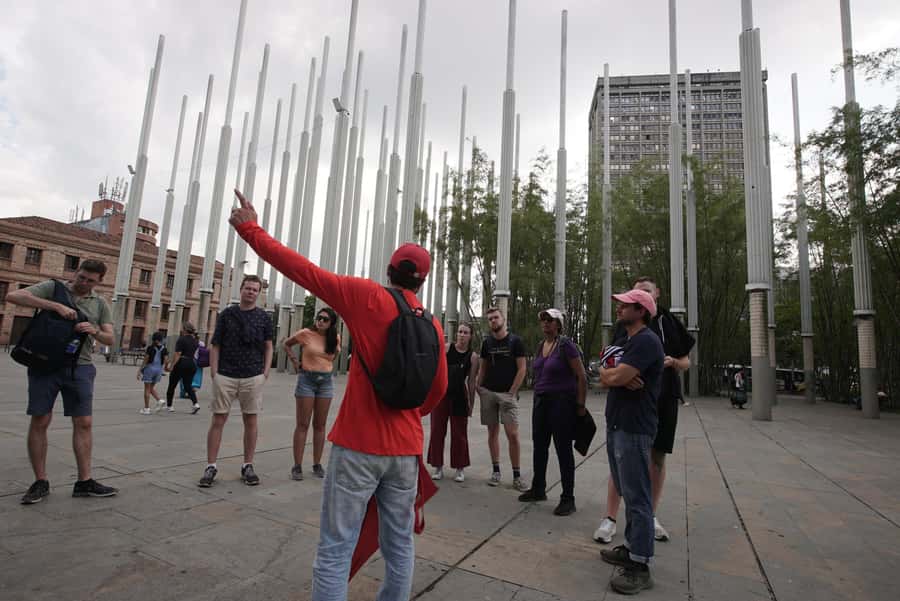
The route moves through passages, central streets, and the famous Junín street. This is where the tour feels most like an introduction to everyday downtown rather than a parade of formal monuments.
You will be walking through active commercial areas, so stay close enough to hear the guide and keep your bag secure. The wireless receivers help a great deal here. Instead of waiting for everyone to gather around one person, you can hear the explanation while looking at a building, taking a picture, or walking a short distance behind the group.
That convenience also changes the pace. You are not tied to a single fixed position, but you still need to pay attention when the group stops or crosses a street. The system is designed for people aged 15 and older, so families with younger children should know that the audio equipment is not suitable for them.
The streets can be crowded and the social reality is visible. One participant found repeated requests for money and drug use in parts of the center unpleasant. That is not a feature of the tour, but it is part of the setting you may encounter. I would not choose this walk expecting a polished tourist zone. The point is to see central Medellín as it is, with its art, commerce, public spaces, and serious social problems all close together.
Understanding the 1980s and 1990s without a narcos-only script
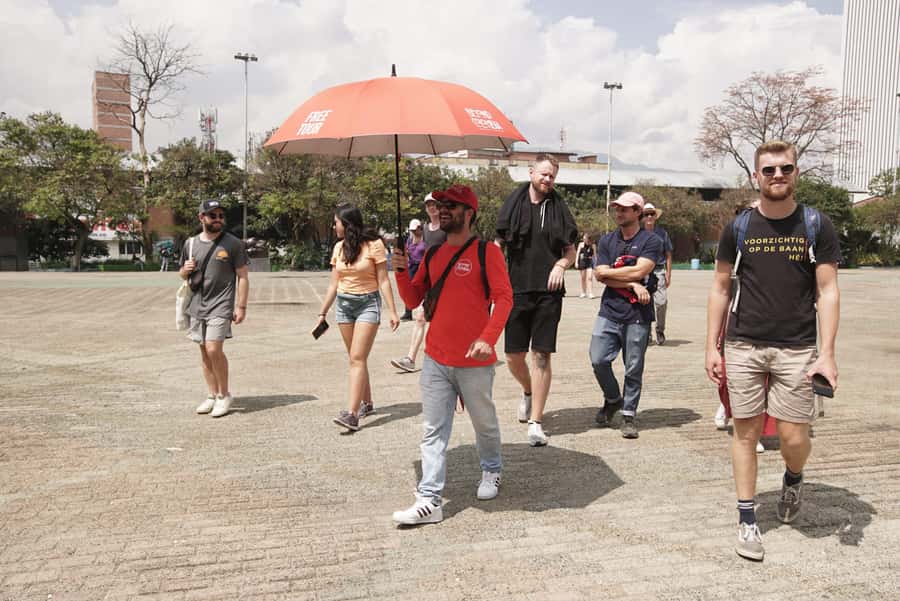
The section on Medellín in the 1980s and 1990s is one of the tour’s strongest reasons to book. The guide addresses the violence connected to drug trafficking without turning the city’s suffering into entertainment.
That distinction matters. Many visitors arrive with images shaped by television and popular culture. A useful city tour should replace sensational stories with a clearer account of how violence affected residents, institutions, public life, and the city’s reputation.
The guides also connect the difficult years with the changes that followed. You learn how collective effort and social investment helped Medellín move toward a safer and more inclusive future. The story is not presented as finished. Current challenges remain, and the best interpretation holds both ideas at once: Medellín has changed greatly, and it still has work to do.
Sebastian has been praised for explaining the city’s past without making drug trafficking the entire focus. Daniel is especially appreciated for being positive about the changes underway while remaining open about ongoing problems. That balance is important. A tour that offers only a cheerful success story is too shallow, while one that focuses only on violence gives you a distorted picture.
I would book this walk if you want context before visiting places such as Comuna 13 or riding the city’s metro system. The route itself does not promise those attractions, but it gives you a useful base for understanding Medellín’s public investment and social programs.
A completely different kind of day out around Medellin:
- Medellin: Comuna 13 Graffiti Tour, Cable Car & Street Food
★ 4.8 · 9,046 reviews - Medellín: The Real Pablo Escobar Tour
★ 4.8 · 3,205 reviews - Medellín: Comuna 13 True Story and Street Food Tour
★ 4.9 · 1,779 reviews - Medellín: Comuna 13 District Tour with Cable Car Ride
★ 4.8 · 1,467 reviews
La Alpujarra and the railroad story
La Alpujarra and the railroad are presented as symbols of Medellín’s development. This part of the walk shifts attention from conflict to infrastructure, trade, movement, and the practical systems that helped the city grow.
Railroads may sound less exciting than plazas or sculptures, but they explain a great deal. Transport links influence where businesses develop, how people move, and how a regional center connects with the rest of a country. Your guide uses this history to show why Medellín became such an important place in Antioquia and Colombia.
The tour also includes a visit to the Park of Lights, described as a tribute to the father of Medellín’s railroads. The space offers a different kind of public monument, linking the city’s industrial story with its modern effort to make central areas more usable and visible.
Expect several stops rather than one continuous lecture. You will walk, pause, listen, and then continue. That rhythm keeps the tour moving, but the total distance can still be demanding. Wear proper walking shoes and bring water. The stated duration ranges from 150 minutes to three hours, depending on the route, group pace, and time spent answering questions.
How the wireless audio system changes the walk
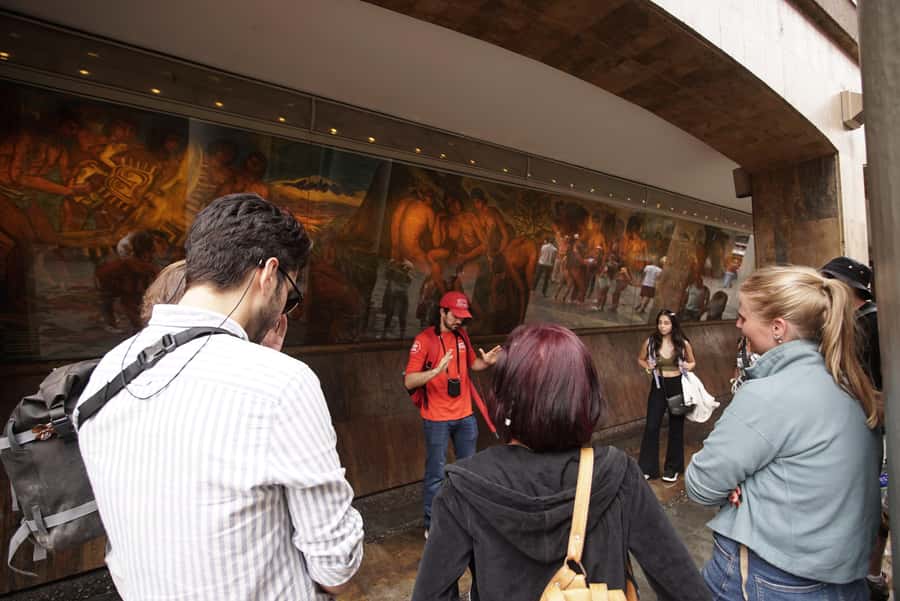
The audio equipment is more than a small extra. Downtown streets can be loud, and a guide speaking to a group without amplification can be difficult to follow. With a receiver, you can hear the explanation clearly while standing a little apart from the guide.
I especially like this for photography. You can frame a statue, mural, or building without losing the thread of the story. It also helps when the group spreads out at a crossing or when a busy sidewalk makes it awkward for everyone to stand shoulder to shoulder.
There are practical limits. The system is not waterproof, so if rain begins, the devices must be collected and protected. Medellín’s weather can change, and the tour provider specifically advises bringing an umbrella or rain cape. A rainproof jacket is the safer choice if you want both hands free.
The equipment is not suitable for children under 15. It is also one reason this tour works best for older teenagers and adults who can manage a long walk and follow instructions in crowded streets.
What the guides add to the experience
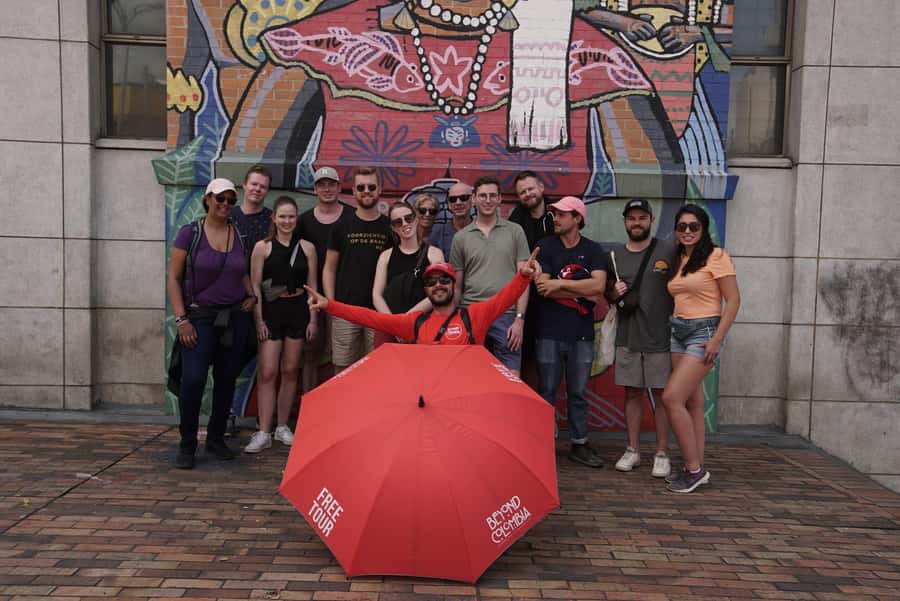
The guide is the heart of this tour. The route covers a lot, but the quality depends on how well the guide connects buildings and events to the lives of people who live in Medellín.
Several guides receive particularly strong praise. Miguel is repeatedly described as passionate about his city, good at answering questions, and helpful with suggestions for later activities. Santiago is praised for energy, humor, historical detail, and practical advice. Carolina is noted for warmth and for checking that people understood when their Spanish was limited.
Deisy is praised for patience and careful answers, while Daniel receives credit for explaining both history and present-day issues. Sebastian is often singled out for giving a clear account of Medellín beyond the familiar narcos story. You cannot choose a particular guide from the information provided, but the repeated strength across several names suggests a solid guide team.
The language options are English and Spanish. If you join an English tour, the guides are expected to explain the material in English, but accents and speed can vary. The audio system helps, and the guides have shown a willingness to answer questions and check understanding.
What you get for $13
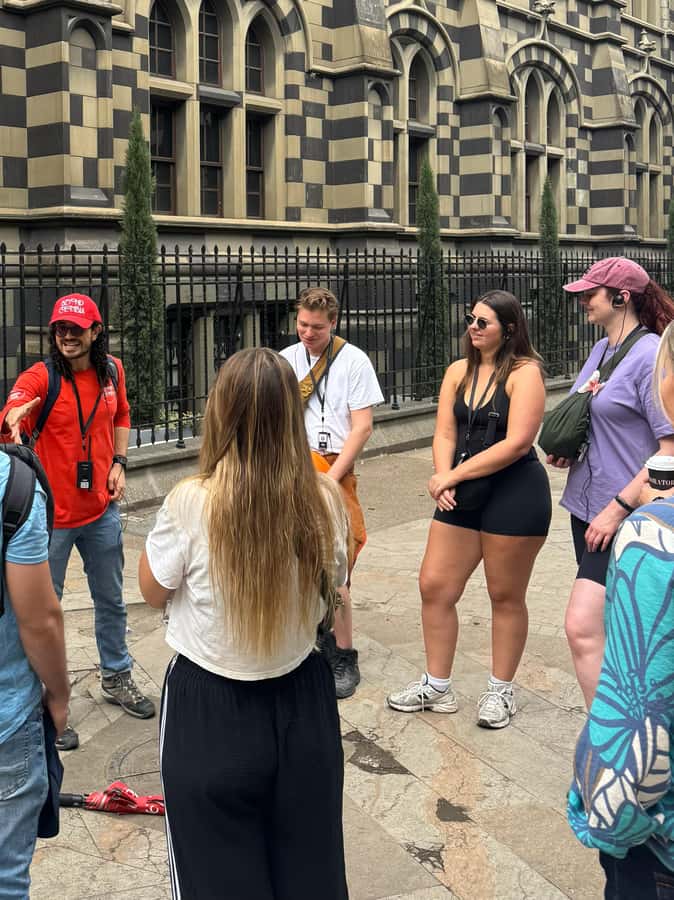
At $13, this is a strong value for a three-hour guided introduction to Medellín. You are paying for a local guide, historical interpretation, a planned route through the center, wireless audio, and practical recommendations for coffee, lunch, souvenirs, and other local stops.
There are no added entry fees during the walk, and the tour does not take you into places where sudden charges appear. Food, drinks, souvenirs, hotel transfers, and transport are not included. You walk from place to place, with resting stops along the way.
The price is especially attractive if you are new to the city. A good first tour can save you time later by showing you where the center’s main sights are and helping you understand what you are seeing. One guide also helped orient a participant toward future activities, which is exactly the sort of benefit I want from a first-day city walk.
This is not a private tour. You share the guide with other people and will not control every stop or discussion. If you want a slow photographic walk, a custom route, or uninterrupted time at each site, you should pay for a private experience instead.
Who should book this Medellín city walk
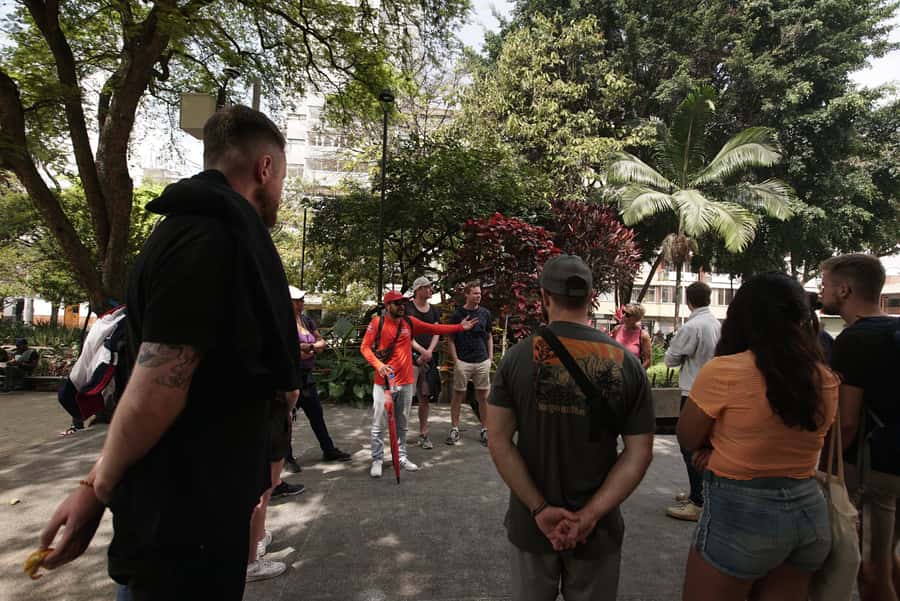
I would recommend it most strongly to first-time visitors who want a solid foundation. It suits you if you enjoy urban history, public art, social issues, and walking through real working neighborhoods rather than only visiting polished attractions.
It is also a good fit for visitors who want a fuller account of Medellín’s past. The tour does not hide the violence of the 1980s and 1990s, but it also explains industry, culture, public investment, and the people who helped shape the city’s future.
You should think twice if you have mobility limitations or dislike long walks. The route covers about 8 kilometers and includes crowded streets, crossings, and standing periods. It is not suitable for people with mobility impairments.
Bring comfortable shoes, water, weather-ready clothing, and a camera. Keep your belongings close, especially in crowded areas. The local phrase no dar papaya, roughly meaning do not make yourself an easy target, is practical advice here.
The experience is also less suitable for children under 15 because of the audio equipment. Younger children may find the history and walking pace difficult even aside from that restriction.
Should you book the Beyond Colombia downtown tour?
Yes, if you want an affordable and serious first look at Medellín. The strongest parts are the guides, the clear audio, the mix of art and infrastructure, and the honest treatment of the city’s difficult decades.
Book it early in your stay so the route can help you plan the rest of your time. Choose another activity if you need a short, relaxed outing, private attention, indoor shelter, or a route designed for limited mobility.
For most adults who can comfortably walk 8 kilometers, this $13 tour offers an unusually useful introduction to Medellín. It gives you Botero, Junín, La Alpujarra, the Park of Lights, Paisa culture, railroads, conflict, and social change in one well-priced outing. Just bring water, rain protection, patience, and a willingness to see the city honestly.
FAQ
Where does the Medellín downtown tour meet?
Meet in front of Museo de Antioquia at Botero Plaza. Look for the Beyond Colombia team with red umbrellas.
How long does the tour last?
The tour lasts about 150 minutes to three hours. The exact length can depend on the pace of the group and the time spent at stops and questions.
How far will I walk?
You should expect to walk about 8 kilometers, with resting stops where the guide explains the sights and history.
Is transportation included?
No. The tour is conducted on foot, and transportation to or from your hotel is not included.
What languages are available?
The tour is available in English and Spanish, with a live guide.
Is the wireless audio system suitable for children?
No. The wireless audio system is not suitable for children under 15 years old.
What happens if it rains?
The audio devices are not waterproof. If rain begins, the devices must be collected and kept safe, so bring an umbrella, rain cape, or rainproof coat.
Can I cancel for a full refund?
Yes. You can cancel up to 24 hours in advance for a full refund. You can also reserve now and pay later.
Just added around Medellin
- Medellin: 4-Hour Zip-Line Adventure★ 5.0 · 3 reviews
- Medellin: Tour to The Cathedral – History of Pablo Escobar and his Impact★ 5.0 · 3 reviews
- Medellin: waterfalls and naturals poolls tour★ 3.7 · 3 reviews
- Guatapé & Coffee Farm, all in one day★ 5.0 · 3 reviews
- Comuna 13: Recorrido de Arte Urbano, Cultura y Resiliencia★ 5.0 · 3 reviews
- Shared Tour Medellin’s Violence & Post-conflict after Pablo★ 4.1 · 3 reviews
- Medellin: Coffee Farm Tour & Spa with Overnight Glamping★ 4.5 · 3 reviews
- Colombia: Official Pablo Escobar Meet the Family Museum Tour★ 5.0 · 3 reviews
Medellín Tours, compared.

Comuna 13 Graffiti Tour, Cable Car & Street Food
Read our review →
Coffee Tour with Transport, Snacks and Tastings
Read our review →
Browse the lists this tour appears in