
Reviewed · CARTAGENA TOURS
Shared Old Cartagena & Getsemani Tour with Wireless System
Cartagena rewards curious walkers. This $13 shared tour links the Walled City with Getsemaní, pairing colonial plazas and pirate-era defenses with murals, music, and neighborhood life. I like the wireless audio system, which should make it easier to hear your guide in crowded streets, and I like that the route includes both famous sights and everyday corners. The main drawback is pace: covering roughly 8 kilometers in two hours requires steady walking and quick stops.
I also like the practical finish. You receive local suggestions for food, coffee, souvenirs, nightlife, and less obvious corners, plus a wristband that may bring discounts with recommended partners. Just arrive early at Santo Domingo Square, wear light comfortable clothing, and keep your belongings close in busy areas.
In This Review
- Key points to know before you book
- Starting beside Gertrudis in Santo Domingo Square
- Colonial plazas and the stories behind the stones
- Plaza de la Aduana, Plaza de los Coches, and the Clock Tower
- What you see from the city walls
- Camellón de los Mártires and Parque Centenario
- Calle de la Magdalena and the move into Getsemaní
- Calle del Guerrero, Plaza de la Trinidad, and local life
- Callejón Ancho and the street art of Getsemaní
- What the $13 price really delivers
- Pace, comfort, safety, and who should book
- Should you book this Cartagena walk?
- FAQ
- Where does the tour begin?
- Where does the tour finish?
- How long does the tour last?
- Which languages are available?
- Is transportation included?
- What should I bring?
Key points to know before you book
- Two Cartagena districts in one walk: You begin in the UNESCO-listed Walled City and finish in Getsemaní, giving you two very different views of the city.
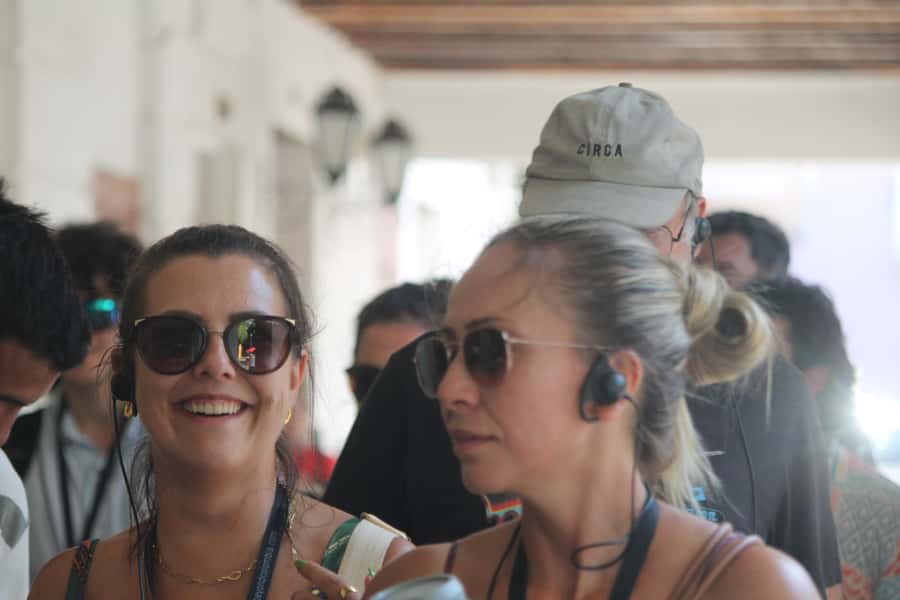
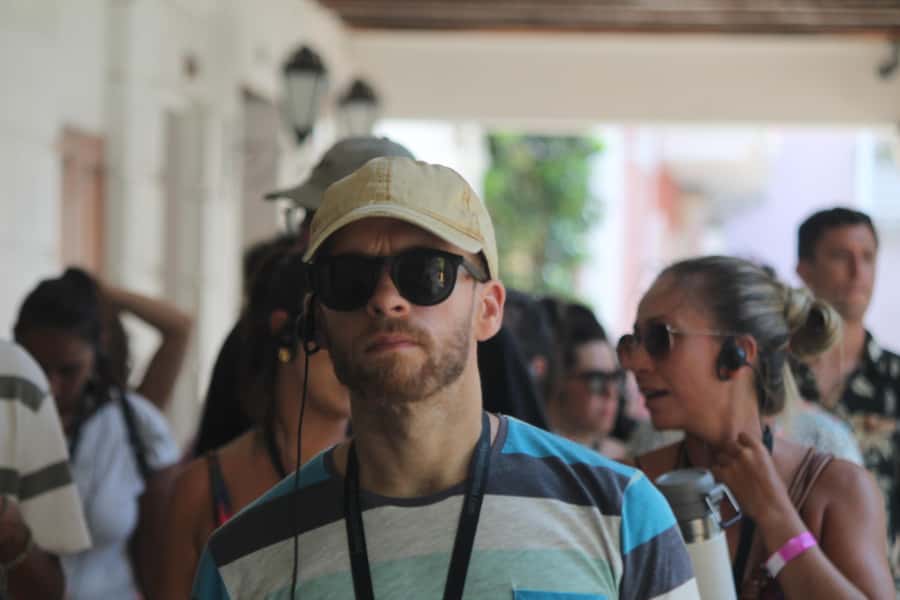
- Wireless audio receivers included: You can hear the guide while taking photographs, even along noisy streets.
- A low price with no surprise entrance fees: At $13, the tour focuses on outdoor sights and does not include paid attractions.
- The city walls provide the strongest view: The Santo Domingo bastion brings Cartagena’s defenses and sea-facing outlook into the walk.
- Getsemaní supplies the local pulse: Plaza de la Trinidad, Calle de la Sierpe, and nearby lanes show the neighborhood’s art and community identity.
- Expect a fast walking route: The tour is listed at two hours and about 8 kilometers, so it suits active walkers more than slow sightseers.
Starting beside Gertrudis in Santo Domingo Square
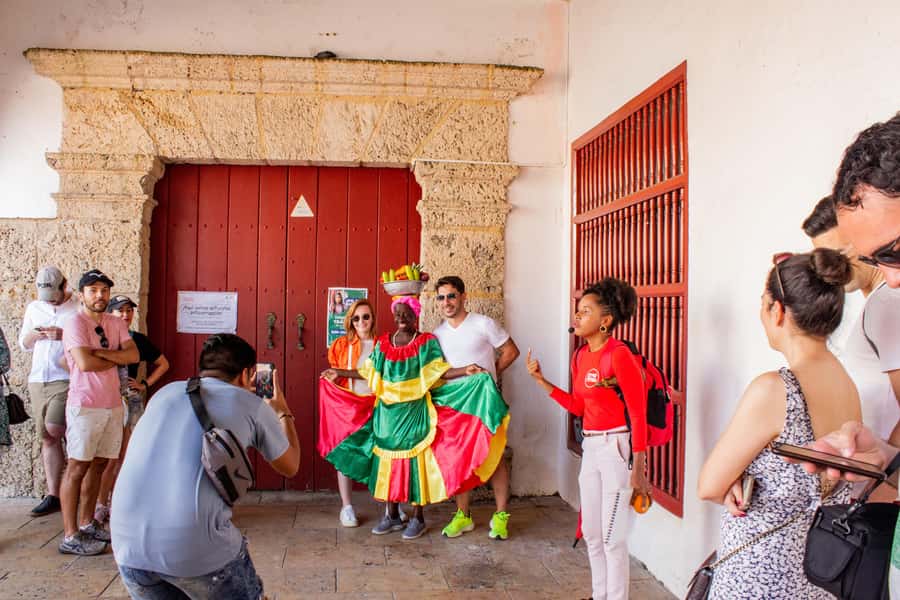
Meet the Beyond Colombia team at Santo Domingo Square, beside Fernando Botero’s famous sculpture Gertrudis and the red umbrellas. This is a useful meeting point because the plaza is central and easy to recognize, though it can be crowded and lively.
Arrive five minutes early. That small cushion matters because you need to receive the wireless audio equipment before the group sets off. You will also want to check that the receiver works and that you can hear the guide clearly before leaving the square.
Santo Domingo Square is a good place to begin because it immediately gives you Cartagena in miniature. Colonial buildings frame the plaza, public art draws people in, and the street scene moves around the historic setting. The tour does not treat the city as a museum frozen behind walls. It presents Cartagena as a place where old stone, local routines, and visitors all share the same space.
The group is shared, not private. That keeps the price low, but it also means you will not set the pace or stop wherever you wish. If you need long pauses for photographs, you may have to choose between listening and catching up.
A few more trips worth weighing up before you book
- Cartagena: Historic Center and Getsemaní Shared Walking Tour
★ 4.9 · 2,716 reviews - Cartagena: Rosario Islands Catamaran with Lunch and Snorkel
★ 4.5 · 2,479 reviews - Full-Day Rosario Islands Including Barú, Bocachica & Playa Blanca
★ 4.0 · 1,729 reviews
Colonial plazas and the stories behind the stones
The first part of the walk moves through several important squares and religious landmarks. At Plaza de la Proclamación, you begin to see how Cartagena’s public spaces connect political memory with daily life. The guide brings attention to the stories behind the architecture rather than simply pointing out attractive facades.
Plaza de Bolívar offers another shift in tone. Its trees, historic buildings, and central location make it one of the key civic spaces in the Walled City. This is where the tour can help you understand how Cartagena’s plazas functioned as places of authority, gathering, ceremony, and debate.
You then reach the Santuario de San Pedro Claver. The stop adds a religious and human dimension to the walk. The guide discusses the people and events connected with Cartagena’s past, including the difficult history surrounding the Inquisition and the forces that shaped the city’s identity.
That context matters. A quick architectural tour can leave you with a string of pretty squares and no clear idea of why they matter. Here, the stories are meant to connect the buildings with power, faith, conflict, and the people who lived through those periods.
The drawback is that outdoor explanations depend on street noise, group position, and the time available. The wireless receiver helps, but you should not expect a long, quiet interior visit at every landmark. This is a city walk, not a series of museum tours.
Plaza de la Aduana, Plaza de los Coches, and the Clock Tower
Plaza de la Aduana is one of the route’s major public spaces. Its name points to Cartagena’s role as a port and trading center, while its scale helps explain how the Walled City was organized around movement, commerce, and control.
Plaza de los Coches takes you closer to the Clock Tower, Cartagena’s best-known entrance. The tower is more than a convenient meeting point. It marks the passage from the modern city into the old fortified center, and it has become one of the city’s most recognizable symbols.
This section should be especially useful if Cartagena is new to you. The guide explains the legends of pirate attacks, defensive battles, and the people who helped shape the city. You also hear about less obvious details, such as symbols in architecture and the meaning attached to different plazas.
The Clock Tower area can be crowded. Keep your phone and wallet secure, especially when the group pauses for photographs. The advice to keep your friends close and your belongings closer is practical here. In Cartagena, taking care of your things does not mean you should be nervous. It means you can enjoy the street scene without handing an easy opportunity to someone else.
What you see from the city walls
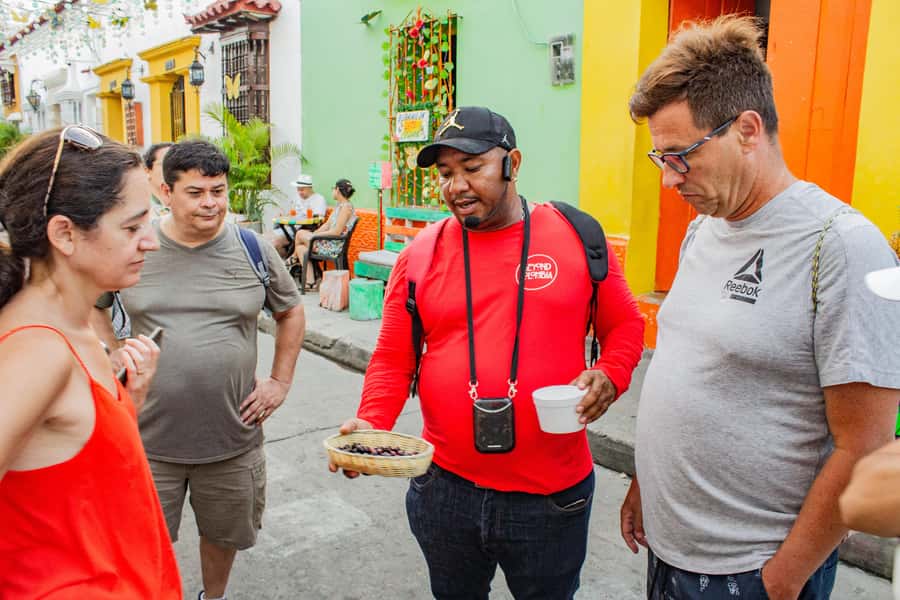
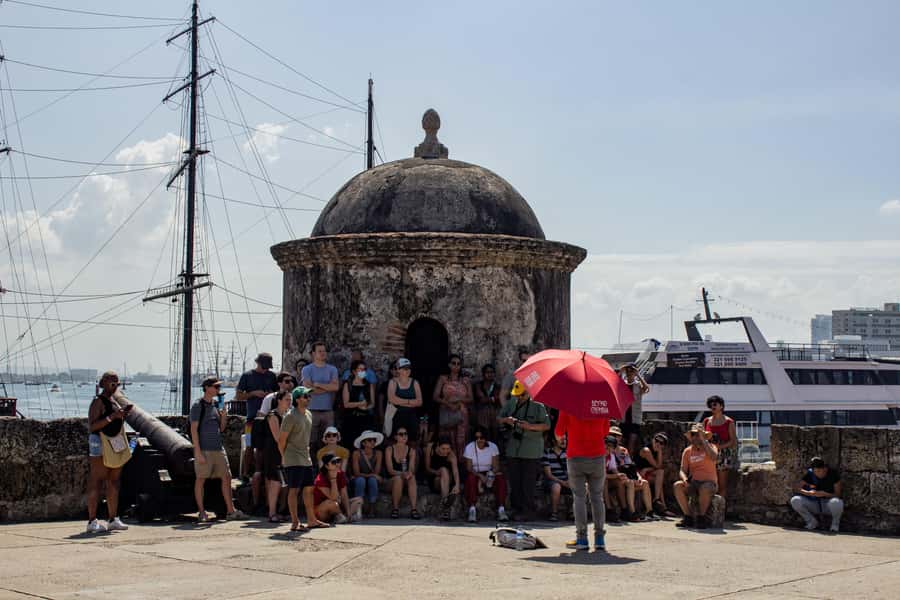
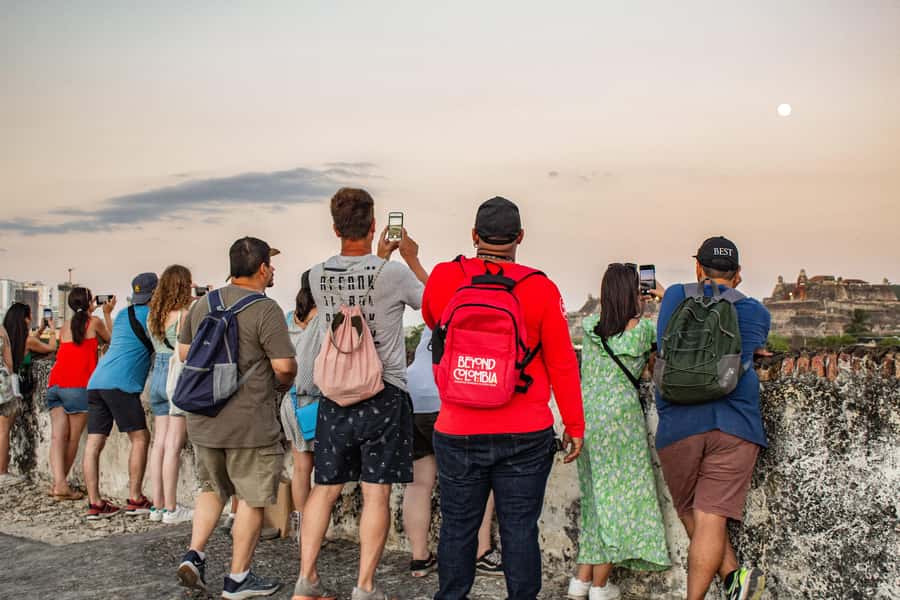
The walk includes views from the Santo Domingo bastion on Cartagena’s defensive walls. This is one of the tour’s best moments because the walls turn the city’s military past into something you can physically walk across.
From the fortifications, you get a broader sense of Cartagena’s position and defenses. Pirate-era stories become easier to picture when you are standing on the structures built to protect the city. The walls also offer strong photo opportunities, especially when the old buildings, open sky, and stone surfaces come together.
Do not expect a long wall walk or a detailed fort visit. The route has many stops, and the entire experience lasts two hours. Still, even a short section on the walls can give you a useful frame for the rest of the tour.
The walking surface may be uneven in places, and the heat can make the distance feel longer than it sounds. Comfortable shoes are essential. Bring water or another drink, since the route includes repeated walking between stops and only brief rest periods.
A completely different kind of day out around Cartagena:
- Cartagena de Indias: 2-Hour Sunset Cruise
★ 4.7 · 1,105 reviews - 2-hour tour in Cartagena Sunset View in party boat
★ 4.6 · 899 reviews - Cartagena: Guided Street Food Tour with Tastings
★ 4.9 · 833 reviews - Cartagena: City Sightseeing Hop-On Hop-Off Bus Tour & Extras
★ 3.9 · 681 reviews
Camellón de los Mártires and Parque Centenario
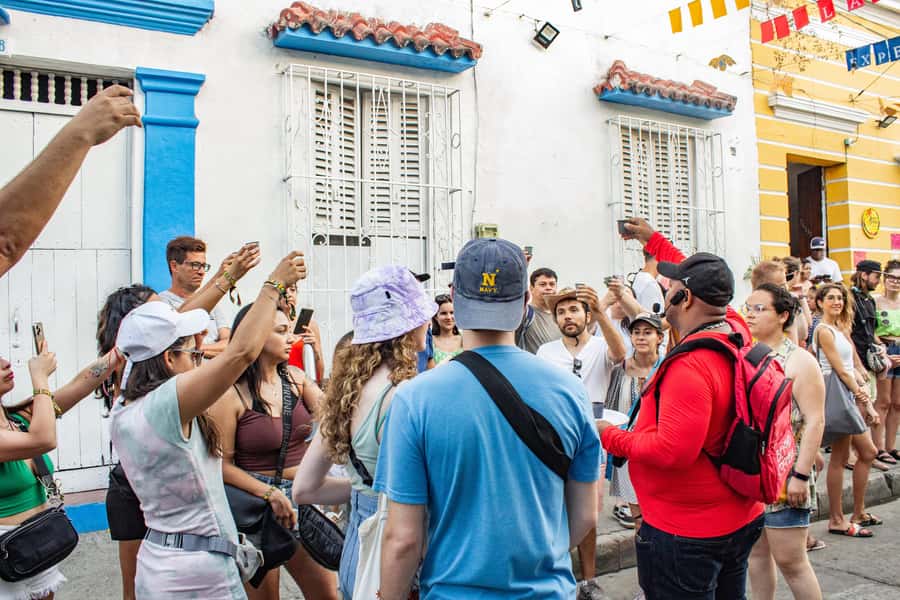
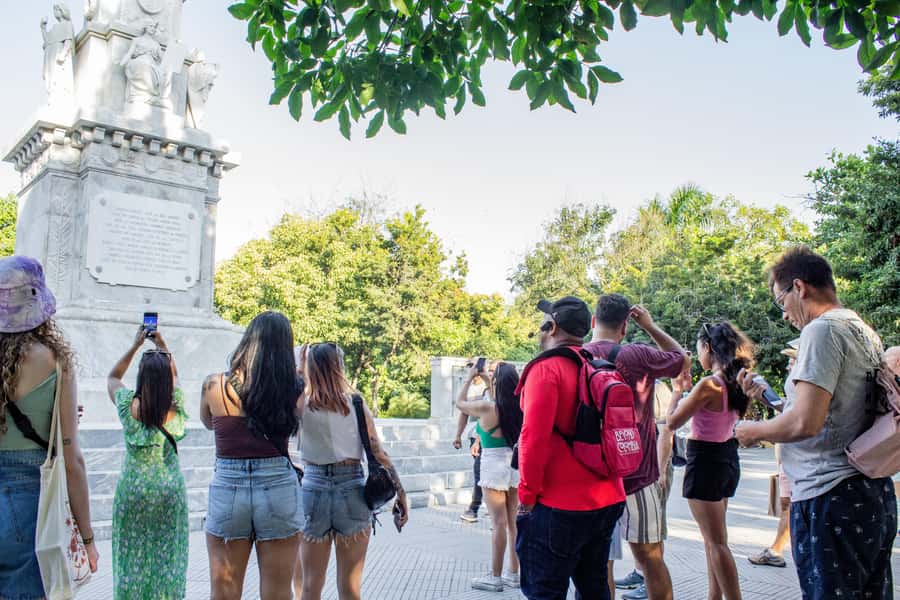
After the Clock Tower area, the route moves through Camellón de los Mártires and Parque Centenario. These stops help connect the old center with the route toward Getsemaní.
Camellón de los Mártires carries public memory into an open urban setting. The guide uses the area to discuss people and events tied to Cartagena’s struggle and political identity. It is a reminder that the city’s story is not limited to Spanish colonial buildings or pirate legends.
Parque Centenario offers a change of pace. It is a public park and a useful transition point between the Walled City and Getsemaní. Here, the tour begins to feel less like a walk through a preserved historic center and more like a route through a living city.
This transition is one of the strongest reasons to choose the tour. Many short city walks stay inside the postcard version of Cartagena. This one crosses into a neighborhood with a different social character, different street art, and a more local sense of place.
Calle de la Magdalena and the move into Getsemaní
Calle de la Magdalena begins the more neighborhood-focused portion of the walk. As you leave the formal squares and fortified center, the atmosphere changes. The guide points out colorful architecture, street details, and the way local culture appears in public spaces.
Getsemaní is often described as the heart of the people, and the route explains why. Its identity is tied to independence, Afro-Caribbean culture, community life, music, and art. The walk does not present the neighborhood only as a nightlife district or a backdrop for photographs. It gives you a sense of the pride and resistance expressed through its walls and streets.
You should keep an open mind here. Some parts of the story may be more complicated than the polished colonial image inside the walls. That is useful. Cartagena becomes easier to understand when you see both the historic center and the neighborhood that grew around it.
Calle de la Magdalena is also a good place to listen rather than rush for photographs. The details may be small: a balcony, a painted wall, a narrow lane, or a building altered by daily use. The wireless system lets you keep following the explanation while looking around, which is more natural than stopping in a tight circle around a guide.
Calle del Guerrero, Plaza de la Trinidad, and local life
The route continues along Calle del Guerrero toward Plaza de la Trinidad. This is the social center of Getsemaní and one of the most memorable places on the walk.
Plaza de la Trinidad blends neighborhood life with Cartagena’s independence story. It is the sort of public square where the past and present sit side by side. You may find people gathering, children playing, music nearby, and visitors taking in the setting, but the important point is that the plaza remains part of local life rather than existing only for sightseeing.
The guide uses Getsemaní to talk about community, Afro-Caribbean identity, and the neighborhood’s role in Cartagena’s history. That makes the tour more than an architecture lesson. You are learning how people claim, protect, and express a place.
The stop is also a strong choice for photographs. Still, the two-hour format means you may not have much free time to sit in the square. If you want a relaxed evening there, return later on your own after the tour.
Callejón Ancho and the street art of Getsemaní
Callejón Ancho brings you into the narrow lanes that make Getsemaní feel so distinctive. The route also includes Calle de la Sierpe, known for powerful murals tied to local culture, pride, resistance, and dreams.
Street art changes over time, so the exact paintings may not look the same on every visit. The value of this section is not just one mural. It is seeing how public art gives the neighborhood a voice and how color, symbols, and portraits carry ideas about identity.
This is where the tour feels most different from a standard old-town walk. The Walled City offers grand plazas, church facades, balconies, and fortifications. Getsemaní answers with walls that speak in a more immediate way. The contrast gives you a fuller picture of Cartagena.
Callejón Ancho also brings practical issues. Narrow streets and busy sidewalks can make it harder to stay beside the group. Use the audio receiver, watch where you are walking, and avoid stopping in the middle of the lane for a photograph. You can always step aside and take the picture without blocking local movement.
The route ends at Av. Pedregal in Getsemaní. That is useful because you are already in the neighborhood where you may want to eat, have coffee, explore more art, or return to Plaza de la Trinidad.
What the $13 price really delivers
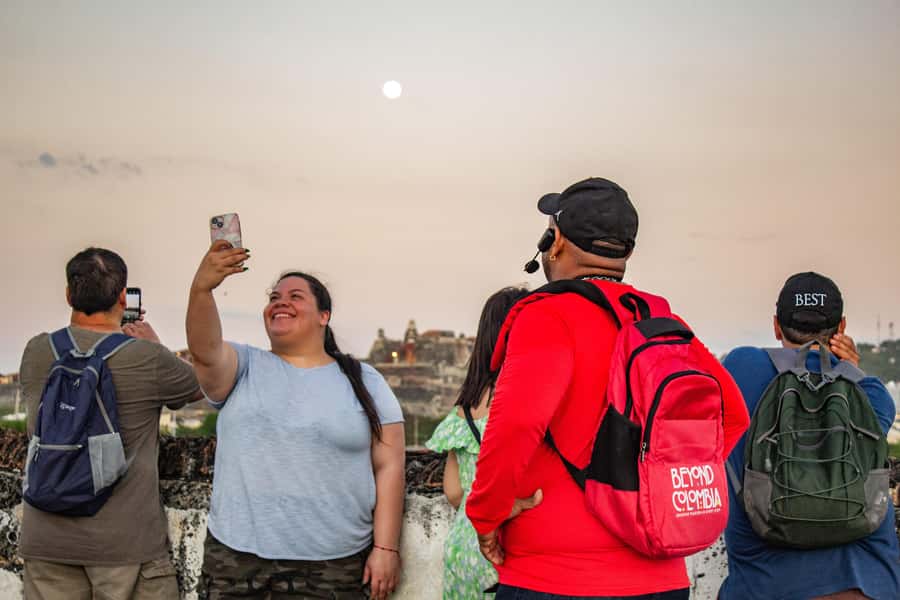
At $13 per person, this is a strong value if you want orientation and context rather than private attention. You receive a certified Beyond Colombia guide, a two-hour route through two districts, wireless audio equipment, local suggestions, and no sudden charges for attractions because the walk stays focused on public spaces.
The price does not cover food, drinks, souvenirs, hotel transfers, or transportation during the route. There is no private guide, and you should not expect entry into paid sites. Those limits are clear, and they help explain why the cost stays low.
I especially like the absence of forced add-on fees. You can see the Clock Tower, plazas, streets, walls, park, and Getsemaní without having to decide at each stop if you should pay more. If you want interior visits later, you can choose them separately.
The wristband may provide discounts with recommended partners after the walk. Treat that as a bonus rather than the reason to book. The real value is getting your bearings, learning the broad story, and receiving practical local suggestions early in your stay.
A guide named Louis Carlos earned especially strong praise for his clear command of the subject and his guiding. That is useful evidence of the standard you might hope for, though shared tours can vary with the individual guide and group size.
Pace, comfort, safety, and who should book
This is an active walking tour. The stated distance is about 8 kilometers, with stops to listen, and the route is completed in two hours. That is a brisk pace for anyone, especially in Cartagena’s heat.
I would book it near the start of your stay if you want a quick orientation to both districts. You can use the food, coffee, nightlife, and safety suggestions for the rest of your visit. It also suits solo visitors who like meeting other people, couples who prefer a clear route, and anyone who wants more context than a self-guided photo walk provides.
I would think twice if you prefer long museum visits, frequent shade breaks, or a slow photography tour. The experience is not suitable for children under six or people over 65 according to the stated conditions. Those restrictions are unusually broad, so older adults should consider their own fitness carefully rather than relying only on the label.
Wear comfortable shoes and loose clothing. Bring water, protect your belongings in crowded areas, and avoid recording video or audio during the tour. The wireless device is there to help you listen, not to provide a personal recording.
Free cancellation is available up to 24 hours before the start, and you can reserve now and pay later. That makes it easier to fit the walk around changing plans, but the key decision is still physical: can you comfortably walk the full route in the available time?
Should you book this Cartagena walk?
Book this tour if you want two hours of useful history, local context, and neighborhood contrast for $13. The mix of plazas, city walls, the Clock Tower, Getsemaní murals, and Plaza de la Trinidad gives you more range than a Walled City-only walk.
Choose it with realistic expectations. You will move quickly, share the guide with others, and remain outdoors. If that sounds right, the wireless audio system, practical tips, and strong guide feedback make this a smart low-cost introduction to Cartagena. If you want depth at every stop, book a longer private experience instead and explore Getsemaní at a slower pace.
FAQ
Where does the tour begin?
The meeting point is Santo Domingo Square, beside Botero’s Gertrudis sculpture. Look for the Beyond Colombia team under red umbrellas.
Where does the tour finish?
The walk ends at Av. Pedregal #27-137 a 27 1 in Getsemaní, Cartagena de Indias.
How long does the tour last?
The tour lasts two hours. The route covers about 8 kilometers with stops for explanations.
Which languages are available?
The live guide and audio support are available in English and Spanish.
Is transportation included?
No. You walk between the stops, and transportation to and from your hotel is not included.
What should I bring?
Bring comfortable shoes, comfortable clothing, and water or another drink. Keep your belongings secure in crowded areas, and do not record video or audio during the tour.
Just added around Cartagena
- Cartagena: Party Bus Tour In Cartagena★ 4.2 · 3 reviews
- Cartagena: Ecoplan on Barú, Aviary and Oceanarium in one day★ 3.3 · 3 reviews
- Isla Tierra Bomba beach club: Day Pass with typical food★ 5.0 · 3 reviews
- White Night Boat Party: Dinner Buffet, Dancing and Open Bar★ 4.6 · 3 reviews
- Mompox Caribbean Routes★ 4.8 · 3 reviews
- Tayrona Park adventure in Santa Marta: Cabo San Juan from Cartagena★ 3.8 · 3 reviews
- Cartagena: Photography Workshop Tour★ 5.0 · 3 reviews
- Cartagena: Day Tour to Tierra Bomba Island★ 3.2 · 3 reviews
Cartagena Tours, compared.
Historic Center and Getsemaní Shared Walking Tour
Read our review →
Rosario Islands Catamaran with Lunch and Snorkel
Read our review →
Full-Day Rosario Islands Including Barú, Bocachica & Playa Blanca
Read our review →

2-hour tour in Cartagena Sunset View in party boat
Read our review →

City Sightseeing Hop-On Hop-Off Bus Tour & Extras
Read our review →
Browse the lists this tour appears in