
Reviewed · HISTORICAL TOURS
Cartagena: Historic Center and Getsemaní Shared Walking Tour
Cartagena tells its story in layers. This $12 walking tour connects the Walled City and Getsemaní through conquest, slavery, independence, music, religion, and daily life, giving you a useful first look at Bolívar’s Caribbean capital. I especially like the way it links grand monuments to human stories, and I like that the route ends with salsa and champeta rather than stopping at old stone walls.
The main drawback is the heat. You walk for 150 minutes, often on bright streets, so comfortable shoes, sunscreen, water, and weather-ready clothing matter. The tour is also guide-dependent. Recent guides such as Álvaro David, Dani, Daniela, Legacy, Robert, Ingrid, Liz, and Rebeca have been praised for energy, clear explanations, and local pride, though one English-speaking guide was asked to slow down at times.
In This Review
- Key points to know before you book
- Starting at Plaza Cervantes by the Clock Tower
- Following the old slave-trade route
- Seeing art, gold, emeralds, and San Pedro Claver
- Cartagena’s walls, bastions, and pirate stories
- Cooling off among the trees at Centennial Park
- Crossing into Getsemaní and modern Cartagena
- Ending with salsa, champeta, and a bit of dancing
- What the $12 price really buys you
- Heat, pace, language, and guide style
- Who should book this Cartagena walk?
- Should you book it?
- FAQ
- Where does the Cartagena walking tour begin?
- How long does the tour last?
- Which areas does the tour visit?
- What languages are available?
- Is the tour wheelchair accessible?
- Is the tip included?
- Are hotel pickup and drop-off included?
- Are food and drinks included?
- What should I bring?
- Can I cancel for a full refund?
Key points to know before you book
- Two neighborhoods in one outing: You cover the Historic Center, San Diego, and Getsemaní without arranging separate walks.
- History with uncomfortable truths: The route addresses conquest, colonial rule, enslavement, the transatlantic slave trade, and independence.
- A low price with a clear value: At $12, the tour includes a professional guide, both walking routes, and the tip.
- Music and movement are part of it: Salsa, champeta, and occasional dance lessons bring Cartagena’s present into the story.
- Centennial Park adds a welcome pause: Sloths, squirrels, and iguanas may appear among the trees and former railway grounds.
- A strong first-day choice: Local food advice, street-vendor price guidance, and practical city tips help you plan the rest of your stay.
Starting at Plaza Cervantes by the Clock Tower
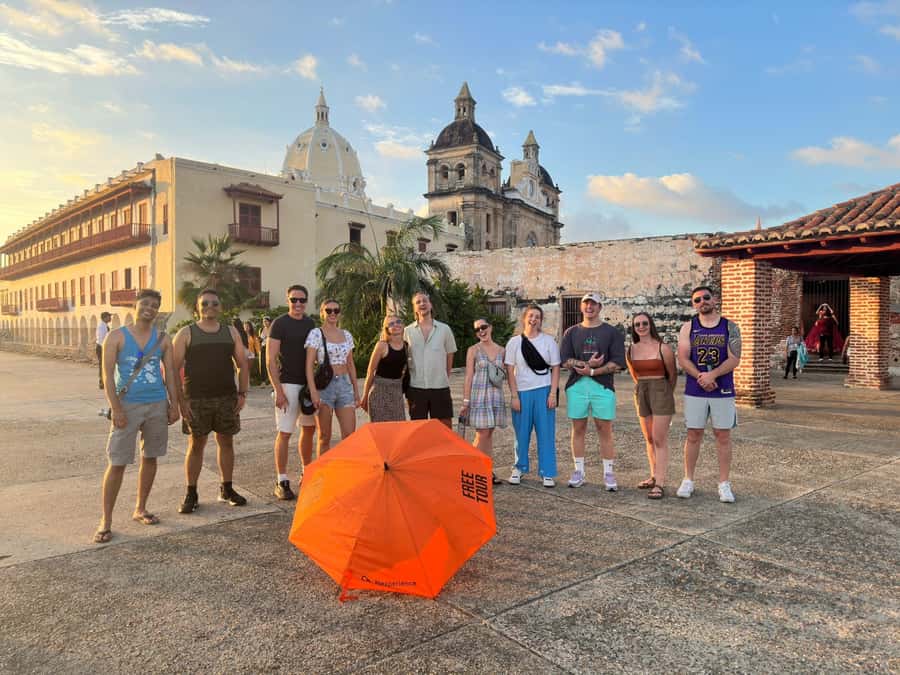
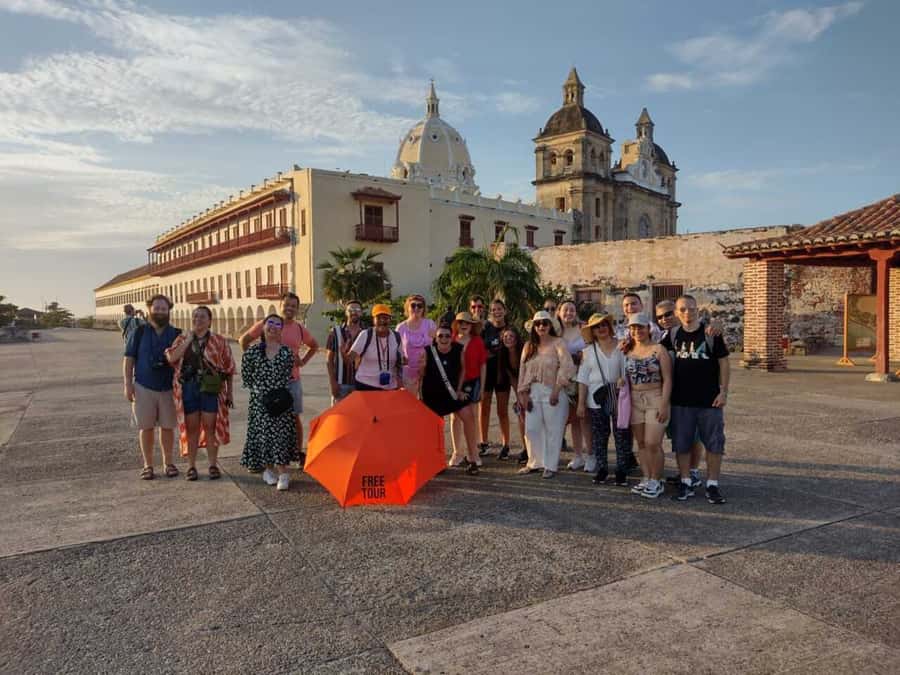
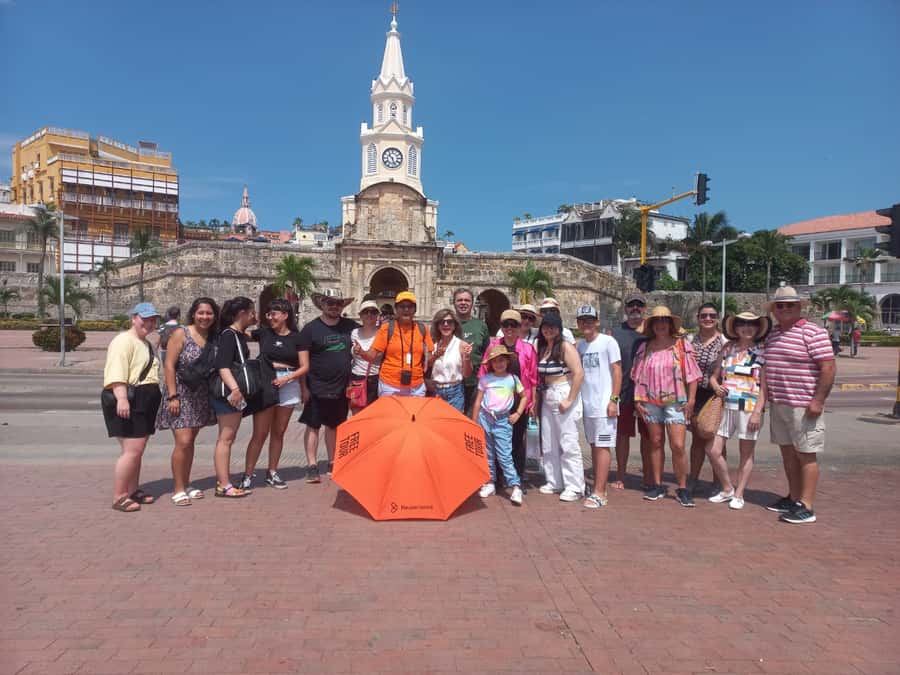
Meet at Plaza Cervantes, also called the Camellón de los Mártires, directly in front of Cartagena’s Clock Tower. The orange umbrella is the marker to look for, which is helpful in a busy central square.
The starting point puts you right beside one of Cartagena’s most recognizable entrances. The Clock Tower is known as the Golden Key of Cartagena, and the group enters through the Plaza del Ecuador, once called the Plaza del Esclavo. That name sets the tone for the tour. This is not simply a pretty-streets walk. You are asked to look at how wealth, architecture, forced labor, and power shaped the city.
The opening discussion covers the Indigenous people who lived in the area before and during the arrival of the Spanish. Pedro de Heredia, the city’s founder, is introduced as part of the story. This early context matters because Cartagena can otherwise seem like a Spanish colonial stage set, with the people and cultures that came before pushed out of view.
The route is shared, so you should expect to listen while walking with other people rather than receive a private, custom-paced visit. That makes the $12 cost especially appealing, but it also means you may need to stay close to the orange umbrella and guide.
More Walking Tours in Cartagena
- Cartagena: Walled City and Getsemani Shared Walking Tour
★ 4.5 · 352 reviews - Walking Tour of Cartagena Including a Colombian Cup of Coffee
★ 5.0 · 30 reviews - Walking Tour Cartagena Old City with Gold Museum and Plaza de Bolivar
★ 4.5 · 28 reviews
Following the old slave-trade route
From the Clock Tower, the walk continues along Porto Carrero and Candilejo streets. These lanes form part of the old enslavement route, leading toward places where people and goods were bought and sold.
The tour explains the role of the Portal de los Dulces, a landmark associated with female commerce during the era of slavery. The important point is not just the sweets sold there today. The site also shows how economic activity changed over time and how descendants continued certain food traditions.
At the old Plaza de la Aduana, you hear about the commercial system that moved merchandise through Cartagena, including enslaved people. The square also contains important civic buildings, including the Municipal Hall. This section gives the city’s impressive facades a harder edge. Cartagena’s wealth did not come from architecture alone. It was tied to trade, colonial control, and human suffering.
I appreciate that the route treats this subject as central, not as a brief aside. The painful parts of Cartagena’s past are necessary if you want to understand the city’s culture today. A guide such as Dani or Daniela may add local perspective and encourage questions, while guides such as Manuel and Álvaro David have been praised for connecting past events with modern life.
Seeing art, gold, emeralds, and San Pedro Claver
The walk passes several cultural and religious landmarks. The Museum of Modern Art presents Caribbean and Latin American art from the 1950s onward. The Gold Museum focuses on Indigenous pieces from the Colombian Caribbean, while the Emerald Museum introduces the stones associated with Colombia and prized by celebrities.
The tour does not include museum entry, so treat these as outside reference points unless you choose to return later. That is useful. You get a map of the cultural institutions in the center without spending your walking time inside exhibits.
Religion enters the route at the Church and Museum-Monastery of San Pedro Claver. San Pedro Claver is remembered as the Slave of the Slaves, and the complex also serves as a headquarters for human rights. The stop connects faith, colonial society, resistance, and modern ideas about dignity.
This is one of the places where a good guide can make a large difference. The building itself is easy to admire, but the story behind it needs explanation. Ingrid has been praised for patiently answering questions about both historical events and present-day customs. Rebeca, guiding in Spanish, has also been praised for making serious material clear and light without treating it casually.
Cartagena’s walls, bastions, and pirate stories
At the San Ignacio Bastion, the tour turns toward military history. The bastion was built to defend the Bay of Souls from pirate attacks. Here you learn how Spanish fortifications protected the port and how military planning shaped the city’s walls.
Cartagena’s pirate and corsair stories naturally draw attention, but the better part of this stop is the connection between legend and strategy. You are not just hearing tales of raids. You are seeing how bastions, walls, bays, and streets worked together as a defense system.
The tour then reaches Plaza Bolívar, named for Simón Bolívar, a central figure in the independence movement. This is also described as a place to refresh, which is welcome after walking through the older center. Still, do not count on a long break. The outing keeps moving, and the full route lasts about two and a half hours.
At this stage, you have covered conquest, colonial trade, enslavement, faith, defense, and independence. That sequence helps explain why the center looks so fortified and formal. It also prepares you for the change in mood ahead.
More history-led tours:
- Visit Palenque with natives : history, culture and ancestral legacy
★ 5.0 · 53 reviews - Cartagena Instagrammable History
★ 4.5 · 29 reviews - Mangroves, cultural fishing, black heritage town and lunch
★ 4.5 · 29 reviews - Cartagena: History, Culture & Coffee Experience
★ 5.0 · 5 reviews
Cooling off among the trees at Centennial Park
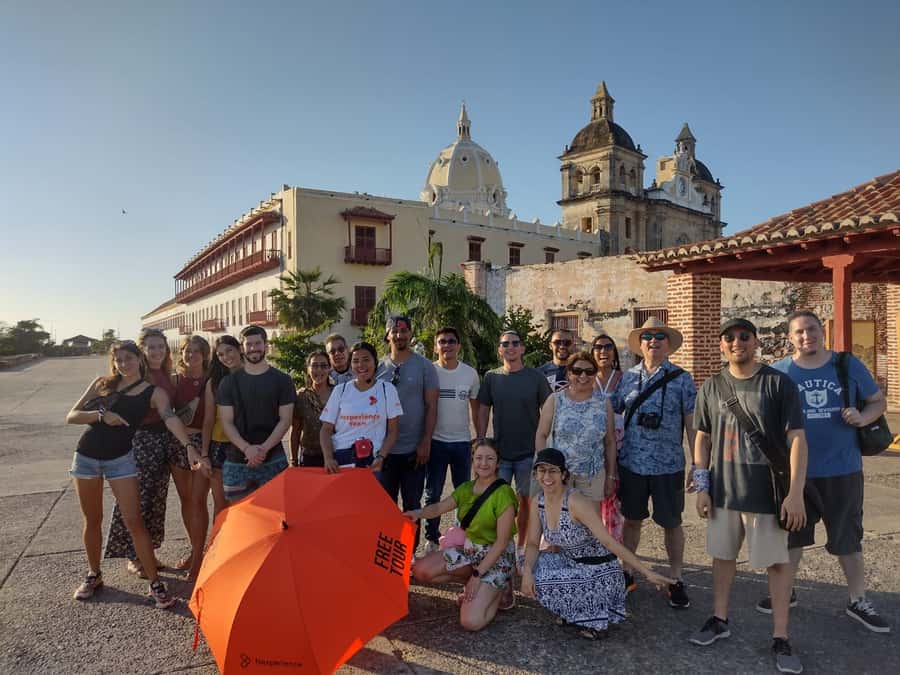
Centennial Park provides a break from tightly packed streets and sunlit plazas. It occupies the grounds of a former railway station and is described as one of Cartagena’s important green lungs, with tropical dry forest and shade.
Keep your eyes open for sloths, squirrels, and iguanas. The park may also offer the chance to spot monkeys, as one visitor described. Wildlife is not guaranteed, so think of this as a pleasant possibility rather than a formal animal encounter.
This stop adds something important to the route. Cartagena is often presented through walls, balconies, churches, and colorful streets. Centennial Park reminds you that shade, trees, animals, and public space are also part of city life.
Guides often use shaded areas when explaining the history, which is a practical touch in Cartagena’s climate. Robert received particular praise for keeping a large group in the shade while continuing the commentary. Álvaro David was also specifically praised for warning people to bring plenty of water during a late-afternoon walk.
Crossing into Getsemaní and modern Cartagena
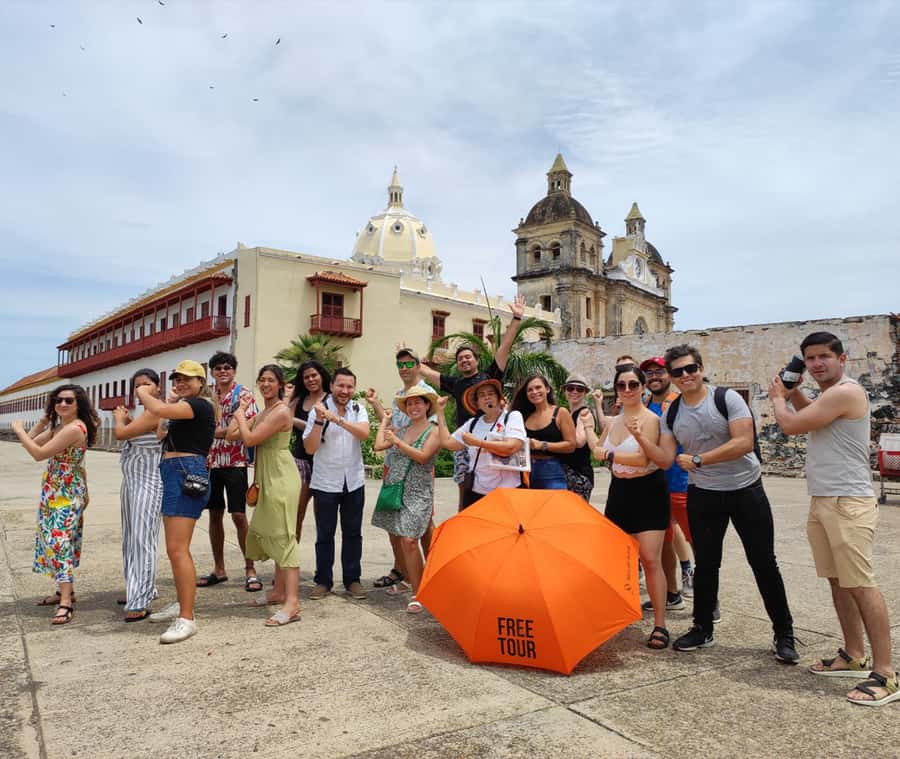
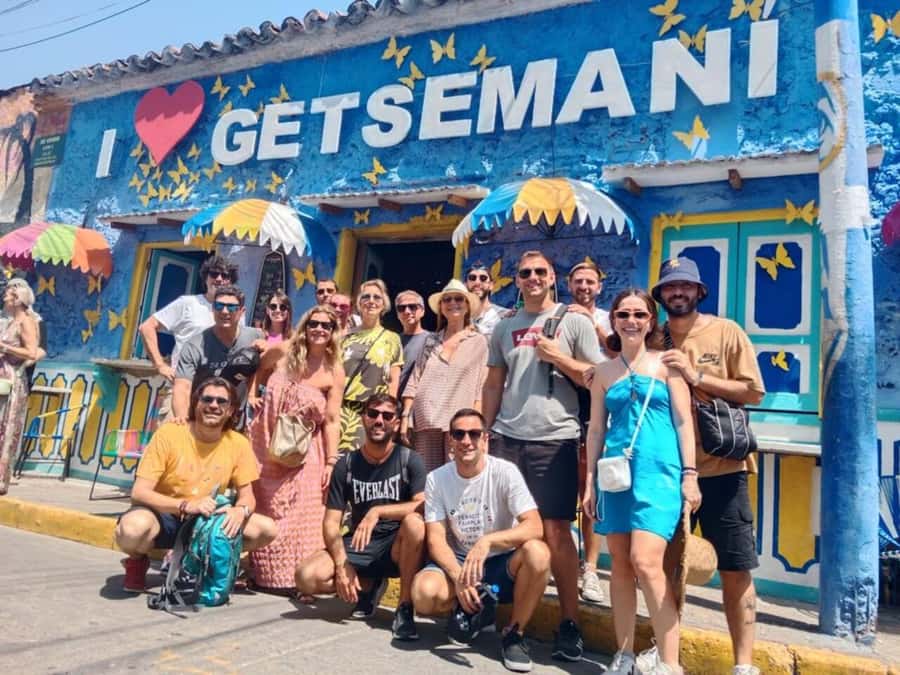
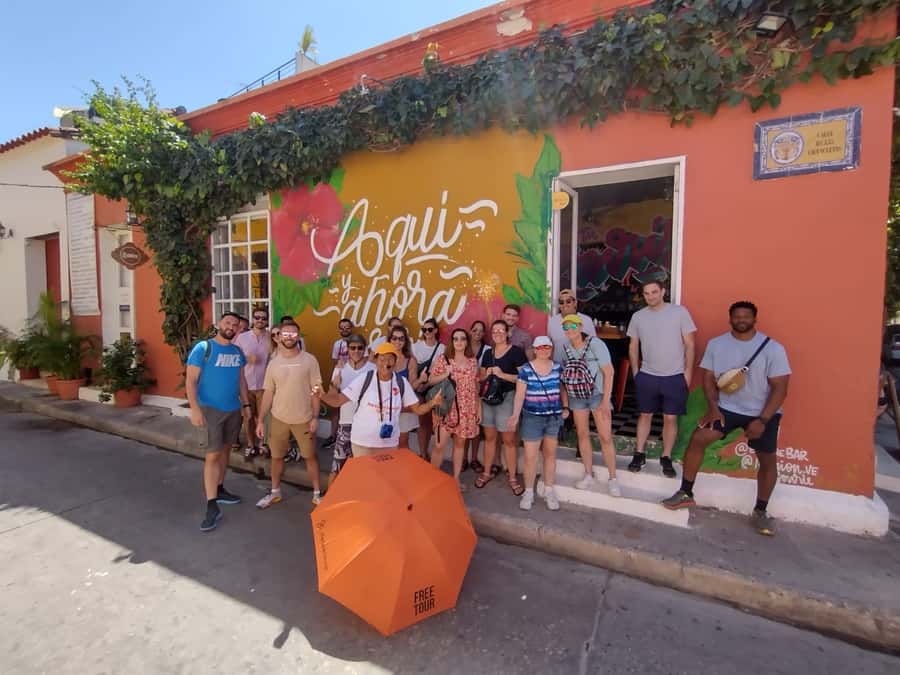
The move into Getsemaní is the strongest reason to choose this tour instead of a Historic Center walk alone. The neighborhood brings a different mood, with colorful cultural corridors, umbrellas used as decoration and advertising, graffiti, and distinctive architecture.
Here the discussion shifts toward the new social order of Cartagena. You learn about local customs, the city’s changing identity, and the mix of African, Caribbean, Spanish, and Indigenous influences. The history of African braids, including their meaning as a sign of freedom and hope, is one of the more memorable cultural topics highlighted on the route.
Getsemaní is also where the tour feels most connected to present-day Cartagena. The Walled City can sometimes seem preserved for sightseeing, while Getsemaní shows how art, music, commerce, and neighborhood life continue to shape the city.
The route passes through a colorful corridor and continues along Callejón Ancho toward Calle San Juan. This part rewards you with photographs, street details, and a sense of how the neighborhood’s character differs from the formal squares of the old center.
Ending with salsa, champeta, and a bit of dancing
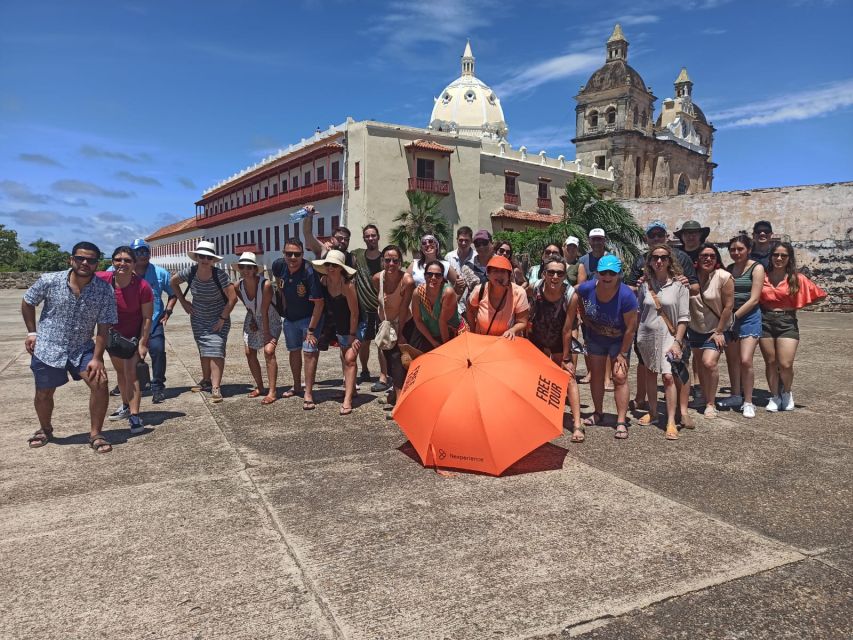
The final stretch reaches Calle San Juan to the sound of salsa and African champeta. These styles are not decorative background music. They help explain the city’s Caribbean identity and the African influence within Cartagena’s culture.
Several guides make the experience interactive by teaching dances or getting the group moving during the walk. Dani and Danni were praised for teaching traditional dances, and one group danced three times during the outing. Legacy has also been praised for using humor and movement to keep the group involved.
You should not book this as a dance class. The dancing is an informal part of the storytelling, and it may depend on your guide and the mood of the group. Still, it gives the final section more life than a standard monument tour.
The guide may also offer advice about places to eat and drink, where to visit next, and typical street-vendor prices. Robert, Dani, and Álvaro David were particularly praised for practical recommendations. That advice can be worth more than it sounds, especially in a city where knowing a reasonable price helps you make better choices.
What the $12 price really buys you
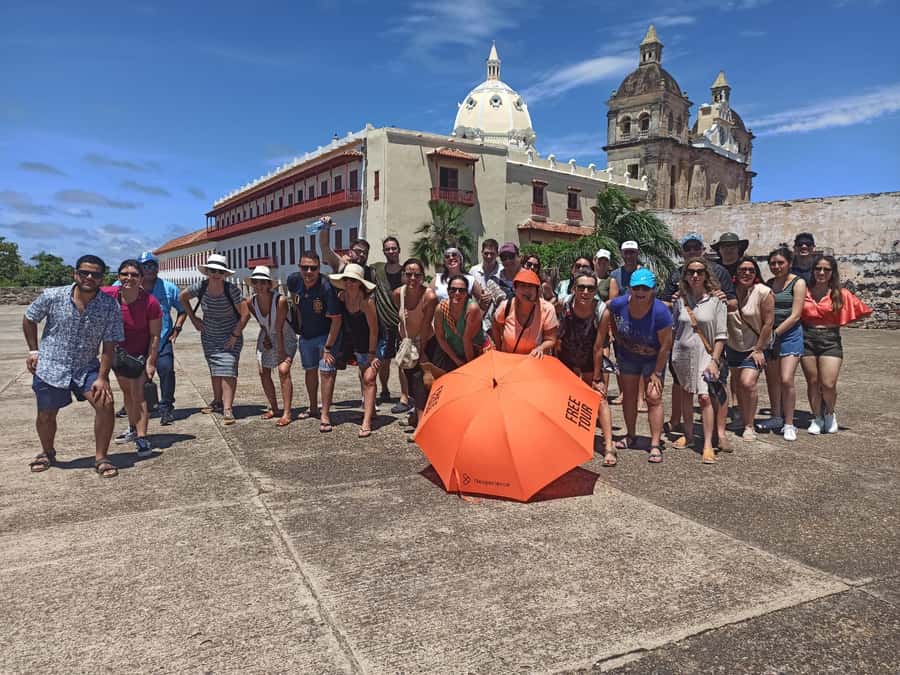
At $12 per person, this is one of the better-value ways to get oriented in Cartagena. The price includes a professional guide, a walk through the Historic Center, a walk through Getsemaní, and the tip. Hotel pickup, drop-off, food, and drinks are not included.
The tip detail is important. This is presented as a free-style walking tour whose tip is already paid, so you do not need to plan for the usual tip at the end. You are paying for a shared experience, not private guiding or museum admissions.
The route covers a lot in 150 minutes. That makes it useful for a first afternoon, but it also means some stops are explanatory rather than full visits. If you want extended time inside the Gold Museum, the church museum, or the Emerald Museum, return independently.
The value improves if you take the tour early in your stay. You gain orientation, learn which landmarks deserve a second look, and receive local suggestions for food and activities. The tour is available in English or Spanish, and the experience is wheelchair accessible.
Free cancellation is available up to 24 hours before the start for a full refund. You can also reserve and pay later, which is handy when your Cartagena schedule is still changing.
Heat, pace, language, and guide style
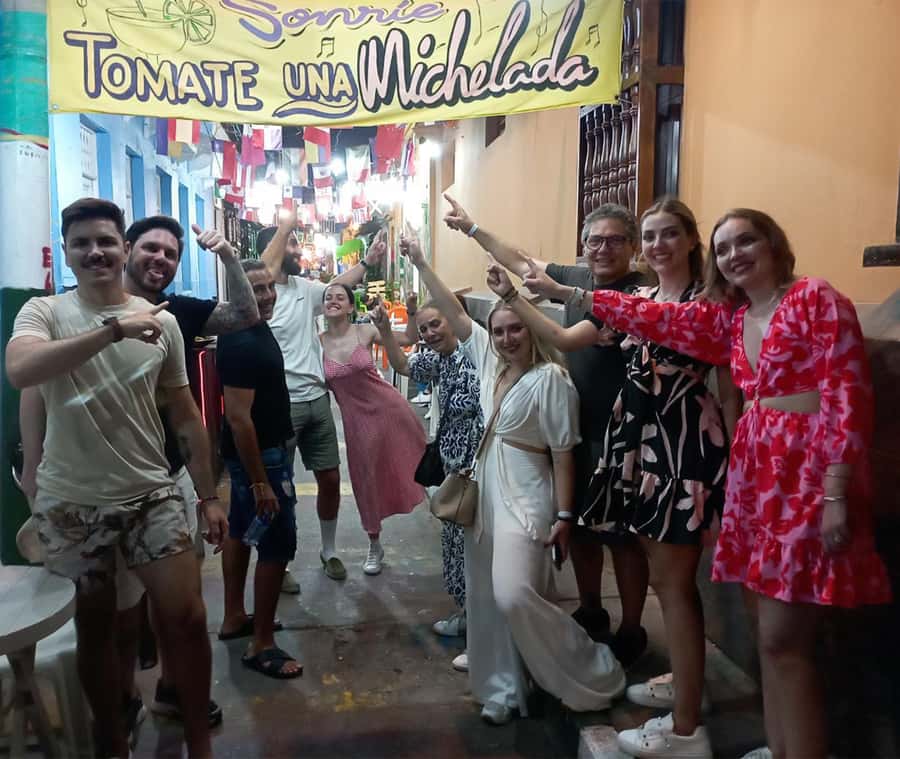
The heat is the main practical concern. Wear light, comfortable clothes and sturdy walking shoes. Sunscreen is essential, and water is a smart addition even though drinks are not included.
The route includes sunny streets and long stretches on foot. Guides often try to use shade, but they cannot shade every block. Rain can also affect the experience. One outing was less enjoyable because of rain, even though the guide handled it well.
Guide style varies. The strongest pattern is enthusiasm, local pride, humor, and a willingness to answer questions. Legacy has been praised for combining serious facts with jokes, while Dani and Daniela have been praised for warmth, cultural pride, and interactive storytelling.
English is generally available, but speaking speed can matter. One English-language guide was asked to slow down because fast speech became harder to follow. If you need a measured pace, say so politely at the start.
Families can manage the walk. A guide named Legacy was praised for checking on a two-year-old and making sure the family had what they needed. Still, the duration and heat mean young children may need extra attention.
Who should book this Cartagena walk?
I would choose this tour if you want a broad introduction before exploring Cartagena on your own. It suits first-time visitors, history fans, culture-focused visitors, and anyone who wants both the polished Walled City and the more expressive streets of Getsemaní.
It is also a good match if you enjoy human stories more than a simple list of buildings. The route includes difficult subjects, including colonialism and enslavement, then connects them to music, food traditions, dance, public art, and modern identity.
You may want a different option if you dislike group walks, hot weather, or interactive activities. It is not designed for long museum visits, private pacing, or a quiet architectural tour. The experience is lively, social, and shaped by the guide leading it.
Should you book it?
Yes, for most people staying in Cartagena. The combination of the Walled City and Getsemaní gives you a useful first picture of the city, and the $12 price is hard to beat for 150 minutes with a guide and the tip included.
Book it early in your stay, bring water and sunscreen, and keep your expectations realistic. You will cover many places quickly, not enter every museum, and may be invited to dance. If that sounds like a good way to meet Cartagena, this tour offers history with its walls still attached to real people, real music, and present-day life.
FAQ
Where does the Cartagena walking tour begin?
It begins at Plaza Cervantes, also called the Camellón de los Mártires, in front of the Clock Tower. Look for the orange umbrella.
How long does the tour last?
The full experience lasts 150 minutes, or about two and a half hours.
Which areas does the tour visit?
It includes Cartagena’s Historic Center, also called the Walled City, and the Getsemaní neighborhood.
What languages are available?
The tour is available in English and Spanish.
Is the tour wheelchair accessible?
Yes, the activity is listed as wheelchair accessible.
Is the tip included?
Yes. The paid tip is included as part of the free-style walking tour arrangement.
Are hotel pickup and drop-off included?
No. You need to make your own way to the meeting point, and hotel pickup and drop-off are not included.
Are food and drinks included?
No. Food and drinks are not included, so bring water and plan separately for anything you want to eat or drink.
What should I bring?
Bring comfortable shoes, sunscreen, comfortable clothes, and clothing suitable for the weather. Water is also a sensible choice because the walk can be hot.
Can I cancel for a full refund?
Yes. You can cancel up to 24 hours in advance for a full refund.
More Walking Tours
- San Felipe Castle and Getsemani Walking Tour with tickets
★ 4.3 · 27 reviews - Cartagena: Walled City Walking Tour
★ 4.4 · 26 reviews - Cartagena: Gabriel García Márquez Private Walking Tour
★ 4.9 · 12 reviews - Cartagena City Tour with San Felipe Castle & Old Town Walk
★ 5.0 · 6 reviews
Just added around Cartagena
- Cartagena: Party Bus Tour In Cartagena★ 4.2 · 3 reviews
- Cartagena: Ecoplan on Barú, Aviary and Oceanarium in one day★ 3.3 · 3 reviews
- Isla Tierra Bomba beach club: Day Pass with typical food★ 5.0 · 3 reviews
- White Night Boat Party: Dinner Buffet, Dancing and Open Bar★ 4.6 · 3 reviews
- Tayrona Park adventure in Santa Marta: Cabo San Juan from Cartagena★ 3.8 · 3 reviews
- Mompox Caribbean Routes★ 4.8 · 3 reviews
- Cartagena: Photography Workshop Tour★ 5.0 · 3 reviews
- Cartagena: Day Tour to Tierra Bomba Island★ 3.2 · 3 reviews
Historical Tours, compared.


History & Local Life Essentials Tour on an E-Bike
Read our review →
Historical Shared Tour Salsa, Graffiti & Resistance in Cali
Read our review →
Shared Tour of Bogota’s Historic Downtown (La Candelaria)
Read our review →


Browse the lists this tour appears in