
Reviewed · SAN BASILIO DE PALENQUE TOURS
Visit Palenque with natives : history, culture and ancestral legacy
Palenque tells freedom’s story. This private, six-and-a-half-hour trip from Cartagena takes you into San Basilio de Palenque, a community celebrated for preserving African traditions, language, music, food, and customs. I like the way the visit uses local people at nearly every stop, and I especially like that you do more than look: you play instruments, try boxing movements, learn Palenque words, and meet people connected to the community. The main drawback is the heat. You will walk a lot, and most buildings do not have air-conditioning.
I also like the practical setup: an air-conditioned vehicle, bottled water, lunch, and a private group rather than a large bus crowd. Guides such as Neudis, Romeo, Royman, Leo, and Victor have been praised for their warmth and local knowledge, while translators including Gabriel and Liliana have helped English-speaking visitors follow the stories. Still, the experience can feel less polished than a major commercial tour, which is part of its local character but worth knowing before you book.
In This Review
- Key points to know before visiting Palenque
- Why San Basilio de Palenque matters
- Starting at the tourist parador
- Meeting Benkos Bioho at the monument
- Inside the Simankongo House Museum
- The medicinal patio and local plant knowledge
- Making music with Kombilesa Mi
- Walking Palenque’s mural route
- Religion, Catholic influence, and Palenque belief
- Boxing with the Kid Pambelé monument
- Lunch from the fire pit to the bijao
- How the $102 price measures up
- Guides, translation, and the feel of the visit
- Who should book this experience?
- Should you book the Palenque tour?
- FAQ
- Where does this tour take place?
- How long does the experience last?
- What is included in the price?
- What food is served for lunch?
- Is traditional music and dance included?
- Is this a private tour?
- What happens if the weather is poor?
Key points to know before visiting Palenque
- A native-led look at San Basilio de Palenque: The tour centers local voices and personal connections rather than treating the town as a museum.
- Nine compact cultural stops: You move from the welcome center and Benkos Bioho monument to medicine, music, murals, religion, boxing, and food.
- Hands-on activities: You can try traditional instruments, learn a few Palenque words, and finish with a short boxing class.
- Lunch is included: Choose from fish, chicken, steak, pork, or a vegetarian option, with fish prepared in coconut sauce among the featured dishes.
- Expect serious heat and walking: Bring a hat, water, sunscreen, and perhaps a fan, umbrella, or water spritzer.
- Good value for a private day trip: At $102 per person, the cost covers transport, a local cultural program, bottled water, and lunch.
Why San Basilio de Palenque matters
San Basilio de Palenque is not simply a day-trip village with a few colorful walls. It is presented here as the first free African village in the Americas, founded through resistance and the determination to live beyond colonial control. That gives every stop more weight.
The story begins with Benkos Bioho, a formerly enslaved man who arrived in Cartagena in the late 1500s. He organized resistance, helped establish palenques, and laid the groundwork for negotiations with colonial authorities. To the people of Palenque, he is a founding hero and a guide toward liberty. The monument named for him gives you an early frame for understanding the town.
I appreciate that the tour does not reduce this past to a single heroic statue. It follows the story into ordinary life: houses, food, medicine, faith, music, language, and sport. You see how freedom is not only a political idea. It is also something preserved through daily habits.
More San Basilio de Palenque day trips:
- Cartagena: Palenque´s tour, dance show, lunch, pick-Up inclu
★ 4.7 · 182 reviews - Tour a san Basilio de Palenque desde cartagena
★ 5.0 · 123 reviews - Cartagena: Palenque Tour and Road to Emancipation
★ 4.5 · 83 reviews
Starting at the tourist parador
Your first stop is the tourist parador, where the group receives an introduction to the community and an outline of the visit. This hour is useful because Palenque can make little sense if you arrive without context. The welcome gives you a basic map of the town’s identity before you begin walking through it.
The pace here is not rushed. Guides explain what you are about to see and help set expectations for a community visit rather than a quick photo stop. If you have a guide such as Royman or Neudis, you may hear the story from someone with a direct connection to Palenque. That personal link is one of the strongest reasons to choose this experience.
The stop is free within the tour, as are the other scheduled visits. Your actual cost goes toward the overall private excursion, transport, guiding, activities, and meal.
Meeting Benkos Bioho at the monument
The Benkos Bioho monument is a short stop, but it carries the central political story of Palenque. The guide explains the different ways this figure has been remembered: as Benkos Bioho to Palenqueros, as Domingo Bioho in colonial records, and as a legendary leader associated with the forest and armed resistance.
You are likely to hear about the way he organized communities of escaped enslaved people and created systems of military defense and political negotiation. That combination matters. This was not only a story of flight. It was also a story of building a functioning society and forcing colonial power to respond.
The stop lasts about 30 minutes. It is mostly listening and asking questions, so it works well early in the tour. It also gives the later cultural activities a clearer purpose. When you hear local music or learn a word in the Palenque language, you understand that these are not decorative extras. They are part of a long effort to maintain identity.
Inside the Simankongo House Museum
The Simankongo House Museum represents a traditional home and shows ancestral objects and household practices. This is one of the more grounded stops because it shifts the focus from famous figures to the structure of daily life.
A traditional home can tell you what a community values, what materials it uses, and how family life is organized. You may find this stop quieter than the music or boxing sessions, but do not skip its meaning. It helps connect the larger history to the physical setting where people lived, worked, and raised families.
The visit lasts around 30 minutes. There is no admission charge listed separately, and the small scale of the space may mean you spend more time listening than wandering on your own.
More history-led tours:
- Cartagena: Historic Center and Getsemaní Shared Walking Tour
★ 4.9 · 2,716 reviews - Cartagena Instagrammable History
★ 4.5 · 29 reviews - Mangroves, cultural fishing, black heritage town and lunch
★ 4.5 · 29 reviews - Cartagena: History, Culture & Coffee Experience
★ 5.0 · 5 reviews
The medicinal patio and local plant knowledge
At the medicinal patio, traditional doctors explain the importance of ancestral medicine and the plants used to treat ailments. This is a chance to hear about a practical body of knowledge passed through generations.
I like this stop because it asks you to think about health care in a wider way. It does not present local medicine as a novelty. Instead, the guide introduces it as part of the community’s accumulated experience and relationship with nearby plants.
Keep your expectations sensible. The stop is educational, not a personal medical consultation or a replacement for modern treatment. It lasts about 30 minutes, giving you enough time to learn the basic ideas without turning the visit into a long lecture.
Making music with Kombilesa Mi
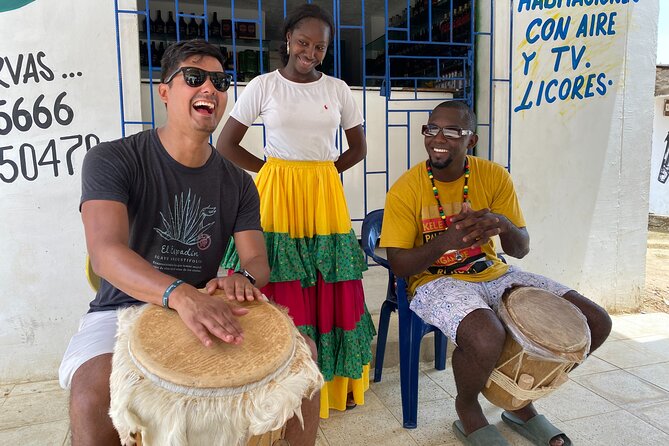
The Kombilesa Mi stop brings in a cultural and musical movement from Palenque. You get the chance to handle traditional instruments and interpret the music alongside members of the group.
This is one of the most interactive parts of the day. You do not need to be a musician. The point is to listen, join in, and feel how rhythm operates as part of community life. Several accounts of the experience highlight music as a favorite moment, and it is easy to see why: the activity turns an explanation into something you can hear and attempt yourself.
Do note one important distinction. A traditional Batata music and dance presentation is not included in the price. The Kombilesa Mi activity is part of the scheduled cultural route, but a separate Batata performance would cost extra if available.
Walking Palenque’s mural route
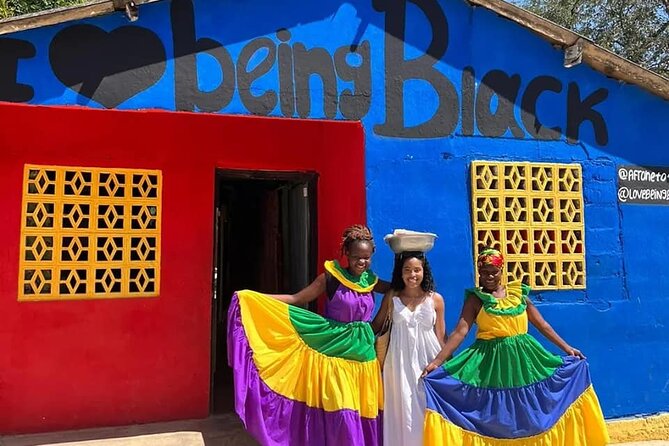
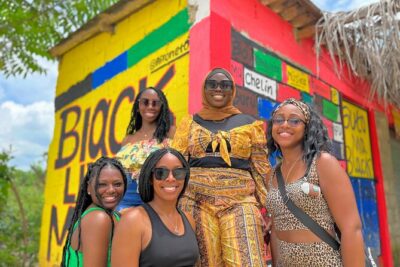
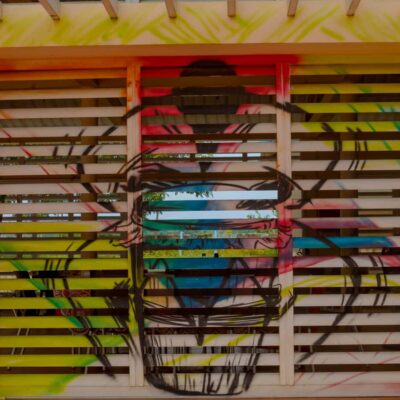
The mural route takes you through the streets of Palenque, where identity murals explain local themes and provide natural places for photographs. This is the most visual section of the tour.
The murals give you a way to read the town as you walk. Instead of seeing painted walls as simple decoration, you learn what each image represents and how art helps keep memory visible. Your guide can also connect the paintings to language, music, ancestry, and daily life.
This is where comfortable shoes matter most. The complete visit involves substantial walking, and the heat can be intense. Buildings generally do not have air-conditioning, so a hat, cool water, and loose clothing are sensible choices. One useful suggestion is to bring a small fan, umbrella, or water spritzer if you struggle with hot weather.
Religion, Catholic influence, and Palenque belief
The religiousness stop examines the imposition of Catholicism and the community’s own religious traditions. The subject is important because colonial religion did not erase earlier beliefs. Instead, local practice developed through pressure, adaptation, and preservation.
Expect a conversation about the difference between imposed religion and the forms of religiosity that remain meaningful within Palenque. This is not simply a church visit. It is a chance to consider how communities protect their worldview while dealing with outside institutions.
The stop takes roughly 30 minutes. Ask questions if you want more detail, since the topic can be layered and the local guide may explain it through stories familiar to the community.
Boxing with the Kid Pambelé monument
At the monument to Antonio Cervantes Reyes, known as Kid Pambelé, the tour turns to sport and local pride. Cervantes was a major Colombian boxing figure, and the stop explains his importance to both the country and Palenque.
The visit ends with a small boxing class. It is a playful change of pace after the historical and religious discussions, but it also has a serious point. Sport can create opportunity, confidence, and public recognition for a community.
You will not need boxing experience. The activity is designed as a short introduction, not a full training session. Still, wear shoes suitable for movement and remember that the heat makes even light activity more tiring.
Lunch from the fire pit to the bijao
The final stop is lunch, and it is a satisfying way to end a day built around everyday culture. The featured meal is fish in coconut sauce, described as coming from the stove to the bijao, with food prepared in a traditional communal style.
The menu also includes fried fish, chicken, steak, and stewed pork, along with a vegetarian choice. Bottled water is included, which matters in this climate. The meal is more than a convenient package add-on. Food shows you what ingredients, cooking methods, and hospitality look like in the community.
If you have a limited appetite or dietary needs, check the available option when booking. A vegetarian selection is listed, but the exact dish is not specified.
How the $102 price measures up
At $102 per person, this is not the cheapest way to leave Cartagena for half a day. The price makes more sense when you count what is included: private transportation in an air-conditioned vehicle, a local guide, bottled water, lunch, and a sequence of cultural meetings and activities.
You are also paying for access to a small community through people who can explain what you are seeing. A large operator might provide smoother timing or a more formal presentation, but it may not offer the same direct contact with local musicians, traditional doctors, artists, or boxing figures.
The private format is especially useful for couples, families, and small groups who want to ask questions without keeping up with a crowded bus. It also makes the experience more personal. The trade-off is that you may encounter guides with different levels of formal tour training. One less favorable assessment found the local presentation less polished than expected, so you should choose this for community contact and substance, not a luxury finish.
Guides, translation, and the feel of the visit
Guide quality matters here because the experience depends on explanation. Names associated with strong visits include Neudis, Romeo, Royman, Leo, Victor, and Laos. Drivers such as Ignacio and Richard have also been praised for punctuality, friendliness, and helpful service.
English support may come through a translator. Gabriel is repeatedly described as clear, friendly, and able to keep the group involved, while Liliana has also been praised for making the day accessible. Your specific guide and translator may vary, so treat these names as examples rather than a guarantee.
If you speak Spanish, you may have an easier time joining informal conversations. If you do not, a translator is important because the value of the visit rests on stories and explanations, not just sightseeing.
Who should book this experience?
I would choose this tour if you want history tied to living culture. It suits people who enjoy talking with local residents, trying activities, eating a regional meal, and learning how a community preserves its identity.
It is also a good fit for solo visitors. The private format can make it easier to ask questions and take part in music or boxing without feeling lost in a large group. Families may enjoy the hands-on elements, especially the instruments and boxing session, though children need protection from the heat.
I would think twice if you want a relaxed, air-conditioned sightseeing day. The tour is active, outdoor-oriented, and warm. It is also not the best match if you expect a highly polished production with fixed performances at every stop.
Free cancellation is available up to 24 hours before the start time. Poor weather or failure to meet the minimum number of participants can lead to a new date or a full refund. Most people can participate, but the amount of walking and heat should guide your decision.
Should you book the Palenque tour?
Book it if you want to understand why San Basilio de Palenque matters, not just take a quick photograph there. The strongest parts are the local voices, the practical look at medicine and homes, the music session, the mural walk, and the meal.
Bring comfortable shoes, sun protection, and extra water money if you want to buy more beyond the included bottles. Small 10,000 COP bills are also useful for tipping the local people who lead individual cultural sessions.
I recommend this tour for curious, respectful visitors who value direct community contact over polished tourism. At $102, it offers good value when you use the private transport, meal, guide, translation, and local activities. Just arrive ready for heat, walking, and a visit that feels personal rather than packaged.
FAQ
Where does this tour take place?
The experience takes you from Cartagena to San Basilio de Palenque, where all of the cultural stops are located.
How long does the experience last?
The tour lasts approximately 6 hours and 30 minutes.
What is included in the price?
The price includes an air-conditioned vehicle, bottled water, and lunch. Lunch options include fish, chicken, steak, pork, and a vegetarian choice.
What food is served for lunch?
The featured meal is fish in coconut sauce, along with fried fish, fried chicken, steak, stewed pork, and vegetarian food.
Is traditional music and dance included?
A traditional Batata music and dance presentation is not included in the price.
Is this a private tour?
Yes. Only your group participates in the private tour or activity.
What happens if the weather is poor?
If poor weather causes the experience to be canceled, you will be offered another date or a full refund.
Just added around Cartagena
- Cartagena: Party Bus Tour In Cartagena★ 4.2 · 3 reviews
- Cartagena: Ecoplan on Barú, Aviary and Oceanarium in one day★ 3.3 · 3 reviews
- Isla Tierra Bomba beach club: Day Pass with typical food★ 5.0 · 3 reviews
- White Night Boat Party: Dinner Buffet, Dancing and Open Bar★ 4.6 · 3 reviews
- Tayrona Park adventure in Santa Marta: Cabo San Juan from Cartagena★ 3.8 · 3 reviews
- Mompox Caribbean Routes★ 4.8 · 3 reviews
- Cartagena: Photography Workshop Tour★ 5.0 · 3 reviews
- Cartagena: Day Tour to Tierra Bomba Island★ 3.2 · 3 reviews
San Basilio de Palenque Tours, compared.
Palenque´s tour, dance show, lunch, pick-Up inclu
Read our review →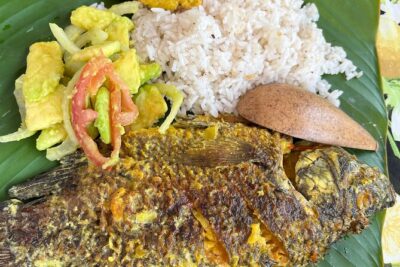
Tour a san Basilio de Palenque desde cartagena
Read our review →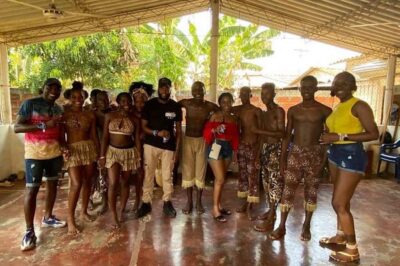

Tour cultural to san Basilio de Palenque from cartagena
Read our review →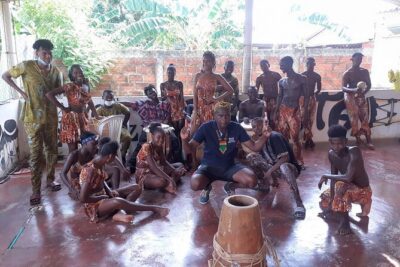
Private Tour with Certified Guide of San Basilio De Palenque
Read our review →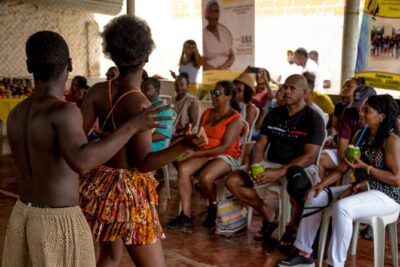
Browse the lists this tour appears in