
Reviewed · HISTORICAL TOURS
Cali: Walking tour of the historic center
Cali’s story is best read on foot. This 2 to 3-hour walk links colonial churches, Indigenous goldwork, riverfront sights, and the salsa world that gives the city its distinctive beat. I especially like the small-group format, capped at seven people, and the chance to try local fruit and a traditional lulada instead of simply walking past cafés and plazas.
I also like the route’s variety. You move from La Merced Church and the Calima Gold Museum to Jairo Varela Square and the trumpet monument, so Cali feels like more than a salsa destination. The main consideration is pace: 13 stops in a short tour means some visits are brief, and anyone wanting long museum time or a relaxed lunch should plan extra time afterward.
Guide quality is a major strength here. Julio has been praised for making the walk feel personal, especially when one booking created an informal one-to-one tour, while Marcela has been described as engaging and skilled at connecting culture, food, daily life, and salsa. The tour has a 4.9 rating from 69 reviews, with 97 percent recommending it.
In This Review
- Key points to know before you book
- Starting at La Merced, where Cali began
- Four thousand years of gold at the Calima Museum
- Churches, theater, and the relationship between church and state
- Plaza de Caicedo and the center of public Cali
- Following the salsa trail on Calle del Sabor
- Puente Ortiz and the Cali River views
- Lulada under the ceiba trees at Parque Paseo Bolívar
- Jairo Varela Square and Cali’s modern salsa identity
- Green pauses, riverfront streets, and La Ermita
- Color and street art on Calle de la Escopeta
- What the $41 price gives you
- Who should book this Cali walk?
- Should you book it?
- FAQ
- How long does the historic center walking tour last?
- What is the maximum group size?
- Where does the tour begin?
- Where does the tour finish?
- Is a drink included?
- Does the tour operate if it rains?
- What should I bring?
Key points to know before you book
- La Merced marks Cali’s origin story: Begin at the church linked to the city’s founding and see Cristo Rey from the center.
- The Calima Gold Museum adds real depth: Spend about 25 minutes with Indigenous artifacts dating back more than 4,000 years.
- Salsa is part of the walking route: Calle del Sabor and Jairo Varela Square explain why music is central to Cali’s identity.
- You taste local Cali along the way: A typical drink, including lulada caleña, is part of the experience.
- The group is genuinely small: The maximum is seven people, allowing room for questions and personal attention.
- Bring rain gear and good shoes: The tour runs in wet weather, and the route includes plenty of pavement and outdoor walking.
Starting at La Merced, where Cali began
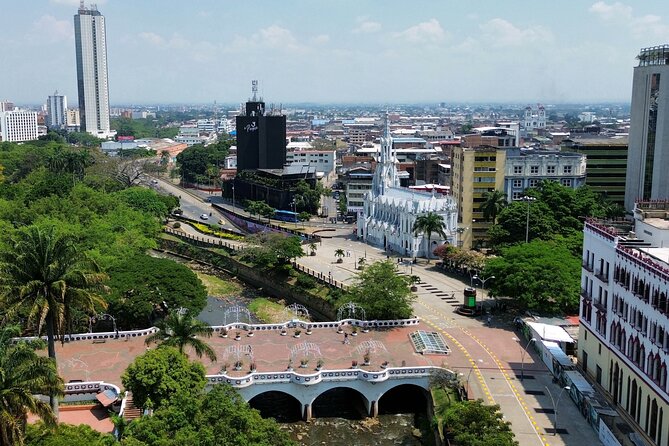
The tour starts at Valley Adventours, at Cra. 5 #3-02 in Comuna 3. From there, you walk to Iglesia La Merced, a fitting first stop because the church is tied to the beginning of Cali. The explanation about the city’s name and the seven rivers gives you a useful frame for everything that follows.
La Merced also offers a graceful introduction to Cali’s colonial side. Inside, you can appreciate the architecture and look toward Cristo Rey, the large hilltop statue visible from the city. The stop lasts about 15 minutes, so expect a guided orientation rather than a long architectural study.
That short opening works well if you want the city explained in plain terms before the route gets busier. If you are especially interested in church interiors, take note of what catches your eye because later stops also include religious buildings, each with a different place in Cali’s civic story.
More Walking Tours in Cali
- The Cali Street Food Walking Tour
★ 5.0 · 81 reviews - Afro Walking Tour. The colors of Cali.
★ 5.0 · 61 reviews - Cali: Walking tour of the historic center
★ 4.9 · 18 reviews
Four thousand years of gold at the Calima Museum

The Museo del Oro Calima is the most substantial museum stop, with about 25 minutes set aside. Here you learn about Indigenous communities and the craftsmanship behind gold objects that helped inspire the El Dorado legend.
The museum gives the tour an important change of mood. Cali is often presented through salsa, nightlife, and warm-weather energy, but the Calima collection reaches back more than 4,000 years. That longer view helps you understand that the city’s identity did not begin with Spanish colonial rule or modern music.
I would pay close attention to the guide’s explanation of how gold shaped European ideas about El Dorado. The point is not simply that old objects are beautiful. It is that Indigenous skill, belief, and material culture were transformed into a powerful outside legend.
The admission is included, and there is no separate ticket cost listed for the stop. Still, 25 minutes is enough for a focused introduction, not every display. If museums are your main reason for visiting Cali, you may want to return independently.
Churches, theater, and the relationship between church and state
The walk continues through the Teatro Municipal Enrique Buenaventura, a Neo-Classical public theater in the historic center and cultural center of Cali. The scheduled visit is only five minutes, so think of this as a quick architectural and civic marker rather than a full theater tour.
Next comes Plaza de la Gobernación and San Francisco Church. The route carries you through central streets before taking you inside the church, giving you a chance to notice how public buildings, religious spaces, and older streets sit close together.
At St. Peter the Apostle Cathedral, you visit Cali’s main church. About 15 minutes are planned here, with the guide explaining the relationship between Church and State. That context gives the cathedral more meaning than a simple photo stop. You are looking at a place connected to public life as well as worship.
These church visits may appeal most if you enjoy history told through buildings. The drawback is that the schedule is tight. You will see several important sites, but the tour is not designed for long periods of quiet reflection or detailed art study.
Plaza de Caicedo and the center of public Cali
Plaza de Caicedo is the city’s main square, surrounded by palm trees and framed by the National Palace. Its open layout makes it a useful place to pause and understand the scale of central Cali.
The stop lasts about 15 minutes. The guide can help you connect the square to the buildings around it, rather than leaving you to see only palms, stone, and passing pedestrians. This is the kind of explanation that turns an ordinary-looking plaza into a place with civic weight.
I like this section because it slows the route after the museum and churches. You are still moving, but the square gives you space to look outward and notice how Cali’s public center is arranged.
More history-led tours:
- Shared Tour Cali’s Historical Downtown
★ 4.8 · 143 reviews - Historical Shared Tour Salsa, Graffiti & Resistance in Cali
★ 5.0 · 107 reviews - Chiva Private Cultural Tour with Audio Guide in Buga
★ 5.0 · 49 reviews - Cartagena: Historic Center and Getsemaní Shared Walking Tour
★ 4.9 · 2,716 reviews
Following the salsa trail on Calle del Sabor
Calle del Sabor, or Flavor Street, brings the music into the walk. The route explains how salsa, clave rhythms, trumpets, and bells shaped this part of Cali’s identity.
The stop is about 10 minutes, so you should expect stories and a sense of place rather than a full dance lesson or club visit. One review praised the chance to dance some salsa during the tour, so you may find the guide adds a little movement and fun when the setting allows.
This is one of the best parts of the experience for anyone who wants culture explained through sound and daily life. You do not need to be an expert in salsa. The point is to understand why music belongs in a walking tour of Cali, not just in an evening entertainment schedule.
Puente Ortiz and the Cali River views
Puente Ortiz is described as the first bridge over the Cali River. From its arches, you can take photographs of the river, Torre de Cali, and the Three Crosses Hill.
The stop lasts around 10 minutes. It gives your legs a short change from church interiors and plazas, while also opening up views across the city. The bridge is a useful reminder that Cali’s public spaces are tied to its rivers and hills, not only to its streets.
Bring your camera, but do not expect a long scenic break. The tour keeps moving, and the bridge is one part of a larger route. If you want extensive photography time, you may need to return later at your own pace.
Lulada under the ceiba trees at Parque Paseo Bolívar
At Parque Paseo Bolívar, you visit the statue of Simón Bolívar and learn about Colombia’s independence. The stop is planned for about 20 minutes, making it one of the longer outdoor pauses.
The shade of the ceiba trees is welcome, especially on a sunny day. You also get a typical Cali drink, la lulada caleña, made with local lulo fruit. This is a small but valuable detail because food and drink often explain a place more directly than a list of dates.
The tour includes one typical soda or pop drink, but anything beyond the specified refreshments is not included. If you have dietary concerns or want more food, bring money for your own purchases. The drink is a sample, not a meal.
Jairo Varela Square and Cali’s modern salsa identity
Jairo Varela Square shifts the focus from traditional history to modern cultural influence. Jairo Varela and Grupo Niche are closely linked to salsa in Cali and far beyond the city.
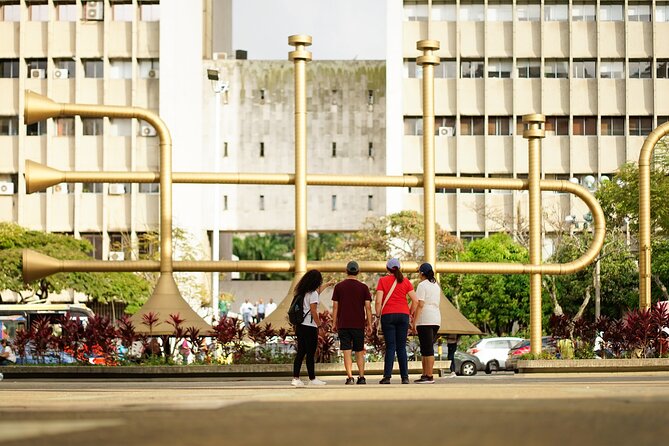
The highlight here is the trumpet monument, where the tour explores the musical design and its connection to the city’s sound. About 20 minutes are allowed, giving the guide enough time to explain why this spot matters rather than treating it as a quick photo backdrop.
This stop should be especially useful if you have heard salsa in Cali but do not know the people and places behind it. Julio and Marcela have both received praise for making the subject engaging, and this is the part of the route where a strong guide can make a real difference.
Green pauses, riverfront streets, and La Ermita
Parque Simón Bolívar provides another short outdoor break. The park includes palm trees, fruit trees, birds, and a tribute to Cali’s rivers. The planned 10 minutes will not turn this into a botanical visit, but it adds a calmer note to the route.
You then walk along Bulevar del Río Cali. From the boulevard, you can see La Ermita Church, the Coltabaco building, and the Jorge Isaacs Theater. The views bring several recognizable pieces of Cali together and help you see how older architecture meets public riverfront space.
This section is less about entering buildings and more about looking carefully as you walk. That is where comfortable shoes, sunscreen, a hat, and a water bottle matter. An umbrella is also wise because the tour operates in rain rather than canceling automatically.
Color and street art on Calle de la Escopeta
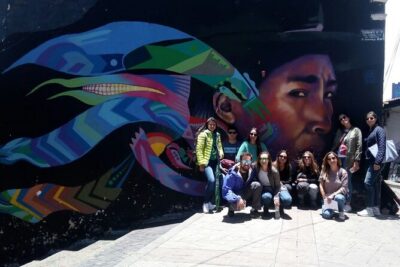
The final listed stop is Calle de la Escopeta, described as one of Cali’s most colorful streets. Woven roofing, street art, colonial surroundings, and food aromas give the closing stretch a more local, informal feel.
You have about 10 minutes here. It is a lively finish after the formal churches, museums, and civic squares. I would use this time to take in small details, including painted walls, overhead textures, and the way food activity changes the character of the street.
The route then returns to the original meeting point. Since the total walk lasts about two to three hours, the 13 stops are tightly arranged. You get a broad introduction to Cali, but not an exhaustive tour of every site.
What the $41 price gives you
At $41 per person, the cost is reasonable if you value a guide who can connect many parts of the city in one outing. Your price covers the local guide, the walking route through the historic center, and a typical drink. The listed attractions have no separate admission charge.
The value comes mainly from interpretation and route planning. You could walk between many of these places yourself, but you would not automatically understand the link between La Merced, the Calima goldwork, Colombian independence, Cali’s rivers, and salsa culture.
The small group improves that value. With a maximum of seven people, you can ask questions without trying to speak over a large crowd. One booking with Julio became an informal private tour because the person was the only one scheduled that morning. That kind of flexibility can make the experience feel personal, though it depends on the day.
The price does not include unspecified food or drinks, so do not treat the tour as a food tour. It is a history and culture walk with one local refreshment.
Who should book this Cali walk?
I would choose this tour if you are visiting Cali for the first time and want a practical orientation before exploring alone. It suits you especially well if you enjoy history, architecture, local music, and short stops that build a broad picture of a city.
It is also a good fit if you prefer a small group. The guides Julio and Marcela have been praised for clear English, engaging explanations, and the ability to connect salsa with everyday life, food, and culture.
You may want another option if you dislike walking in sun or rain, need long museum visits, or want a dedicated salsa class. The pace is active, and the tour runs in wet weather. Wear comfortable walking shoes and sunscreen, and bring a hat, water, and umbrella.
Confirmation is provided at booking, and the meeting point is near public transportation. Most people can participate. You can cancel without penalty up to 24 hours before the local start time, but late cancellations and late changes are not accepted.
Should you book it?
Book this walk if you want Cali explained as a whole, not reduced to salsa alone. The route covers churches, Indigenous art, independence, civic buildings, river views, local fruit, and modern music in a compact three-hour introduction.
I would be comfortable recommending it to a first-time visitor who values a strong guide and a manageable group. Just keep your expectations clear: this is a brisk overview with short visits, not a slow museum day. If that sounds right, the 4.9 rating, 97 percent recommendation rate, and praised guiding from Julio and Marcela make $41 a fair price.
FAQ
How long does the historic center walking tour last?
The tour lasts approximately two to three hours.
What is the maximum group size?
The activity has a maximum of seven travelers.
Where does the tour begin?
It begins at Valley Adventours, Cra. 5 #3-02, Comuna 3, Cali, Valle del Cauca, Colombia.
Where does the tour finish?
The activity ends back at the original meeting point.
Is a drink included?
Yes. A typical soda or pop drink is included. Other food and drinks are not included unless specifically stated.
Does the tour operate if it rains?
Yes. The tour is not canceled because of rain. You should bring an umbrella or suitable rain clothing.
What should I bring?
Wear comfortable walking shoes and sunscreen. Bring a water bottle, hat, and umbrella.
More Walking Tours
- Cali: Walking Tour of the 11 Neighborhoods of Commune 20
★ 5.0 · 10 reviews - Cali: Fruit Market Walking Tour with Tastings
★ 4.6 · 7 reviews - Cali: Two hours walking Cali City discovery tour
★ 5.0 · 3 reviews - Cali: Three hours walking Cali City discovery tour
★ 4.7 · 3 reviews
Just added around Cali
- Cali: Two hours walking Cali City discovery tour★ 5.0 · 3 reviews
- From Cali: Whale Watching Day Trip in Buenaventura★ 4.6 · 3 reviews
- Cali: Three hours walking Cali City discovery tour★ 4.7 · 3 reviews
- Cali: Comuna 20 Siloé Street Art Tour★ 5.0 · 4 reviews
- Craft Beer Pub Crawl in Cali★ 5.0 · 4 reviews
- Cali: Pico de Loro Trekking Adventure – Farallones de Cali★ 5.0 · 4 reviews
- Private Tour on a 1100cc Cruiser Motorcycle★ 5.0 · 4 reviews
- Flavors of Cali: Food tour at the local market★ 5.0 · 5 reviews
Historical Tours, compared.
Historic Center and Getsemaní Shared Walking Tour
Read our review →
History & Local Life Essentials Tour on an E-Bike
Read our review →
Historical Shared Tour Salsa, Graffiti & Resistance in Cali
Read our review →
Shared Tour of Bogota’s Historic Downtown (La Candelaria)
Read our review →
Browse the lists this tour appears in