
Reviewed · MEDELLíN TOURS
We Don’t Talk About Pablo: Untold Narcos Story and Transformation
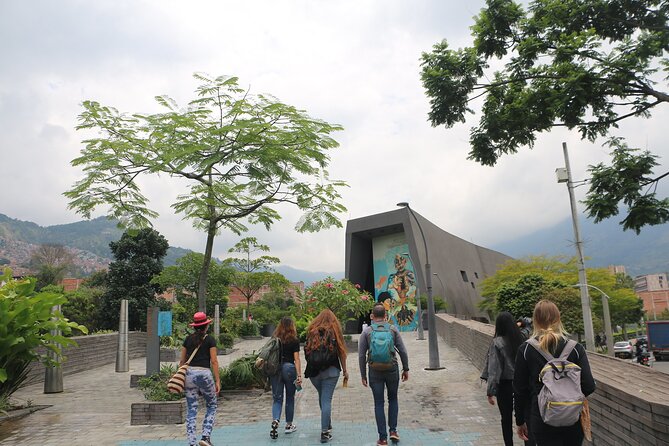
The real story is bigger than one man. This four-hour Medellín tour uses the Pablo Escobar era as a starting point, then turns toward victims, neighborhoods, public memory, and the city’s long effort to change. I like its use of the cable car, tram, and Museo Casa de la Memoria to explain how Medellín fits together, and I like that the tour does not treat Escobar as a folk hero. The main consideration is simple: if you want a parade of Escobar houses, graves, and crime scenes, this may feel too restrained.
I also like the private format, with only your group taking part, and the fact that transportation, public transit tickets, snacks, and admission fees are included. Guides such as Carlos, Juan Carlos, Hector, Wilson, and Luis Ospina have been praised for making the subject personal and clear. Still, some past versions of the experience have included different stops, so you should confirm the exact route before paying if one particular Escobar site is important to you.
In This Review
- Key points at a glance
- A Pablo Escobar tour with a different purpose
- Starting from your Medellín accommodation
- Riding the cable car toward Comuna 8
- The Museo Casa de la Memoria gives the tour its moral center
- Parque Memorial Inflexión and the city’s changing identity
- What the guides add to the experience
- Is $95 a fair price?
- Who should book this tour?
- Final verdict: choose context over celebrity
- FAQ
- How long does the We Don’t Talk About Pablo tour last?
- What is included in the $95 price?
- Is this a private tour?
- Does the tour visit Escobar’s prison or grave?
- Should I wear comfortable shoes?
- Can I cancel for a full refund?
Key points at a glance
- A history lesson with public transit: The cable car and tram are not just ways to get around. They help explain Medellín’s steep geography and changing neighborhoods.
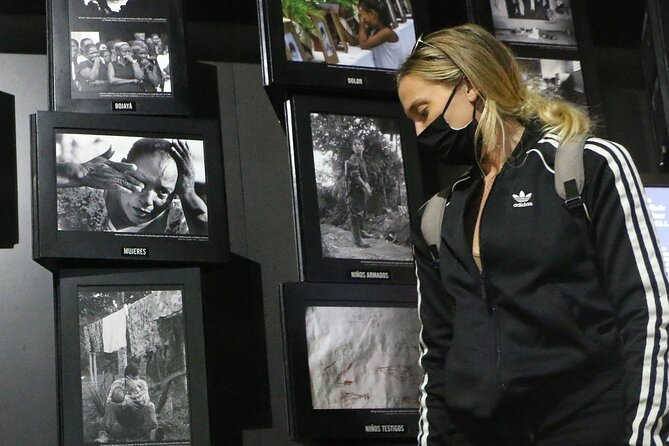
- The Memory Museum is the heart of the tour: Interactive displays bring forward the voices of people affected by narcotrafficking and political violence.
- This is not a glorification tour: The focus is on victims, social damage, environmental effects, and Colombia’s recovery.
- Private guiding makes a difference: Your group can ask direct questions and spend more time on subjects that matter to you.
- Four hours covers a lot: Expect walking, transit rides, museum time, and stops around the center-east of Medellín.
- Good value if you want context: At $95 per person, the price makes more sense for visitors seeking a serious history lesson rather than a quick city ride.
A Pablo Escobar tour with a different purpose
The title is blunt, but the point is not to make Escobar the star. The tour uses his life and death to explain the wider narco era, including the damage inflicted on Colombian society, the environment, public institutions, and ordinary families.
That distinction matters in Medellín. Television productions often reduce the city’s past to glamorous criminals, fast cars, and dramatic escapes. This experience tries to correct that picture by asking what happened to the people who lived through bombings, assassinations, intimidation, poverty, and political violence.
You will hear about Escobar, but you should expect the story to move well beyond him. The tour places his rise within Colombia’s larger social and political setting, then follows the city’s attempts to recover. That makes it a better fit for you if you want to understand Medellín, not simply collect photographs connected to a famous criminal.
The tone also appears to depend heavily on the guide. Several guides have received strong praise for their storytelling and for connecting the past with present-day Colombia. Carlos has been described as especially effective at explaining the era from a personal perspective, while Juan Carlos has been praised for linking Escobar’s story with Medellín’s broader politics and history. Hector was noted for explaining how the city changed over the past 40 years.
Because this is a private tour, you can ask about difficult subjects without worrying about slowing down a large group. That is useful here. The topic is complicated, and a good guide can explain the difference between charity used for political influence and genuine public service, or between popular memory and historical fact.
A few more trips worth weighing up before you book
- Medellin: Comuna 13 Graffiti Tour, Cable Car & Street Food
★ 4.8 · 9,046 reviews - Medellín: The Real Pablo Escobar Tour
★ 4.8 · 3,205 reviews - Medellín: Comuna 13 True Story and Street Food Tour
★ 4.9 · 1,779 reviews
Starting from your Medellín accommodation
The tour begins with pickup from your Medellín accommodation. The supplied information describes a comfortable, air-conditioned minivan for the start of the journey, while the inclusions also refer to hotel pickup and drop-off using public transportation. Since those details do not fully match, confirm the vehicle and return arrangements when you book.
The opening hour is used to set the scene. Rather than rushing straight to a famous address, the guide introduces the narco phenomenon and explains how it continued to affect Colombia after Escobar’s death. You will also begin looking at Medellín as a city of hills, separated neighborhoods, and major transport projects.
That geographic lesson is valuable. Medellín is not a flat city where every district feels close together. The steep terrain shaped how communities developed and how difficult it was for some residents to reach jobs, schools, and public services. The transport network became part of the city’s effort to reduce that isolation.
The guide may also explain the contrast between old fear and newer civic efforts. Medellín’s social transformation did not erase the past, and the tour does not pretend it did. Instead, it shows why public transport, memorials, museums, and neighborhood improvements matter in a city still dealing with painful memories.
Riding the cable car toward Comuna 8
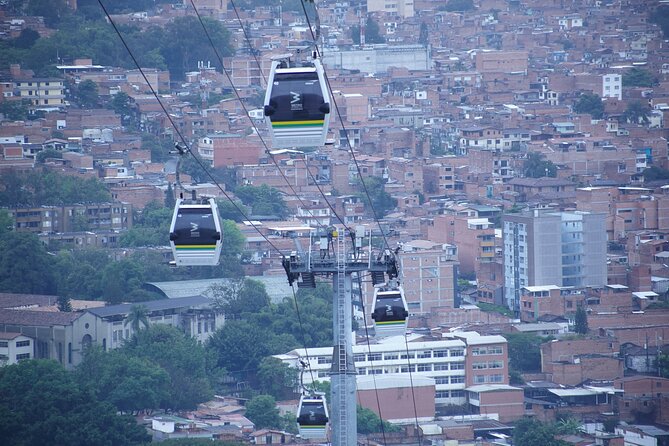
The cable car ride is one of the most useful parts of the experience because it gives you a visual lesson in Medellín’s geography. As the car climbs, you can see how neighborhoods rise along the hillsides and how the city stretches across the valley.
The ride toward Comuna 8 is not presented as a sightseeing shortcut. Your guide uses it to explain the communities affected by violence and the city’s efforts to improve access and opportunity. The view helps you understand why transport has a social role here, not just a practical one.
You will then walk through several stops connected to Medellín’s transformation. The supplied route refers to areas from El Pinal to Ayacucho. Exact walking distances are not provided, so wear comfortable shoes and clothing as advised. This is not a ride-only excursion.
There is also a practical benefit to using local transport. You get a small taste of how residents move through the city rather than seeing Medellín only through the windows of a private vehicle. For many visitors, the cable car and tram make the tour feel more connected to daily life.
Still, do not expect every stop to be a polished attraction. Some places are meaningful because of what happened there, not because they are visually impressive. The experience asks you to listen, look at the city around you, and think about change. It is less about dramatic scenery than about understanding why the city looks and functions as it does.
The Museo Casa de la Memoria gives the tour its moral center
The tram takes you to Museo Casa de la Memoria, an institution focused on Colombia’s past and the experiences of people affected by violence. Admission is included, and the museum uses interactive exhibits to present different voices connected with struggle, loss, and resilience.
This is where the tour’s purpose becomes clearest. Instead of treating the narco era as an adventure story, the museum shifts attention to families, communities, and citizens who had to live with the consequences. You get a wider view than a standard celebrity-crime tour can provide.
Plan to give the museum real attention. One hour is allotted for this stop, which should allow time to engage with the exhibits rather than simply walk through. The displays may be emotionally heavy, so this is not the lightest stop of the afternoon.
The museum’s role in shaping the tour’s research and narrative adds weight to the visit. It also helps balance the guide’s spoken account with a public institution designed to preserve memory. You are not relying only on one person’s interpretation.
I consider this museum the strongest reason to choose this tour over a basic Escobar circuit. It gives you tools for understanding how violence affects a society long after the headlines fade. It also makes the visit more respectful to the people whose lives were changed by the narco era.
A completely different kind of day out around Medellin:
- Medellín: Comuna 13 District Tour with Cable Car Ride
★ 4.8 · 1,467 reviews - Medellin: Coffee Tour with Transport, Snacks and Tastings
★ 4.7 · 1,357 reviews - From Medellín: Paragliding Tour with GoPro Photos & Videos
★ 4.9 · 1,210 reviews - Tour Guatapé
★ 5.0 · 865 reviews
Parque Memorial Inflexión and the city’s changing identity
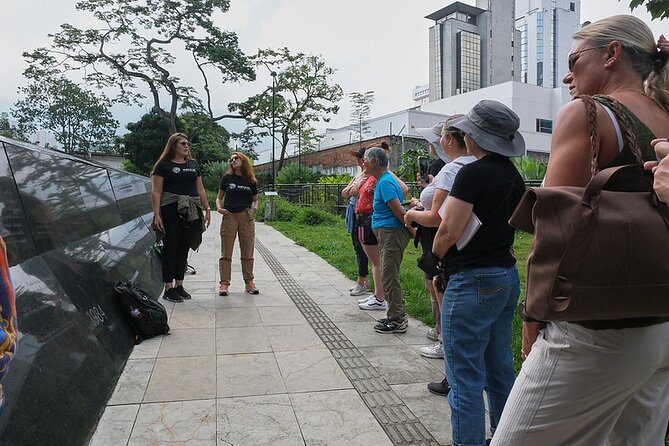
The final two-hour section includes Parque Memorial Inflexión and other significant locations connected with Medellín’s violent past and renewal. Parque Memorial Inflexión functions as a memorial to victims of the narco wars, shifting the focus once again from the perpetrator to those who suffered.
A memorial can feel quiet compared with the drama of a television series, but that is part of its value. You are given space to consider the cost of violence and the way a city chooses to remember it. The stop helps explain why public memory matters in Colombia.
The route also includes neighborhood walks and stops that illustrate change from El Pinal toward Ayacucho. Your guide connects these places with social renewal and ongoing efforts to deal with the effects of violence. The point is not to claim that Medellín has solved every problem. It is to show how the city has worked to build a different future.
Some past experiences with related tours included a home connected with Escobar, a cemetery, planes associated with drug trafficking, or La Catedral for an added fee. One past booking also substituted La Catedral after the group had already visited Comuna 13. Those details are useful context, but they should not be treated as guaranteed parts of this current route.
The current stated itinerary centers on the Memory Museum, cable car, tram, memorial, and neighborhood stops. If you specifically want Escobar’s former prison, house, grave, or place of death, ask the operator before booking. One person found the absence of the prison disappointing, while another felt that the broader focus made the experience stronger.
What the guides add to the experience
The strongest praise for this experience goes to its guides. Carlos has been credited with telling the story through the viewpoint of people who lived through the violence, and some visitors found his own background especially compelling. Juan Carlos was praised for making the tour feel like a friend showing someone around Medellín while still explaining serious history.
Other named guides include Nicolas, Wilson, Luis Ospina, Hector, and John William. Their approaches have varied, but the common thread is clear: the guide can make this tour either a thoughtful history lesson or a basic ride around town.
Nicolas was praised for expanding the discussion beyond Escobar and for ending with a local food stop in Comuna 13. Luis Ospina was described as a personable storyteller who could sometimes arrange an additional visit to La Catedral for a small extra charge. John William was appreciated for presenting information in a neutral way, even when an unexpected television production was filming at one location.
You should use the private format to your advantage. Ask about how the narco era affected Medellín’s government, neighborhoods, police, military, and ordinary residents. Ask how the city’s transport system fits into its social programs. A good guide should be able to adjust the conversation to your interests.
The tour is bilingual in English and Spanish. If you have a strong preference for one language, state it at booking.
Is $95 a fair price?
At $95 per person, this is not the cheapest way to see Medellín. The value depends on what you want from the day.
You are paying for about four hours, a private experience for your group, a bilingual guide, transportation, cable-car and tram tickets, snacks, museum admission, and other entry fees. That bundle is more useful than a simple vehicle tour because the route includes public transit, guided interpretation, and a museum visit.
I think the price is fair if you care about context and want a guide who can answer questions. It is less attractive if your main goal is a fast circuit of famous Escobar locations. One past booking described the tour as a little expensive for a ride around the city, which is a fair warning for visitors who do not plan to engage with the historical material.
The private format improves the value for couples, families, or friends who want to ask many questions. Solo visitors pay more per person, but the experience may still be worthwhile if this subject is a major reason for visiting Medellín.
The fact that the tour is often booked well in advance suggests you should not leave it to the last minute. Confirmation is sent within 48 hours, subject to availability.
Who should book this tour?
I would recommend it to you if you:
- Want to understand Medellín’s narco era without celebrating Escobar
- Prefer social and political context over crime trivia
- Enjoy museums, guided walks, and public transport
- Want a private guide who can adjust the conversation
- Are interested in how a city rebuilds after violence
- Have not yet visited the Museo Casa de la Memoria
It may not suit you if you:
- Want guaranteed visits to Escobar’s house, grave, or prison
- Prefer a relaxed sightseeing drive with little walking
- Find memorial museums emotionally difficult
- Have already studied the subject in depth and want only specific locations
The tour is suitable for most people, but comfortable shoes are important. The route includes walking, cable-car travel, tram travel, and neighborhood stops. Since the experience is private, you can ask about the walking demands and timing before setting out.
Final verdict: choose context over celebrity
I recommend We Don’t Talk About Pablo if you want a serious introduction to Medellín’s recent past. Its best features are the Memory Museum, the cable-car route through Comuna 8, and guides who explain how narcotrafficking affected real communities.
I would not book it expecting a fixed list of Escobar landmarks. The route described today is built around memory, geography, and transformation, and past versions or related bookings have sometimes used different stops. Confirm your priorities before paying.
For a first or early-day activity in Medellín, this tour can help you understand the city’s neighborhoods, transport system, and difficult past before exploring on your own. At $95, it is worthwhile when you want more than a crime-themed photo stop. If that sounds like your kind of travel, book it. If you only want Pablo Escobar locations, choose a tour that lists those sites clearly and specifically.
FAQ
How long does the We Don’t Talk About Pablo tour last?
The experience lasts approximately four hours. The schedule includes about one hour for the initial Medellín history and orientation, one hour at Museo Casa de la Memoria, and two hours for Parque Memorial Inflexión and neighborhood stops.
What is included in the $95 price?
The price includes a bilingual English and Spanish guide, hotel pickup and drop-off arrangements, cable-car and tram tickets, snacks, and entry tickets. Tips, unspecified food and drinks, and personal expenses are not included.
Is this a private tour?
Yes. Only your group participates in the activity.
Does the tour visit Escobar’s prison or grave?
The current stated route focuses on the Museo Casa de la Memoria, Comuna 8, Parque Memorial Inflexión, Ayacucho, El Pinal, and related stops. Past bookings have included different Escobar locations, but the prison, grave, house, and place of death are not guaranteed in the supplied itinerary. Ask the provider if one of these places is essential to you.
Should I wear comfortable shoes?
Yes. Comfortable clothing and shoes are recommended because the tour includes walking as well as cable-car and tram rides.
Can I cancel for a full refund?
You can cancel up to 24 hours before the experience’s start time for a full refund. Cancellations or changes made less than 24 hours before the start time are not accepted for a refund.
Just added around Medellin
- Medellin: 4-Hour Zip-Line Adventure★ 5.0 · 3 reviews
- Medellin: Tour to The Cathedral – History of Pablo Escobar and his Impact★ 5.0 · 3 reviews
- Medellin: waterfalls and naturals poolls tour★ 3.7 · 3 reviews
- Guatapé & Coffee Farm, all in one day★ 5.0 · 3 reviews
- Comuna 13: Recorrido de Arte Urbano, Cultura y Resiliencia★ 5.0 · 3 reviews
- Shared Tour Medellin’s Violence & Post-conflict after Pablo★ 4.1 · 3 reviews
- Medellin: Coffee Farm Tour & Spa with Overnight Glamping★ 4.5 · 3 reviews
- Colombia: Official Pablo Escobar Meet the Family Museum Tour★ 5.0 · 3 reviews
Medellín Tours, compared.

Comuna 13 Graffiti Tour, Cable Car & Street Food
Read our review →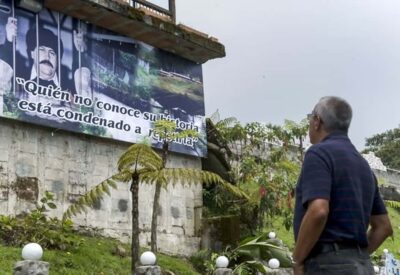

Coffee Tour with Transport, Snacks and Tastings
Read our review →
Browse the lists this tour appears in