
Reviewed · COMUNA 13 & STREET ART TOURS
Graffiti Tour: a fascinating walk through a street art City
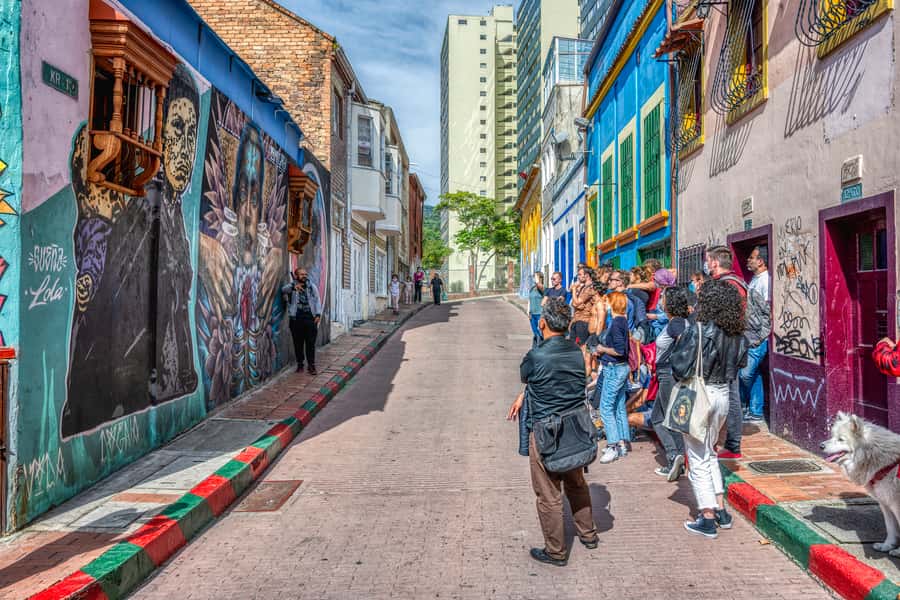
Street art here carries real political weight. This Bogotá walk turns painted walls, political posters, and community stories into a lesson about Colombia’s past and hopes for the future. I like the focus on local artists and the way the tour connects art with current social issues. I also like that the experience supports new murals rather than treating the city as a backdrop. The main consideration is that the tour deals with serious subjects, including false positives, so it may feel more like a cultural history lesson than a light sightseeing stroll.
The meeting point beside the Gold Museum makes the start easy to find, and the 150-minute length gives you enough time to see several locations without giving up a whole day. At $15 per person, the shared option offers strong value, though you should expect walking, outdoor conditions, and frank discussion of politics and conflict.
In This Review
- Key points to know before you go
- Why Bogotá’s street art deserves a closer look
- Starting beside the Gold Museum
- The first murals: learning how to look
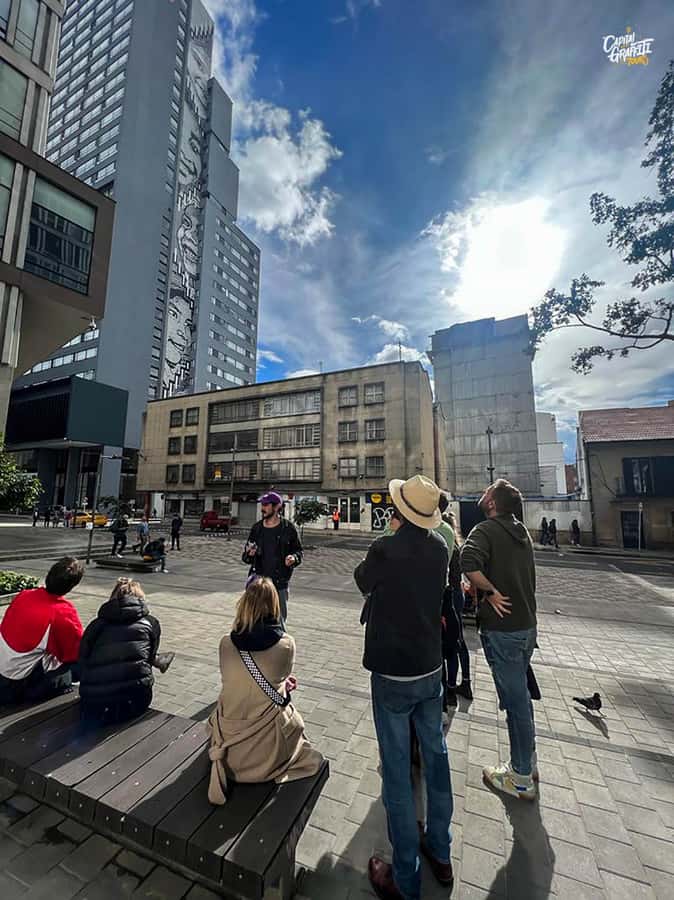
- The tallest illegal graffiti in Colombia
- Political posters and the city’s current debates
- False positives and community resilience
- How the social impact model affects the experience
- What 150 minutes feels like on the street
- English, Spanish, and four other language choices
- Who will get the most from this walk
- Booking details that matter
- Should you book Capital Graffiti Tours?
- FAQ
- Where does the graffiti tour meet?
- How long does the tour last?
- How much does the experience cost?
- What languages are available?
- Is the tour wheelchair accessible?
- Can I book a private group?
- Can I cancel or pay later?
Key points to know before you go
- See Colombia’s tallest illegal graffiti: One of the tour’s headline sights is a remarkable piece of unauthorized street art, presented as part of Bogotá’s wider struggle over public space.
- Read political posters in context: The walk includes posters addressing current social issues, giving you more than a collection of colorful walls to photograph.
- Learn about false positives: The tour examines the resilience of communities affected by this painful part of Colombia’s recent story.
- Meet beside the Gold Museum: Look for a guide wearing a purple hoodie, purple cap, or carrying a purple umbrella at Carrera 6 # 15-88.
- Support ongoing art projects: The company works with artists and community leaders, putting money and effort into new murals and cultural projects.
- Choose your language and group style: Guides are available in English, Spanish, Italian, French, and German, with private and small-group options offered.
Why Bogotá’s street art deserves a closer look
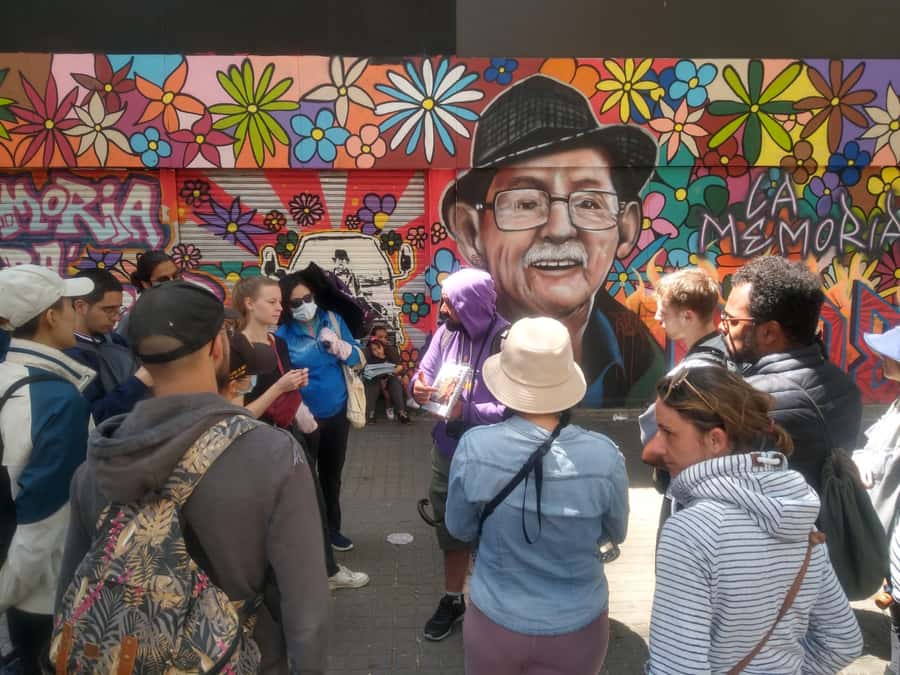
Bogotá is often described through museums, colonial buildings, food, and mountain views. Yet its walls provide another way to understand the city. Graffiti and street art here can speak about government, inequality, peace, memory, identity, and the right to use public space.
That context is what makes this tour more useful than a simple photo walk. You are not only looking at color and technique. You are being shown how an image can carry a political message, remember a painful event, or ask what kind of future Colombia wants.
I like the tour’s broad approach. It includes major murals, smaller pieces, political posters, and the people behind them. That range matters because Bogotá’s street art is not one single style. Some works are large and carefully planned. Others are direct, urgent, and designed to be seen quickly by people passing through.
The tour is also presented by people involved in art promotion and cultural work. That gives the experience a clear purpose: to help fund and manage new murals while connecting visitors with local artists and community leaders. You are still taking a city tour, but your payment also helps support the work being discussed.
More City Tours in Bogotá
- Bogota: Bicycle City Tour
★ 4.9 · 2,156 reviews - Bogotá: Private City Tour, Monserrate, Emerald and Botero
★ 4.9 · 798 reviews - Bogotá City Tour with Monserrate, Gold and Botero Museums
★ 4.9 · 584 reviews
Starting beside the Gold Museum
The meeting point is next to the Gold Museum at Carrera 6 # 15-88. This is a practical place to begin because the museum is a well-known central landmark. You do not need to search for an obscure doorway or a business hidden on a side street.
Look for the guide’s purple hoodie, cap, or umbrella. That simple identifying detail is especially useful in a busy downtown meeting area. Arrive ready to walk, since the tour visits multiple street art and graffiti locations rather than remaining in one square.
The Gold Museum also creates an interesting contrast. Inside, you find Colombia’s pre-Columbian goldwork and ancient cultures. Outside, the city’s walls show modern arguments and artistic experiments. The tour does not replace a visit to the museum, but starting here places old and new Colombian culture within a few steps of each other.
The provider is Capital Graffiti Tours. Its guides speak English, Spanish, Italian, French, and German. If you are traveling with people who have different language needs, confirm the preferred language when booking.
The first murals: learning how to look
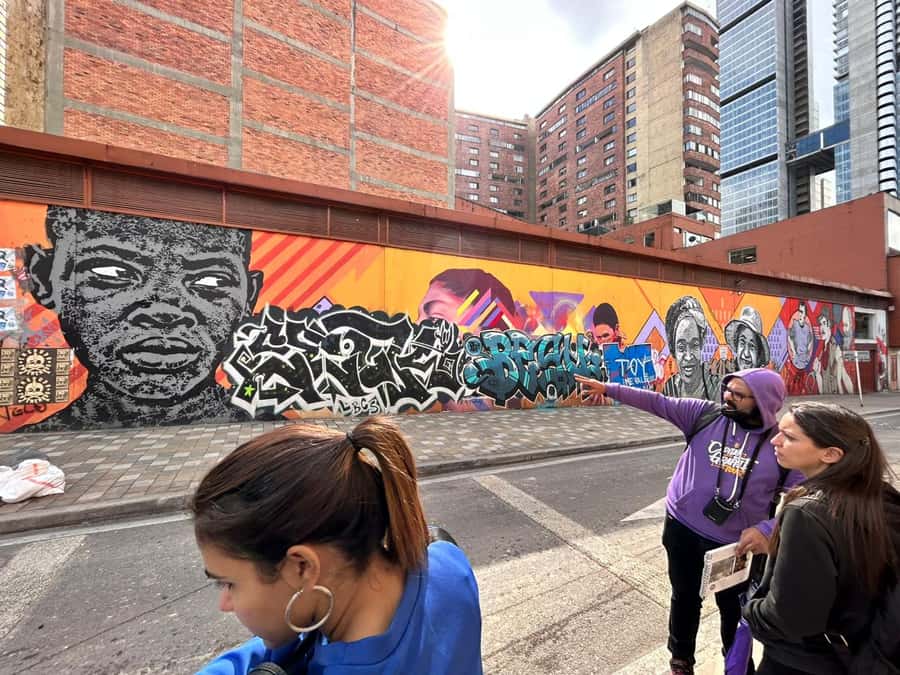
Early in the walk, your guide helps you read a mural rather than simply photograph it. That may include the artist’s technique, source of inspiration, use of scale, and choice of location. A large wall can communicate one idea through size alone, while a small poster may depend on words or a quick visual symbol.
This is where the tour’s educational purpose becomes useful. Without explanation, you might admire a design but miss why it was painted there or what it responds to. The guide provides political, cultural, historical, and geographical context so the work has a clearer place in Bogotá’s public life.
You can also expect an introduction to different artists and methods. The supplied information does not identify individual guides or promise specific artists on every departure, so the exact works can vary. That is worth keeping in mind if you are hoping to see one particular mural.
Still, the flexible format has an advantage. Street art changes. Walls are painted over, damaged, reclaimed, or replaced. A tour built around several sites can respond to that changing city better than a fixed museum display.
The tallest illegal graffiti in Colombia
One of the strongest reasons to book is the chance to see what is described as the tallest illegal graffiti in the country. The phrase illegal refers to the work’s unauthorized status, not to a lack of artistic skill. Its scale raises a basic question: who gets to decide what belongs on a city wall?
This stop gives the guide a chance to discuss the tension between public art, private property, municipal rules, and artistic freedom. The work is important not just because it is tall. Its size makes the dispute over public space impossible to ignore.
For you, the stop is also a reminder that graffiti is not always a small signature or quick tag. Some works require planning, teamwork, materials, and a willingness to accept risk. The tour’s explanation can help you see the difference between a passing mark and a major public statement.
Do not expect every stop to have the same visual impact. A towering mural naturally attracts attention, while a political poster may be modest in size. The tour works best when you value the meaning behind the art as much as its scale.
More Walking Tours in Bogotá
- Bogotá: Guided La Candelaria Walking Tour
★ 4.8 · 1,229 reviews - Zipaquirá Salt Cathedral Private Tour + Walking Tour
★ 5.0 · 66 reviews - La Candelaria Walking Private Tour (3 Hrs.)
★ 5.0 · 51 reviews - Bogota Walking Tour Teusaquillo, a different part of the city
★ 5.0 · 41 reviews
Political posters and the city’s current debates
The walk includes an area filled with political posters addressing current social issues. This section may be less polished than a commissioned mural, but it can be just as revealing. Posters are direct by nature. They often aim to persuade, criticize, remember, or organize rather than simply decorate.
Your guide explains the issues behind the images and words, helping you place them within Bogotá’s present-day debates. The tour also addresses the country’s peace process and its hopes for a better future. That gives the posters a wider frame, connecting local street messages with national questions.
This part of the walk deserves patience. If you rush past the posters, you may see a wall of paper and paint. If you stop to listen, you begin to understand how public art can function as a newspaper, memorial, protest sign, or community notice.
The political content is also the main reason this tour may not suit everyone. If you want only cheerful murals and colorful photo stops, parts of the experience may feel heavy. If you want help understanding how Colombians use public space to discuss difficult subjects, this is one of the tour’s most valuable sections.
False positives and community resilience
The tour addresses the resilience of communities in the face of false positives. This is a painful subject, and the wording matters. Rather than treating Colombia’s difficult past as distant background, the walk connects it with the people and communities who continue to live with its consequences.
Street art can preserve memory when official accounts feel incomplete or disputed. A mural or poster may give a community a way to name an injustice, honor people affected, and insist that the subject not be forgotten. Your guide provides the context needed to approach this material with care.
The exact examples can differ depending on the route and current works. The important point is that the tour does not use political art as decoration alone. It shows how creative work can help communities speak, organize, and continue forward.
This is also where the tour’s social purpose becomes clearest. Capital Graffiti Tours works with community leaders and artists, and it reinvests in the financing and management of new murals. You are not simply looking at a finished product. You are learning about an ongoing process of cultural expansion and community action.
How the social impact model affects the experience
Many city tours collect a fee, provide a guide, and end when the group returns to the meeting point. This one presents a wider model. The organizers describe themselves as artists and promoters, not only as a tourism company. Their work includes supporting new murals and helping manage projects that change the urban setting.
That makes the $15 price easier to assess. For a 150-minute guided walk, the cost is already reasonable compared with many organized cultural activities. The added value comes from the explanation and from the stated connection between tour income and future art projects.
In the shared option, the amount you pay per person equals the suggested tip for the guides and the work they provide, after commission. You do not need to pay extra at the end, even if other people in the group contribute a different amount. That arrangement keeps the final cost clear.
A private or small-group format is also available. The information provided does not state the price difference, so check that before choosing. A smaller group may be useful if you want more time for questions or prefer a quieter discussion of political subjects.
What 150 minutes feels like on the street
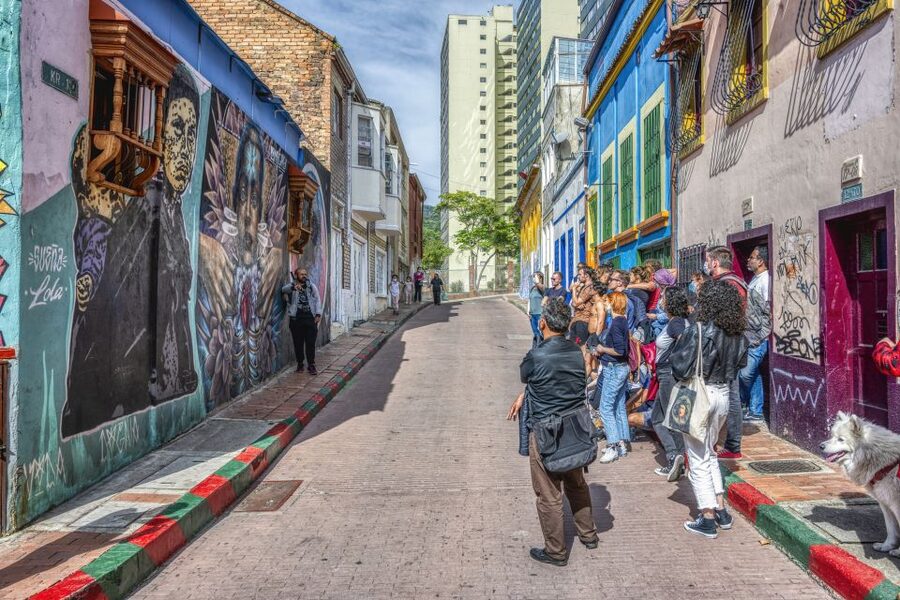
Two and a half hours is a good length for this kind of walk. It is long enough to visit several locations and build a connected story, but short enough to fit around a museum visit or another central Bogotá activity.
The tour is outdoors and centered on walking between works. The exact route and number of stops are not specified, so you should think of the experience as a guided neighborhood walk rather than a timed sequence of named attractions. Some parts may hold your attention for their size or detail. Others may matter because of the issue they present.
Wear practical shoes and dress for changing outdoor conditions. These are general walking precautions rather than special requirements, but they will make the two and a half hours more comfortable. Keep valuables out of sight, since valuables are specifically not allowed on the activity.
The tour is wheelchair accessible. If you need particular route support, it is sensible to mention your requirements when booking, since street conditions and the current route can affect comfort even on an accessible experience.
English, Spanish, and four other language choices
The available languages are English, Spanish, Italian, French, and German. That is a useful range for an experience built around wordplay, political messages, and historical context. You want to understand the explanation, not just look at the pictures.
A guide can also help explain references that do not translate neatly. A slogan, symbol, or local political reference may seem vague without context. The language choice therefore affects the quality of the tour more than it might on a simple sightseeing route.
Because the guide is central to the experience, pay attention to the format you book. Shared tours place you with other people and can offer a social atmosphere. Private and small-group options may give you more control over questions and pace, though the price may be different.
Who will get the most from this walk
I would recommend this tour to anyone who wants Bogotá’s public art explained rather than merely photographed. It suits museum visitors, students of Colombian history, photographers who want more context, and people interested in how cities express political ideas in public.
It is particularly useful early in a Bogotá visit. The themes may help you notice later murals and posters with a better understanding of what you are seeing. The tour can also add balance to a schedule focused only on traditional attractions.
Families with older children may find it worthwhile if they are comfortable discussing serious social issues. The subject matter is not presented as carefree entertainment, and younger children may not have much interest in the political explanation.
You may want to skip it if you have limited mobility and do not want an outdoor walking tour, though the activity is listed as wheelchair accessible. You may also prefer another outing if your only goal is to find bright, playful walls for quick photographs.
Booking details that matter
You can cancel up to 24 hours in advance for a full refund. The reserve-now, pay-later option lets you hold a place without paying today, which is helpful when your Bogotá schedule is still changing.
Check starting times before booking because availability varies. The meeting point is fixed beside the Gold Museum, but the street art route itself may change as new pieces appear and older ones disappear.
At the start, look for the purple clothing or umbrella. Bring only what you need, since valuables are not allowed. The activity includes an English-speaking guide by default in the stated inclusions, while the full language range also includes Spanish, Italian, French, and German.
Should you book Capital Graffiti Tours?
Book this walk if you want political context, local art, and community stories in one central Bogotá experience. The $15 shared price is fair for 150 minutes, particularly because the stated payment model supports the guides’ work and helps fund future murals.
Go with realistic expectations. This is not only a hunt for the city’s prettiest walls. You will encounter serious subjects, changing public art, and discussion of Colombia’s peace process and false positives. For me, that is the point: Bogotá’s street art is most valuable when you understand what it is trying to say.
FAQ
Where does the graffiti tour meet?
The tour meets next to the Gold Museum at Carrera 6 # 15-88 in Bogotá. Look for a guide wearing a purple hoodie or cap, or carrying a purple umbrella.
How long does the tour last?
The tour lasts 150 minutes, or two and a half hours.
How much does the experience cost?
The stated price is $15 per person. For the shared option, this amount covers the suggested tip for the guides and their work, minus commission, and no extra payment is required at the end.
What languages are available?
The tour is available in English, Spanish, Italian, French, and German.
Is the tour wheelchair accessible?
Yes. The activity is listed as wheelchair accessible.
Can I book a private group?
Yes. Private and small-group options are available.
Can I cancel or pay later?
You can cancel up to 24 hours in advance for a full refund. You can also reserve now and pay later, so nothing is due at the time of booking.
More Street Art
- Bogotá Street Art and Graffiti Tour 3 Hrs
★ 5.0 · 5 reviews - Medellín: Private Comuna 13 Street Art Tour
★ 4.8 · 88 reviews - 2-Hours Street Art Walking Tour in Medellin Comuna 13
★ 5.0 · 54 reviews - History and Street Art Tour in Comuna 13
★ 5.0 · 35 reviews
More Comuna 13 and Street Art Tours
- Bogotá: La Candelaria Graffiti & Urban Art Guided Tour
★ 4.7 · 250 reviews - Fun Graffiti Workshop: The Art of Aerosol and Color
★ 5.0 · 73 reviews - Graffiti Tour in La Candelaria Bogotá with Transportation
★ 5.0 · 68 reviews - Bogotá: Graffiti Tour el mejor recorrido de arte urbano
★ 4.7 · 41 reviews
Just added around Bogota
- Zipaquirá: Private Salt Cathedral Mine and Walking Tour★ 4.8 · 3 reviews
- Walking tour José Celestino Mutis Botanical Garden 3 hrs★ 5.0 · 3 reviews
- Bogota: East Hills Mountain Hike★ 4.2 · 3 reviews
- Fun Graffiti Workshop: The Art of Aerosol and Color★ 5.0 · 3 reviews
- Bogota: Explore the forest and bird watching at Chicaque Natural Park★ 5.0 · 3 reviews
- Bogota: Downtown City and Monserrate Hill Private Tour★ 3.7 · 3 reviews
- Bogotá: La Candelaria Food Tour with Tastings★ 4.2 · 3 reviews
- Bogotá: Candelaria Tour with Cacao and Coffee Workshop★ 5.0 · 3 reviews
Comuna 13 & Street Art Tours, compared.
Comuna 13 Graffiti Tour, Cable Car & Street Food
Read our review →
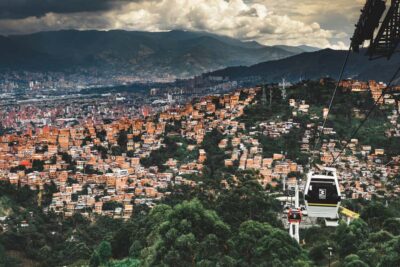
Private City Tour with Metrocable and Comuna 13
Read our review →
Comuna 13 Tour with Snacks And Your Own Graffiti
Read our review →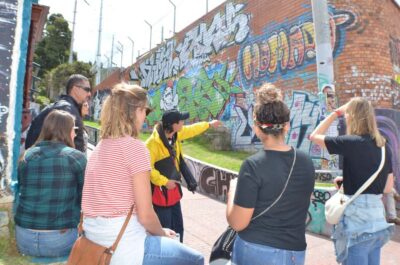
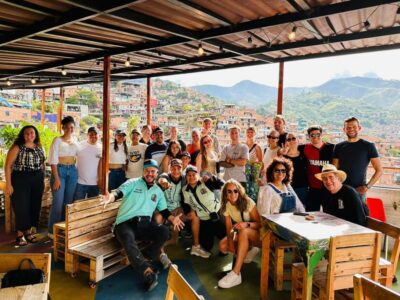
Comuna 13 and Graffiti Guided Tour with a Local
Read our review →
Browse the lists this tour appears in