
Reviewed · COMUNA 13 & STREET ART TOURS
Shared Tour Cali’s Salsa, Graffiti & Resistance Experience
Salsa tells Cali’s story. This 150-minute walk links music, graffiti, and social protest in a way that goes well beyond a dance lesson. I like the strong cultural focus and the chance to see murals that honor both salsa figures and social movements. I also like the practical tips on salsa bars and food spots. The main drawback is the pace: you may walk about 8 kilometers, often in warm conditions, and the shared format means the guide cannot tailor every minute to you.
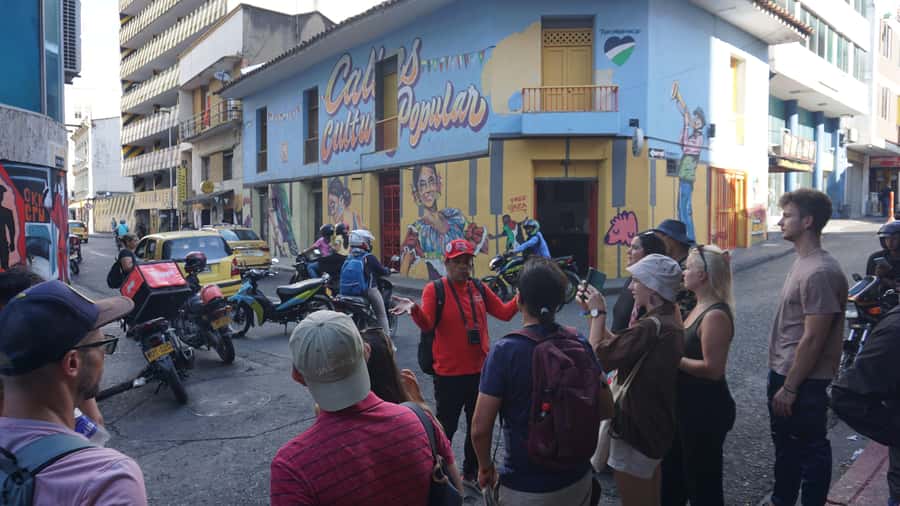
Starting at Plazoleta Jairo Varela, the tour follows Cali’s popular culture through public squares, streets, murals, and music landmarks. Guides such as Cristian, also called Chris, bring plenty of energy to the subject. You should come ready to listen, walk, ask questions, and perhaps move to the beat. Comfortable shoes and water are essential.
In This Review
- Key points to know before you book
- Why salsa matters in Cali beyond the dance floor
- Meeting the red umbrellas at Plazoleta Jairo Varela
- Plazoleta de la Caleñidad and the meaning of local pride
- Calle del Pecado and Cali’s street-level flavor
- The River Boulevard curve and the city’s changing messages
- World Cup Tunnel, 5th Avenue, and the N21 monument
- What the walking distance means for your day
- How the shared format affects the experience
- What is included for $13, and what is not
- Languages, timing, and simple preparation
- Who will enjoy this Cali walk most
- FAQ
- Where does the tour meet?
- How long does the tour last?
- How much walking is involved?
- Which languages are available?
- Is transportation included?
- Are food and drinks included?
- Can wheelchair users join?
- Should you book the Salsa, Graffiti & Resistance Experience?
Key points to know before you book
- Salsa with a social story: Learn how a popular musical form connects to African emancipation, cultural identity, protest, romance, and everyday life in Cali.
- A long urban walk: Expect about 8 kilometers over roughly 2.5 hours, with stops to hear the guide and catch your breath.
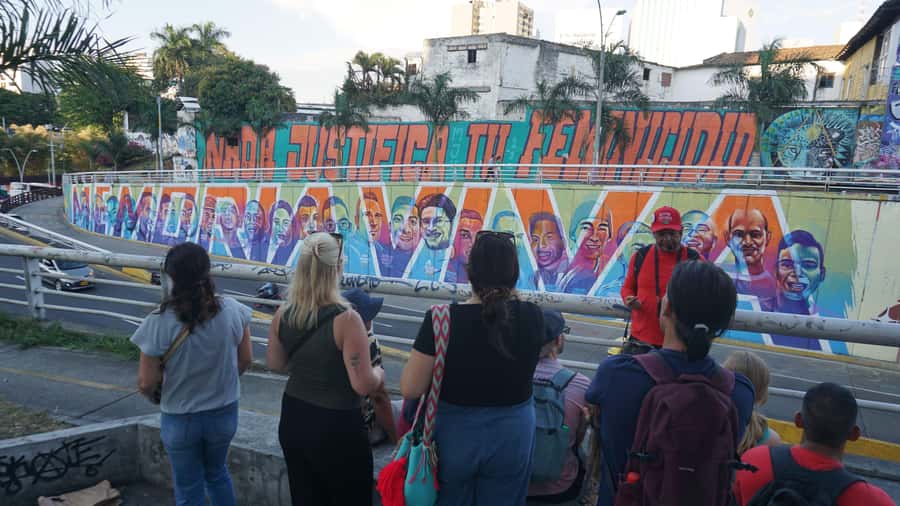
- Graffiti with purpose: See murals honoring salsa artists alongside works tied to victims, activism, and popular struggles.
- Several central landmarks: The route includes Plazoleta de la Caleñidad, Calle del Pecado, the River Boulevard curve, World Cup Tunnel, 5th Avenue, and the N21 monument.
- Useful nightlife advice: The guide recommends salsa bars and local places to eat, which can help you plan the rest of your evening.
- Good value at $13: The price covers the guide and walking experience, while food, drinks, transport, and paid entrances are left to you.
Why salsa matters in Cali beyond the dance floor
Cali is famous for salsa, but this tour asks you to hear the music differently. Instead of treating salsa as background noise for a night out, it presents it as part of cultura popular, the shared culture shaped by ordinary people, neighborhoods, musicians, dancers, and social groups.
The story begins beyond Cali. The tour traces salsa from the Caribbean Antilles through musical mixing and its later definition in New York. From there, it follows the music into Cali, where the style took root and developed strongly during the 1960s through the 1980s.
That timeline matters. You are not simply learning that Cali likes salsa. You are learning why the city made the music its own and how a genre shaped by African and Caribbean experiences became a central part of local identity.
The guide also explains how salsa lyrics can carry several kinds of meaning. Some songs speak of romance and heartbreak. Others refer to historical events, social conditions, or resistance. The music can be joyful and political at the same time, which helps explain why it remains so important in Cali.
I find this approach more useful than a tour that only points out dance clubs. If you already know salsa, it gives you social and historical context. If you are new to the music, it gives you a better way to listen when you hear it later that night.
More Comuna 13 and street art walks:
- Historical Shared Tour Salsa, Graffiti & Resistance in Cali
★ 5.0 · 107 reviews - Cali: Comuna 20 Siloé Street Art Tour
★ 5.0 · 4 reviews - Medellin: Comuna 13 Graffiti Tour, Cable Car & Street Food
★ 4.8 · 9,046 reviews
Meeting the red umbrellas at Plazoleta Jairo Varela
The meeting point is Plazoleta Jairo Varela, where you should look for the red umbrellas. This gives you a clear starting place in the city center and avoids the uncertainty that can come with meeting on an unnamed street corner.
The plaza is a fitting place to begin because the tour is concerned with public art, music, and Cali’s shared identity. Your guide introduces the main idea here: salsa is not only something performed in a club. It is part of the city’s public life.
This first stop is also where the group gets organized. Since this is a shared walk, you will meet other people rather than have an exclusive guide. That keeps the cost low at $13, but it also means you should expect a group pace instead of a private schedule.
Cristian, known as Chris to some participants, has earned especially warm praise for his animated storytelling and love of Cali. His style appears to suit this subject well. Salsa, protest, and street art need a guide who can keep the conversation moving, and the experience is designed around that energy.
Plazoleta de la Caleñidad and the meaning of local pride
The route continues to Plazoleta de la Caleñidad, a useful place to consider how Cali presents itself. The name points toward caleño identity, and the tour uses the square to discuss local pride and the habits, passions, and struggles that shape it.
Here, you can expect more explanation than formal sightseeing. The value lies in connecting a physical public space with the idea of cultura popular. Your guide helps frame salsa as something made meaningful by the people who dance to it, listen to it, perform it, and pass it along.
This part may appeal most to you if you want more than a list of landmarks. It also sets up the later contrast between celebratory salsa imagery and graffiti carrying harder political messages.
Calle del Pecado and Cali’s street-level flavor
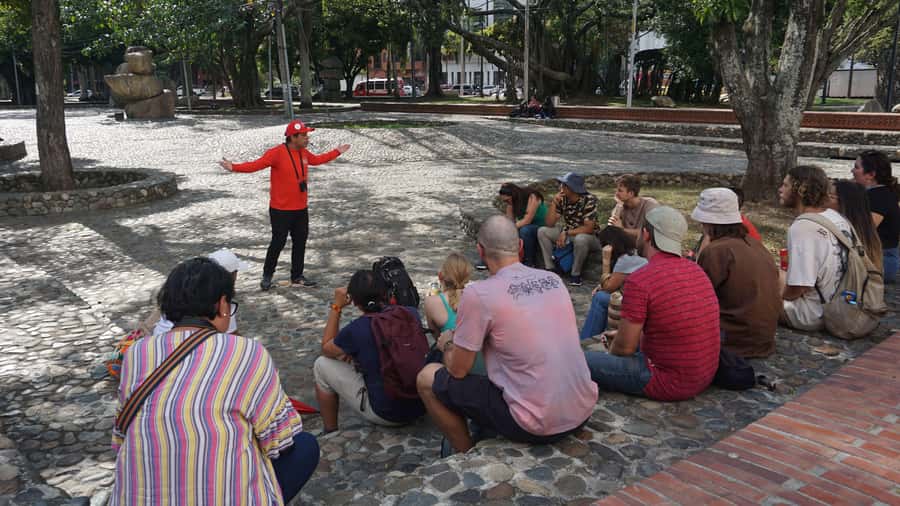
The Calle del Pecado, also called the street of flavor, brings the tour closer to Cali’s social and nightlife culture. The name alone hints at a playful, informal side of the city, and the stop helps explain how music, food, social life, and dancing overlap.
Do not expect a full meal or a bar visit included in the price. Drinks and food are not included, and the tour does not promise paid entrances. Instead, the guide offers recommendations for salsa bars and places to eat.
That can be one of the most useful parts of the afternoon or evening. Patricia, who took the tour, found the food recommendation particularly good and used the guidance to plan a night of dancing. You can treat this stop as a preview, then choose where to spend your own money afterward.
The practical advantage is clear. A guide can point you toward places connected with the local salsa scene, while you decide how much time and money to spend there. The trade-off is that the tour itself is not a club crawl.
A few more trips worth weighing up before you book
- Shared Tour Cali’s Historical Downtown
★ 4.8 · 143 reviews - The Cali Street Food Walking Tour
★ 5.0 · 81 reviews - San Cipriano Rainforest – River, Waterfalls and Adventure Day
★ 5.0 · 73 reviews - Cali: Street Food Tour
★ 4.8 · 71 reviews
The River Boulevard curve and the city’s changing messages
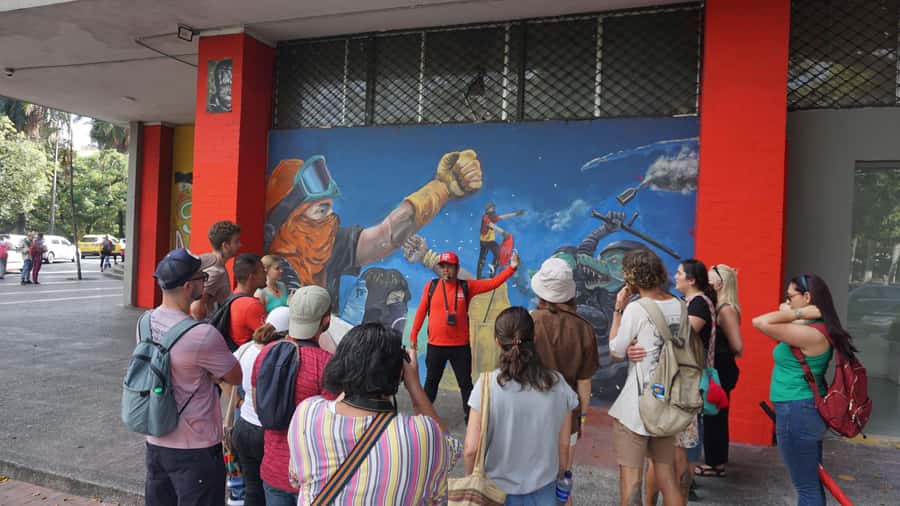
At the curve of the River Boulevard, the focus shifts toward public space and the way Cali’s streets carry memory. You will hear more about how salsa connects communities and social groups, rather than functioning only as entertainment.
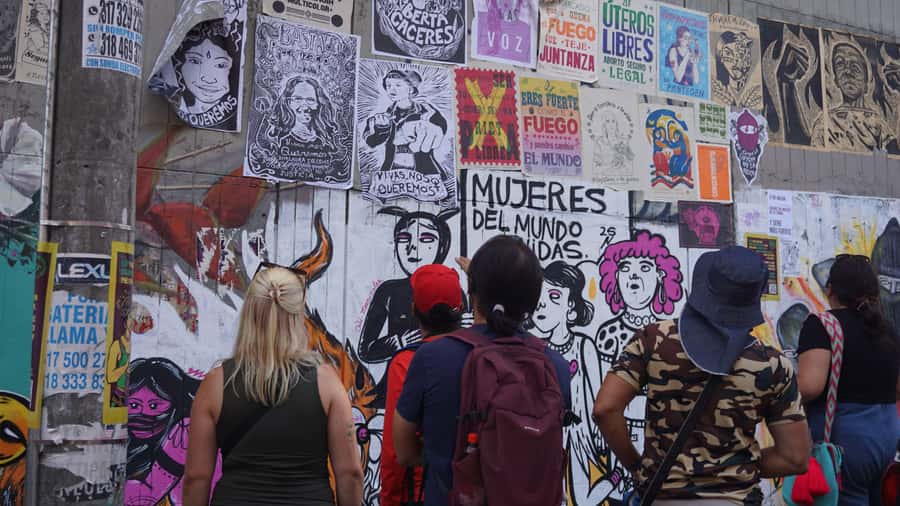
This is also where the tour’s title becomes clearer. Salsa, graffiti, and resistance are treated as related forms of expression. One mural may honor a musician or dance tradition. Nearby, another work may refer to a social cause, a protest, or a community’s pain.
The guide’s job is to help you read those works together. You are not only looking at paint on a wall. You are considering who is being remembered, which struggles are visible, and how art can keep a public conversation alive.
The route includes active street art, so conditions may change over time. Murals can be altered, covered, or replaced. That is part of the nature of street art, but it also means you should value the explanation and wider context rather than expect every image to remain exactly the same.
World Cup Tunnel, 5th Avenue, and the N21 monument
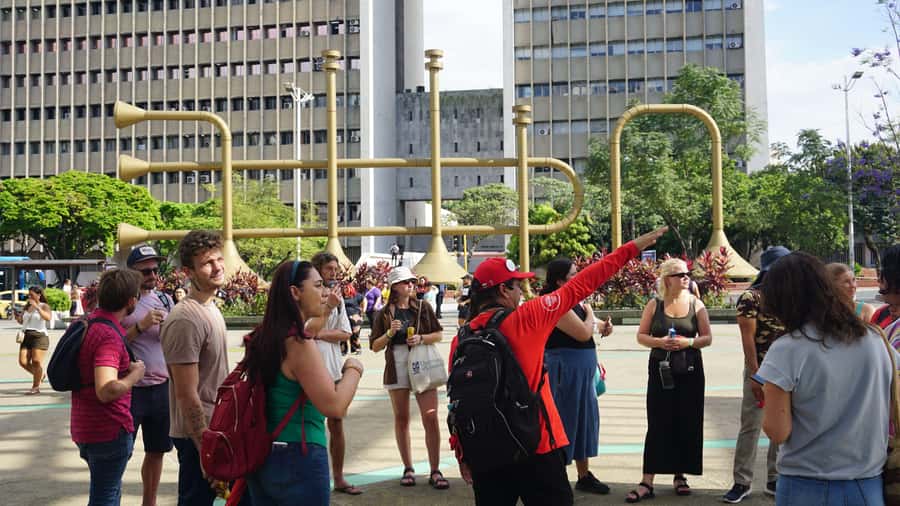
The World Cup Tunnel and 5th Avenue add more major city spaces to the walk. These locations help place the cultural story within Cali’s wider streets rather than keeping it inside a museum or dance hall.
The N21 graffiti monument, dedicated to victims, brings a more serious tone. This is an important counterweight to the music and nightlife sections. The tour does not present Cali as only cheerful, carefree, and ready to dance. It also addresses violence, loss, social outbreaks, protests, and solidarity struggles.
You should come with an open mind. The subject can be emotional and political, especially when the guide connects public art to people affected by conflict or social unrest. The experience is best for anyone willing to listen without reducing these subjects to a quick photo stop.
The tour’s central argument is that music and art can be tools of resistance. Salsa can celebrate survival, express frustration, preserve memory, and bring people together. Graffiti can do some of the same work in a more direct visual form.
What the walking distance means for your day
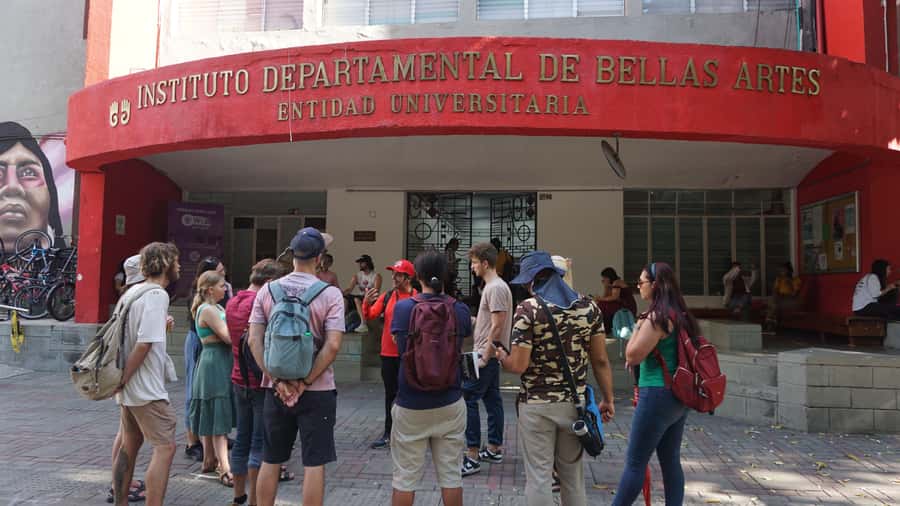
The tour lasts about 150 minutes and covers roughly 8 kilometers. That is a substantial walk, even though the guide includes resting stops. You should wear shoes that you can walk in comfortably and carry water or another preferred drink.
The route does not include transportation. You walk from place to place, and you are responsible for getting to the meeting point and returning to your hotel or next stop. That keeps the experience focused and affordable, but it may not suit you if you want a short, low-effort introduction to Cali.
Warm weather can make the distance feel longer. Comfortable clothing is more useful than dressing to impress, especially since the tour is outdoors and includes extended time on city streets.
The experience is not suitable for wheelchair users, according to the activity information. If mobility is a concern, you should contact the provider before booking rather than assume the route can be changed.
How the shared format affects the experience
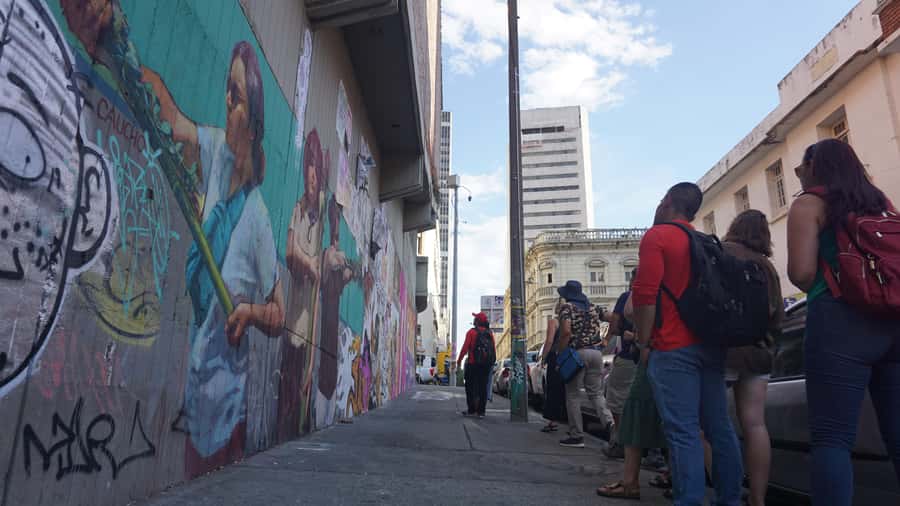
This is a shared tour, not a private walk. You will meet new people, follow a common route, and listen to the guide’s presentation with the rest of the group.
That format works well for a subject built around exchange and social energy. Salsa is a communal culture, and the group setting can make the walk feel more social. It also helps explain the low price.
The limitation is flexibility. A private guide could spend longer on your favorite mural, adjust the pace, or focus heavily on dance history. Here, the guide has to balance salsa, graffiti, resistance, city landmarks, and practical recommendations within one session.
Cristian’s lively manner seems especially important in this setting. Several comments single out his enthusiasm, storytelling, and ability to keep the experience interactive. If you want a quiet, academic lecture, this may not be the right match. If you like a guide who talks with you, keeps the group moving, and brings personal enthusiasm to the topic, it should fit better.
What is included for $13, and what is not
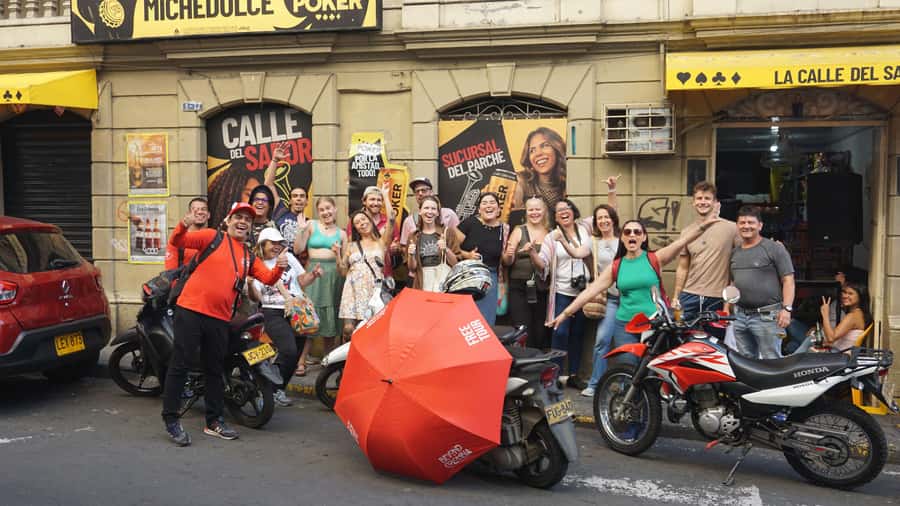
At $13 per person, the value is strong if you want context rather than admission tickets. The price includes a professional Beyond Colombia guide, the salsa history discussion, the public art route, recommendations for salsa bars, and access to benefits or discounts with recommended partners when you show the company’s Free Walking Tour Map through its Linktree.
You do not pay extra for sudden entrance fees because the route does not take you into places where those charges arise. That makes budgeting simple.
You still need to pay for your own food, drinks, souvenirs, and transport before or after the walk. No dancing lesson, club admission, meal, or drink is promised as part of the experience.
For me, the strongest value comes from the guide’s interpretation. You could see some street art on your own, but you would miss the intended links between salsa, African emancipation, popular culture, activism, and local identity. At this price, that explanation is the main purchase.
Languages, timing, and simple preparation
Live guiding is available in English and Spanish, with an optional Spanish audio guide. You should check the available start times when booking because the exact departure schedule can vary.
Bring a camera if you enjoy street art photography. Also keep your phone, wallet, and other belongings close. The route includes crowded areas, and the provider specifically advises visitors not to be careless with valuables.
Smoking is not allowed on the tour. Free cancellation is available up to 24 hours before the start for a full refund, and you can reserve now and pay later, which helps if your Cali schedule is still taking shape.
The best preparation is simple:
- Wear comfortable shoes.
- Carry enough water.
- Dress for walking and warm conditions.
- Bring curiosity about social history.
- Keep your belongings secure.
- Leave room in your evening for a salsa bar or meal recommendation.
Who will enjoy this Cali walk most
I would choose this experience if you want to understand why salsa matters to Cali, not simply find a place to dance. It suits first-time visitors who want a strong introduction to the city’s cultural identity and people who already enjoy salsa but want to hear its political and historical side.
It is also a good choice for anyone interested in public art, protest movements, or the way music shapes a city. The combination of colorful murals and difficult social subjects gives the walk more substance than a standard sightseeing route.
You may want to skip it if you dislike long walks, prefer private guiding, or only want nightclub recommendations. The tour includes those recommendations, but they are one part of a larger story.
The experience has a 4.8 rating from 53 reviews, and the most consistent praise centers on the guides, especially Cristian or Chris. The strongest comments describe the walk as informative, entertaining, interactive, and full of music. That combination is the real reason to book.
FAQ
Where does the tour meet?
Meet at Plazoleta Jairo Varela. Look for the red umbrellas.
How long does the tour last?
The tour lasts approximately 150 minutes, or about 2.5 hours.
How much walking is involved?
You will walk about 8 kilometers, with stops to rest and listen to the guide.
Which languages are available?
Live guides are available in English and Spanish. An optional Spanish audio guide is also offered.
Is transportation included?
No. You walk during the tour, and transportation to and from your hotel is not included.
Are food and drinks included?
No. Food, drinks, and souvenirs are not included.
Can wheelchair users join?
The experience is not suitable for wheelchair users.
Should you book the Salsa, Graffiti & Resistance Experience?
Book it if you want Cali explained through its music, public art, and social struggles. At $13, it offers good value, especially when you count the local bar and food suggestions that can shape the rest of your evening.
Just plan for the 8-kilometer walk, bring water, and expect a shared group experience. If you do that, you will leave with more than a few mural photographs. You will have a clearer sense of why salsa is not merely Cali’s soundtrack, but part of how the city remembers, celebrates, and speaks up.
Just added around Cali
- Cali: Two hours walking Cali City discovery tour★ 5.0 · 3 reviews
- From Cali: Whale Watching Day Trip in Buenaventura★ 4.6 · 3 reviews
- Cali: Three hours walking Cali City discovery tour★ 4.7 · 3 reviews
- Cali: Comuna 20 Siloé Street Art Tour★ 5.0 · 4 reviews
- Craft Beer Pub Crawl in Cali★ 5.0 · 4 reviews
- Cali: Pico de Loro Trekking Adventure – Farallones de Cali★ 5.0 · 4 reviews
- Private Tour on a 1100cc Cruiser Motorcycle★ 5.0 · 4 reviews
- Flavors of Cali: Food tour at the local market★ 5.0 · 5 reviews
Comuna 13 & Street Art Tours, compared.
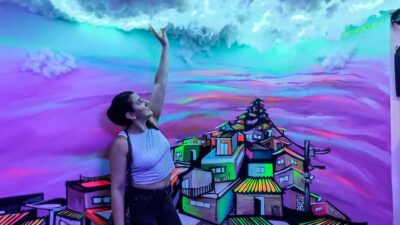
Comuna 13 Graffiti Tour, Cable Car & Street Food
Read our review →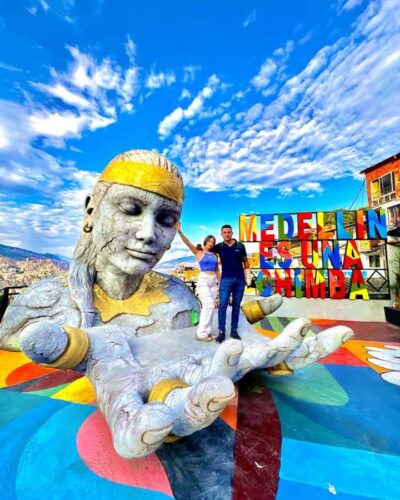
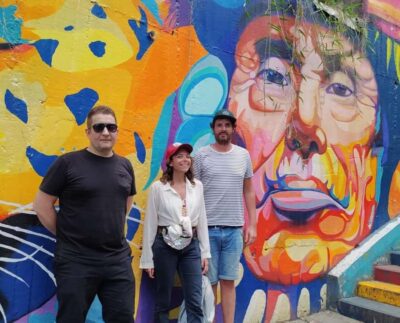
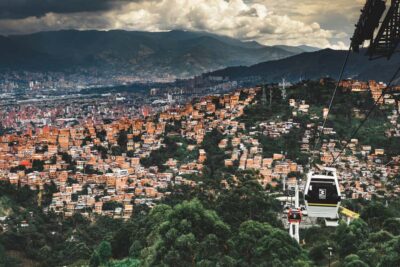
Private City Tour with Metrocable and Comuna 13
Read our review →
Comuna 13 Tour with Snacks And Your Own Graffiti
Read our review →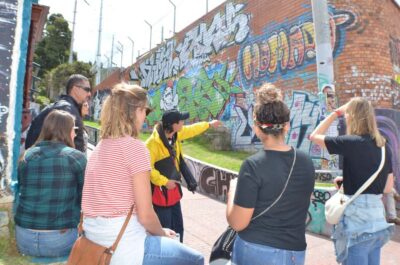
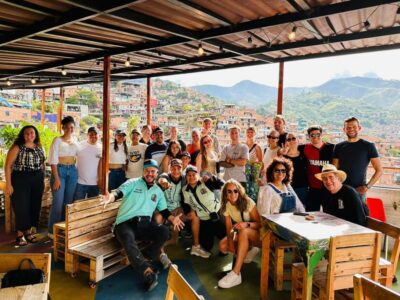
Comuna 13 and Graffiti Guided Tour with a Local
Read our review →
Browse the lists this tour appears in