

Reviewed · CABLE CAR TOURS
Walking tour, cable car & fruit tasting
Medellín reveals itself in layers. This half-day tour links tram rides, cable-car views, downtown walks, and tropical fruit into one useful introduction to the city. I like the small group limit of six, which gives you room to ask questions, and I like the mix of everyday places with serious history. The main tradeoff is pace: four hours covers a lot, so some stops are brief.
I also like that the tour helps you get comfortable with Medellín’s public transport early in your stay. Guides Oscar and Yuli receive especially warm praise for their friendly approach and clear explanations. Still, you should expect walking, stairs or uneven city surfaces, and a moderate level of physical effort. The fruit tasting is a delicious finish, but extra food, drinks, and the metro fare from El Poblado cost more.
In This Review
- Key points at a glance
- Why this four-hour route works so well
- Starting at San Antonio Park and learning the transport system
- Salon Malaga and Medellín’s old tango mood
- Villa Sierra and the cable-car view
- Returning through Bicentenario and walking downtown
- Casa de la Memoria and the cost of understanding Medellín
- Placita de Florez and a serious fruit lesson
- What the $38 price really buys you
- Who should book this Medellín experience
- Guide quality and the personal feel
- Where the tour ends and what to do next
- Should you book it?
- FAQ
- How long does the tour last?
- Where does the tour start?
- Where does the tour end?
- What transportation does the tour use?
- Is the metro fare from El Poblado included?
- Is a cable-car ticket included?
- What food is included?
- How large is the group?
- Is the tour suitable for someone with limited fitness?
- Can the tour be canceled because of weather?
- Can I cancel for a full refund?
Key points at a glance
- Ride Medellín’s tram and cable car: Learn the basics of the city’s transport system while seeing the city from above.
- Visit Salon Malaga: Step into a historic bar tied to Medellín’s tango culture and café traditions.
- Hear difficult Colombian history: The Casa de la Memoria presents testimonies from people affected by the armed conflict.
- Taste Colombian fruit at Placita de Florez: Try sweet and sour tropical flavors at the city’s oldest market.
- Keep the group personal: A maximum of six people makes it easier to speak with the guide and adjust the conversation.
- Finish near central sights: The tour ends at San Ignacio Square, within reach of Botero Square and downtown food spots.
Why this four-hour route works so well
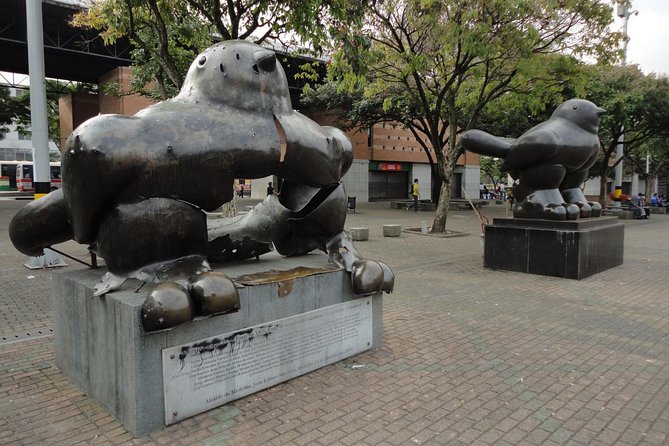
A first look at Medellín can feel scattered. The city has elevated trains, trams, cable cars, steep hills, busy downtown streets, old cafés, public squares, and markets. This route gives you a practical thread through all of it.
You begin in El Poblado and finish in La Candelaria, so the tour moves you through the city rather than keeping you in one polished district. I like that choice. You get a taste of the city’s daily transport, central neighborhoods, food culture, and modern effort to confront its past.
The small group matters here. With only six places available, you are not lost behind a large flag or waiting for a long line of people to cross the street. You can ask Oscar, Yuli, or another multilingual guide about what you are seeing, including details that are easy to miss when you walk alone.
The route is also useful for solo visitors. One particularly strong feature is the guided introduction to the train, tram, and cable car. After seeing how the system works with a local guide, you may feel more at ease getting around Medellín independently later in your trip.
More Food & Drink Tours in Medellín
- Medellin: Comuna 13 Graffiti Tour, Cable Car & Street Food
★ 4.8 · 9,046 reviews - Medellín: Comuna 13 True Story and Street Food Tour
★ 4.9 · 1,779 reviews - Medellín: Pablo Escobar Tour with beer included
★ 4.7 · 612 reviews
Starting at San Antonio Park and learning the transport system
The first listed meeting point is San Antonio Park. This opening stop lasts about 10 minutes and has no admission charge, so think of it as a starting place and orientation point rather than a long park visit.
From there, you move to the San Antonio transport area at Carrera 50A and Calle 46. The route uses the tram and cable car, giving you a look at how Medellín connects central districts with hillier areas. The transport portion takes about 20 minutes at this stage, followed later by another cable-car ride and the return journey.
This is a practical part of the experience, not just a sightseeing ride. You get help understanding the system while moving through the city, which can be especially useful if you are staying in El Poblado and want to explore beyond it.
One detail to watch: the tour includes one cable-car ticket per person, while the metro ticket needed to reach downtown from El Poblado is not included. Ask for clear instructions about where to meet and which fare you need before setting out. The tour is near public transportation, but you still need to budget for that initial metro journey.
Salon Malaga and Medellín’s old tango mood
Salon Malaga is a short stop of about 15 minutes. The old bar dates to the 1950s and is tied to tango culture. You may learn about the café’s role in the city’s musical life, and one past tour experience also included Colombian coffee and tango lessons at this historic setting.
Do not expect a long meal here. The stop is brief, so its value comes from atmosphere and explanation. It gives you a glimpse of an older Medellín, before moving on to the public transport and market scenes that define much of the rest of the route.
This is also where a good guide can make a big difference. Oscar is praised for making conversation easy and for pointing out small details that a casual walk might miss. That kind of local commentary is more useful than a long list of dates, especially in a place where music, cafés, and public gathering spaces help explain the city’s character.
Villa Sierra and the cable-car view
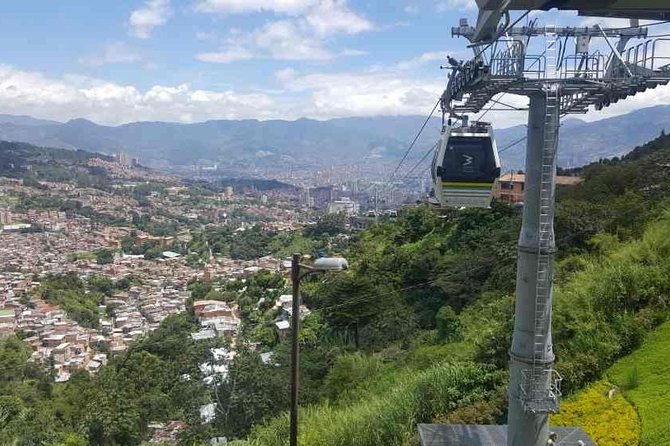
At Villa Sierra, you ride the cable car for about 40 minutes and see a broad view of the city. This is one of the tour’s longer stops, and rightly so. From above, you can better understand the shape of Medellín and the relationship between the central city and the surrounding hills.
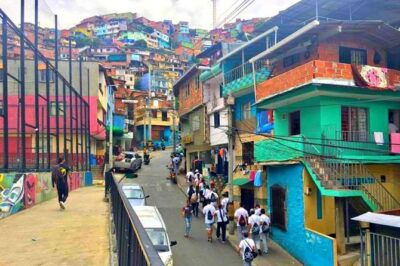
The ride also helps explain why the cable-car system matters beyond sightseeing. It is part of how people move between areas with very different access to the city. From the cabin, you can see homes, roads, and neighborhoods spread across the hills, giving you a more grounded picture than a view from a hotel roof.
Your guide can also place the view in the story of Medellín’s transformation. Several tour experiences have included discussion of violence, inequality, and the city’s efforts to improve daily life. That context makes the cable car more meaningful. You are not simply looking down at rooftops. You are seeing the physical setting in which those changes took place.
Bring your camera, but also listen. The view is attractive, yet the most useful part is understanding what you are looking at. Weather may affect visibility, and the provider says to dress for conditions. The cancellation terms also allow a new date or full refund if poor weather prevents the tour from running.
More Walking Tours in Medellín
- Comuna 4 Walking Tour Medellin
★ 5.0 · 217 reviews - Medellin Historic Walking Tour
★ 4.9 · 86 reviews - 2-Hours Street Art Walking Tour in Medellin Comuna 13
★ 5.0 · 54 reviews - Walking tour downtown Medellín
★ 5.0 · 39 reviews
Returning through Bicentenario and walking downtown
After the cable-car section, you return by tram and continue on foot near Bicentenario at Calle 49 and Carrera 38. This portion takes about 20 minutes and shifts the experience from transport lesson to city walk.
I like this change of pace. The cable car gives you distance and perspective. Walking downtown lets you notice street-level details, architecture, public spaces, and signs of economic difference. Oscar has been praised for explaining these contrasts instead of smoothing them over for visitors.
You should expect a real urban walk here, not a carefully separated sightseeing zone. That is part of the point, but it also means you need sensible footwear and awareness of your surroundings. The operator asks for moderate physical fitness, and that is a fair description of the experience.
Casa de la Memoria and the cost of understanding Medellín
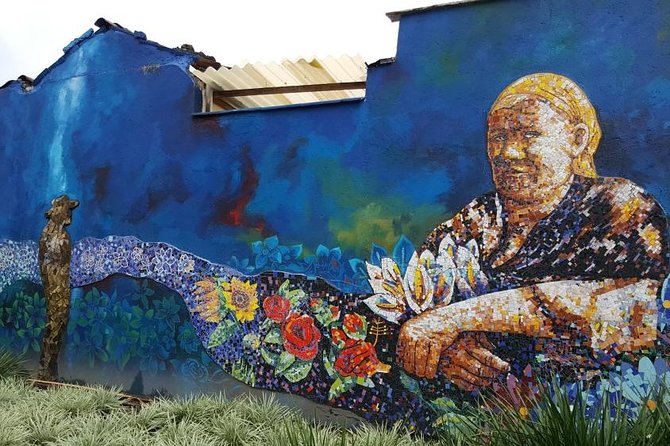
The Museo Casa de la Memoria is one of the most serious stops. You spend about 30 minutes in a museum built around testimonies from people affected by Colombia’s armed conflict. Admission is listed as free.
This is not a light diversion between food stops. The museum asks you to consider the human cost of violence and the experiences of people who lived through it. The visit gives needed context to the city’s changes and helps correct the narrow outside image that reduces Medellín to Pablo Escobar and the drug trade.
A past tour experience described this part of the route as sobering and informative, with discussion of how violence affected citizens and continues to shape the city. That balance is important. You get to enjoy Medellín’s food, music, transport, and public spaces, but you are also given room to understand what the city has had to overcome.
The 30-minute visit is enough for an introduction, not a complete museum study. If you want to examine every testimony or display, you would need to return on your own. Still, placing the museum within this walking route gives the visit a clear purpose.
Placita de Florez and a serious fruit lesson
The final major stop is Placita de Florez, described as the oldest market in the city. You spend about 30 minutes here tasting Colombian tropical fruit. This is where the tour becomes especially hands-on.
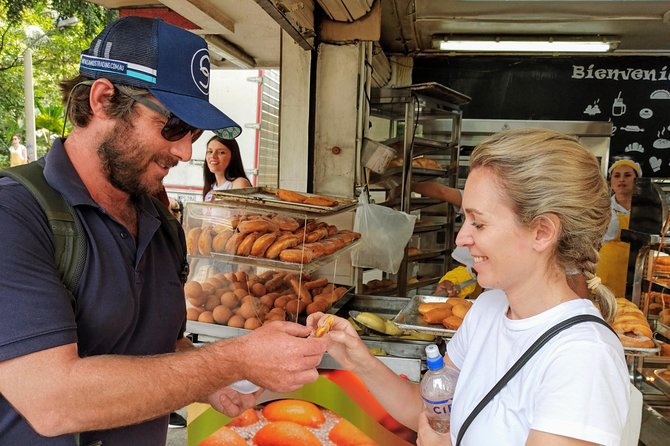
The tasting focuses on a mix of sweet and sour flavors. Depending on what is available, you may try fruits that are unfamiliar to you, with the guide explaining what is grown in Colombia and how the flavors differ. This is not just a token sample handed over at the end. The fruit is one of the most praised parts of the experience.
You also receive several traditional snacks during the tour: a buñuelo, empanada, churro, sweet corn cake, and fruit tasting. These small bites add real value to the $38 price, especially if you are curious about Colombian food but do not want to arrange several separate stops.
I would still plan to buy extra food or drinks if you tend to get hungry during a four-hour outing. Those costs are not included. Placita de Florez is a good place to continue eating after the tour, but any further purchases are your responsibility.
The market setting matters. You taste produce where local food is sold, rather than in a hotel or a formal tasting room. That makes the experience more connected to ordinary city life. The fruit also gives the tour a cheerful ending after the heavier museum visit.
What the $38 price really buys you
At $38 per person, this is not the cheapest way to walk around Medellín, but it offers more than a standard downtown stroll. You receive a guide for about four hours, one cable-car ticket, several Colombian snacks, fruit tasting, transport instruction, and interpretation at places that may be difficult to understand on your own.
The small group improves the value. A maximum of six means the guide can speak with you directly, answer questions, and keep the route from feeling like crowd management. If you are alone or traveling with one companion, that personal contact may be worth more than a lower-cost large group.
The value is strongest if you are new to Medellín. You get an introduction to the city’s transit system, central districts, food market, history, and social changes in one morning or afternoon. It can save you the first-day uncertainty of figuring out how the tram and cable car work.
The price is less compelling if you already know downtown, have used the transit network, and mainly want a long museum or market visit. Several stops are short, and the tour is designed for range rather than deep time in one place.
Remember the extra metro fare from El Poblado, along with any food or drinks you buy. The advertised price covers the listed snacks and one cable-car ticket, not every expense connected with the outing.
Who should book this Medellín experience
I would choose this tour for a first or second full day in Medellín. You get your bearings quickly, and the route can help you decide which areas deserve a longer return visit.
It is especially suitable for:
- Solo visitors who want a safer, more confident introduction to moving around the city
- First-time visitors who want history, food, and transport in one half-day
- Small groups who prefer conversation with a guide
- People interested in Colombian fruit and everyday markets
- Anyone who wants to see Medellín beyond its most familiar stereotypes
It may be less suitable if you dislike public transport, walking, serious historical subjects, or changing locations often. The Casa de la Memoria is emotionally difficult for some people, and the route does not linger at every stop.
The tour can operate in different weather conditions, but you should dress appropriately, and poor weather may lead to cancellation. Wear comfortable shoes and bring enough water for the walk, since extra drinks are not included.
Guide quality and the personal feel
The guide is central to the experience. Oscar is repeatedly praised for being friendly, professional, and easy to talk with. His strength appears to be connecting large subjects, such as violence, inequality, and urban change, to the streets and buildings around you.
Yuli is also praised for being informative, helpful, and willing to add a sense of adventure. The provider may assign a multilingual guide, and on one occasion two guides led the outing while one was training. That arrangement may not happen on your date, but it shows the experience can have a flexible, personal feel.
You should not expect a scripted lecture delivered without interruption. The best parts seem to come from conversation, questions, and the guide’s ability to point out details as you move. If you want a private experience, ask about availability, since a small group can sometimes feel nearly private, but the standard maximum is six.
Where the tour ends and what to do next
The tour finishes at San Ignacio Square, at Carrera 45 and Calle 47-66 in La Candelaria. This is a useful ending point because you are already in the central area and can continue exploring on your own.
From San Ignacio, you can make your own way to Botero Square, as the tour provider suggests, or look for more food in the surrounding area. The tour does not include a guided Botero Square visit, so treat it as a possible next stop rather than part of the formal experience.
Ending downtown also means you are not returned to El Poblado. That is convenient if you want to continue sightseeing, but less convenient if you need to go straight back to your accommodation. Plan your onward route before the final fruit tasting.
Should you book it?
Book this tour if you want a friendly, efficient introduction to Medellín that combines public transport, city history, difficult memories, traditional snacks, and excellent fruit. The strongest reasons are the small group, the cable-car view, the practical transit help, and the market tasting.
I would skip it if you want a slow museum visit, a long food tour, or a route focused only on postcard sights. The experience moves quickly and asks you to walk, ride, listen, and change subjects several times.
For most first-time visitors, especially solo visitors, $38 is a fair price for the amount of ground covered and the local guidance provided. Schedule it early in your stay, wear comfortable shoes, and leave room afterward for Botero Square or a meal near San Ignacio.
FAQ
How long does the tour last?
The tour lasts approximately four hours.
Where does the tour start?
It starts in El Poblado, Medellín. The first listed meeting point is San Antonio Park.
Where does the tour end?
It ends at San Ignacio Square, at Carrera 45 and Calle 47-66 in La Candelaria, Medellín.
What transportation does the tour use?
The route includes travel by tram and cable car, along with walking through downtown.
Is the metro fare from El Poblado included?
No. The metro ticket needed to reach downtown from El Poblado is not included.
Is a cable-car ticket included?
Yes. One cable-car ticket per person is included.
What food is included?
The tour includes a buñuelo, empanada, churro, sweet corn cake, and tropical fruit tasting.
How large is the group?
The maximum group size is six people.
Is the tour suitable for someone with limited fitness?
The experience requires a moderate level of physical fitness. You should expect walking as well as public transport rides.
Can the tour be canceled because of weather?
Yes. If poor weather causes the tour to be canceled, you are offered another date or a full refund. Dress appropriately, since the experience operates in changing weather conditions.
Can I cancel for a full refund?
Yes, if you cancel at least 24 hours before the experience start time. Cancellations or changes made less than 24 hours before the start time are not refunded or accepted.
More Cable Car Tours
- Medellín: Comuna 13 District Tour with Cable Car Ride
★ 4.8 · 1,467 reviews - Medellín: Private City Tour with Metrocable and Comuna 13
★ 4.9 · 330 reviews - Medellín Coffee Farm Tour with Trolley and Cable Car Ride
★ 4.9 · 277 reviews - Medellín: Private Pablo Escobar Tour with Cable Car Ride
★ 4.8 · 228 reviews
More Fruit Tasting Tours
- Exotic Fruit Tour
★ 5.0 · 58 reviews - Private Tour to Comuna 13 & Exotic Fruit Market in Medellin!
★ 5.0 · 41 reviews - Medellin: Coffee and fruit tour
★ 4.9 · 12 reviews - Essential Fruit Experience
★ 5.0 · 4 reviews
Just added around Medellin
- Medellin: 4-Hour Zip-Line Adventure★ 5.0 · 3 reviews
- Medellin: Tour to The Cathedral – History of Pablo Escobar and his Impact★ 5.0 · 3 reviews
- Medellin: waterfalls and naturals poolls tour★ 3.7 · 3 reviews
- Guatapé & Coffee Farm, all in one day★ 5.0 · 3 reviews
- Comuna 13: Recorrido de Arte Urbano, Cultura y Resiliencia★ 5.0 · 3 reviews
- Shared Tour Medellin’s Violence & Post-conflict after Pablo★ 4.1 · 3 reviews
- Medellin: Coffee Farm Tour & Spa with Overnight Glamping★ 4.5 · 3 reviews
- Colombia: Official Pablo Escobar Meet the Family Museum Tour★ 5.0 · 3 reviews
Cable Car Tours, compared.

Comuna 13 Graffiti Tour, Cable Car & Street Food
Read our review →
Bogotá´s Barrios: El Paraíso Favela Tour with Cable Car
Read our review →
Private City Tour with Metrocable and Comuna 13
Read our review →
Medellín Coffee Farm Tour with Trolley and Cable Car Ride
Read our review →
Browse the lists this tour appears in