
Reviewed · COMUNA 13 & STREET ART TOURS
Comuna 4 Walking Tour Medellin
Look beyond Medellín’s polished story. This 3.5-hour walking tour through Moravia, part of Comuna 4, shows how a neighborhood built on a former garbage dump fought for a future of its own. I like the mix of history and personal testimony, especially the time spent with Gladys, an early resident, and local ambassador Toto. I also like that the tour includes small, ordinary places: a football pitch, a health center, a community cultural center, and a tiny street empanada.
The main consideration is that this is not a sightseeing stroll built around grand monuments. You walk through a working neighborhood while discussing poverty, housing, health care, education, and displacement. That makes the experience meaningful, but it may feel emotionally heavy and less polished than the better-known Comuna 13 tours.
- Moravia’s garbage-dump origins: Learn how an illegal settlement grew in the 1960s and how families built lives on difficult ground.
- Gladys’s first-person story: A local resident brings the neighborhood’s long struggle over relocation into human focus.
- Small group of up to eight: The limited size should make it easier to ask questions and hear the community voices.
- Street food with a local touch: A snack of tiny empanadas adds a simple, memorable pause.
- A different Medellín story: The walk questions the official version of the city’s transformation and makes room for community resistance.
- About $35 per person: The price pays for a bilingual guide, a local community leader, and a focused three-and-a-half-hour experience.
In This Review
- Why Moravia Gives You a Different Medellín Story
- Starting Near Metro Caribe and Moravia’s First Chapter
- Morro de Moravia and the Cost of Relocation
- A Quiet Talk About Health Care in Colombia
- Football, Education, and the Meaning of Belonging
- Tiny Empanadas and a Neighborhood Football Pitch
- Moravia Cultural Center and Community-Built Hope
- What the $35 Price Really Covers
- Pace, Group Size, and Practical Comfort
- Who Should Book This Moravia Walk?
- Should You Book the Comuna 4 Walking Tour?
- FAQ
- How much does the Comuna 4 Walking Tour Medellín cost?
- How long does the walking tour last?
- Where does the tour start?
- Where does the tour end?
- What is included in the price?
- Is hotel pickup included?
- How many people can join the tour?
- Can service animals join the experience?
- Can I cancel for a full refund?
Why Moravia Gives You a Different Medellín Story
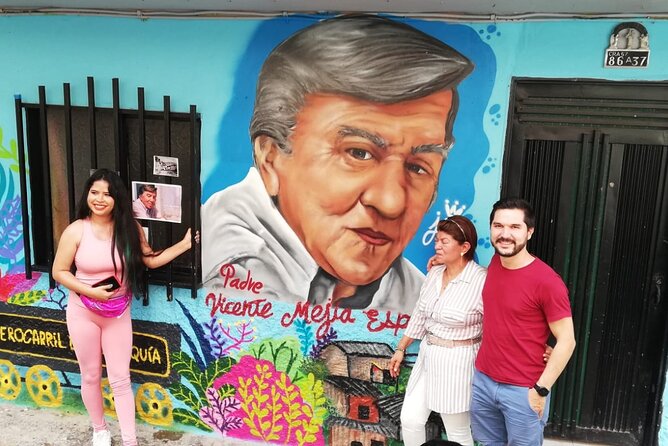
Comuna 4 Walking Tour Medellín takes place in Moravia, a neighborhood whose story does not fit neatly into a tourism brochure. The area began as an illegal settlement in the 1960s, and its residents have spent decades dealing with poverty, overcrowding, government relocation plans, and the difficult question of who gets to shape a city.
That is the reason I would choose this tour over a standard city walk if you want social history rather than a checklist of sights. You are not simply shown attractive murals or viewpoints. You are asked to think about how Medellín changed, who benefited from that change, and who still faces pressure as the city develops.
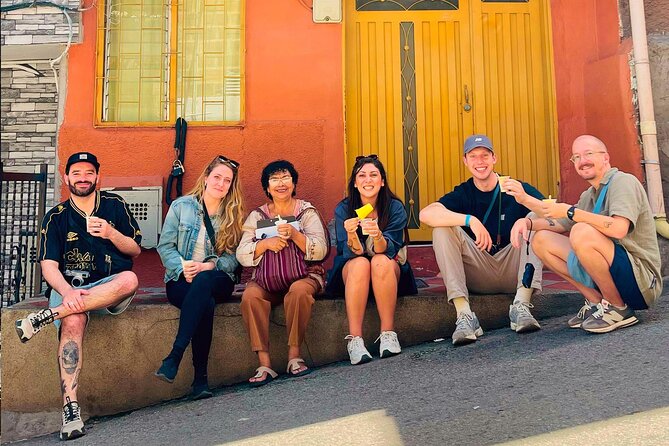
The tour uses two voices. A professional bilingual guide, identified in the experience as Toto, explains the larger political and social picture. A community ambassador adds lived experience. Several accounts point to Gladys, one of the neighborhood’s first residents, as a particularly powerful part of the walk. Her memories help connect government policy and urban change to real families.
That combination is the strongest reason to book. A guide can explain dates and systems, but a resident can show what those systems felt like. You should expect a serious conversation, balanced with humor, warmth, and time to look around.
Starting Near Metro Caribe and Moravia’s First Chapter
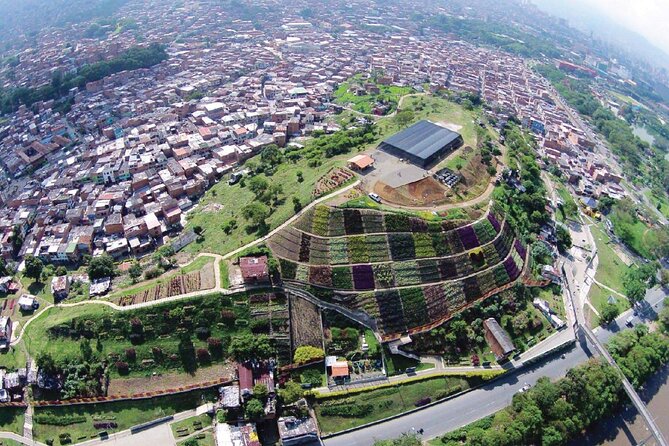
The meeting information names Barrio Transformation Tour on Avenida Regional near Calle 78 in Castilla, while the first activity begins at Estación Metro Caribe. Confirm the exact rendezvous point with the operator before setting out, since the two descriptions are not identical. The tour is near public transportation, and the activity ends back at the meeting point.
At the opening stop, the guide and community ambassador set the stage with the history of Barrio Moravia. You learn about its origins as an illegal neighborhood in the 1960s and hear one version of Medellín’s transformation, the familiar account of a city overcoming violence and neglect through public investment and urban change.
This introduction matters because the rest of the route questions that account. The tour does not reject Medellín’s progress, but it asks you to notice the people and communities who were not always included in the success story.
The opening talk lasts about 30 minutes. That is a substantial start, so do not expect to begin with a quick orientation and immediately march onward. The pace is built around conversation. If you prefer to understand a place before seeing its landmarks, this structure works well.
More Comuna 13 & Street Art Tours in Medellín
- Medellin: Comuna 13 Graffiti Tour, Cable Car & Street Food
★ 4.8 · 9,046 reviews - Medellín: Comuna 13 True Story and Street Food Tour
★ 4.9 · 1,779 reviews - Medellín: Comuna 13 District Tour with Cable Car Ride
★ 4.8 · 1,467 reviews
Morro de Moravia and the Cost of Relocation
The next stop, Morro de Moravia, is the emotional center of the walk. Here you learn about La Resistencia de Moravia and the families who have opposed government relocation plans for more than a decade.
The central issue is not simply housing. Relocation can move people away from jobs, schools, relatives, familiar streets, and the community networks that help families survive. A government plan may look logical on paper, yet feel like the loss of a whole social world to the people asked to leave.
The tour gives you what it calls the other side of Medellín’s transformation. That framing is useful, but listen for the detail behind the slogan. The power of this stop comes from hearing how policy affects residents over time, not from treating the neighborhood as a symbol of hardship.
Plan on about 45 minutes here. You may find this the most demanding part of the experience because the subject is tied to displacement and uncertainty. It is also where Gladys’s presence can make the history personal. Her story gives a face to the long resistance and reminds you that Moravia is a home, not simply an urban problem to be solved.
A Quiet Talk About Health Care in Colombia
The walk then reaches Centro de Salud Moravia El Bosque, where the group sits in a quieter setting to discuss Colombia’s health care and welfare system. This pause breaks up the walking and gives the guide room to explain why so many people work as street vendors.
The discussion also tackles a striking statistic presented on the tour: almost half of Colombians do not have access to the welfare system, despite the existence of a formal system. That helps explain why informal work is so visible. Street vending is not presented as a colorful side note for visitors. It becomes part of a larger conversation about access, income, and survival.
This is one of the tour’s most useful features because it connects what you see on the street with national policy. You leave with a better question to ask about Medellín: not simply why people sell goods outside, but what options are available to them.
The stop lasts about 30 minutes. If you want a purely visual neighborhood tour, this may slow the pace. I see it as a strength. Complex social questions need a chair, some shade, and time to listen.
Football, Education, and the Meaning of Belonging
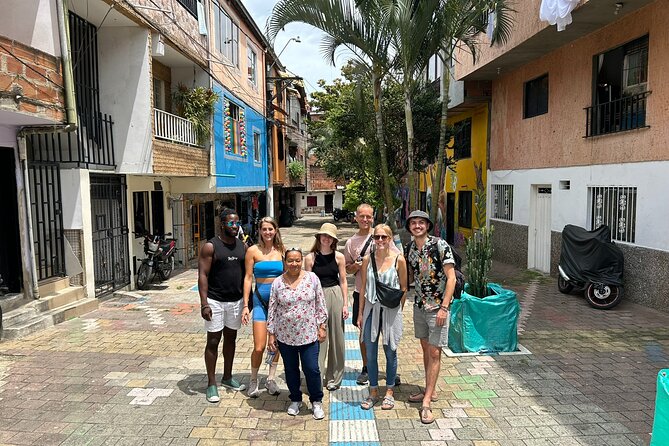
At Cigarreria La Plaquita, the route pauses for roughly 10 minutes beside graffiti dedicated to Medellín’s major football teams. The stop is brief, but the subject is not. Football carries strong cultural meaning in Colombian society, and the graffiti offers a way to discuss identity, loyalty, rivalry, and neighborhood pride.
This is a good example of how the tour uses everyday details. You are not taken to a stadium or given a generic sports lecture. You see how football appears on local walls and hear why it matters to people who live there.
Another shaded stop takes place in front of Fundación Oasis Urbano. Here the focus shifts to education and Colombia’s strata system. The tour does not list this as a separate numbered stop, but it is an important part of the route. The conversation helps you think about how social class is organized and how education fits into that structure.
For you, this section is most useful if you want context for the differences you see across Medellín. It also shows that community development is not just about buildings and transport. Schools, classification systems, and access to opportunity shape daily life just as much.
More Walking Tours in Medellín
- Medellin Historic Walking Tour
★ 4.9 · 86 reviews - 2-Hours Street Art Walking Tour in Medellin Comuna 13
★ 5.0 · 54 reviews - Walking tour downtown Medellín
★ 5.0 · 39 reviews - Walking tour, cable car & fruit tasting
★ 5.0 · 33 reviews
Tiny Empanadas and a Neighborhood Football Pitch
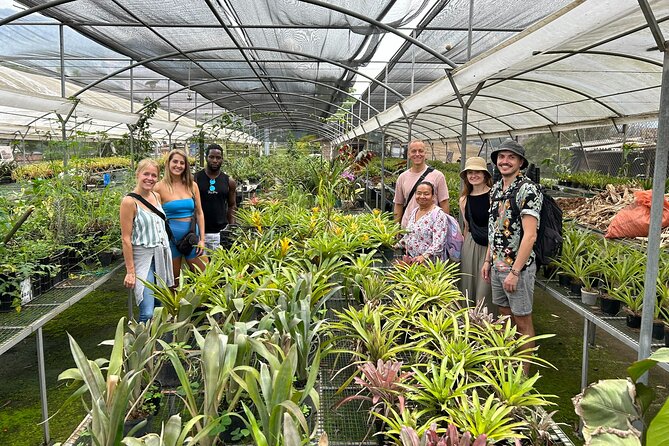
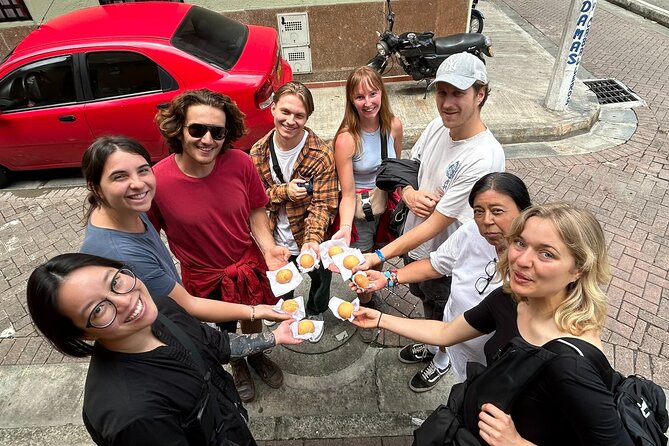
At E.I. Fe y Alegría, Luis Amigó, you stop for some of the city’s smallest street empanadas. The snack is included, so you do not need to budget extra for it. It is a modest touch, but it gives the walk a welcome break and lets you taste something tied to ordinary local life.
Do not expect a full meal. Think of the empanada stop as a quick bite during a walking route. If you have dietary restrictions, ask the operator in advance because no additional food details are provided.
The tour then visits Moravia’s synthetic football pitch. You meet a local ambassador and hear her story of resilience, resistance, and hope. The stop lasts about 10 minutes, making it more of a personal introduction than a long presentation.
Together, these two moments keep the experience from becoming a string of grim statistics. Food, sport, and conversation show a neighborhood with pleasure and pride as well as serious problems. That balance is important. Moravia is not reduced to poverty, relocation, or its former garbage dump.
Moravia Cultural Center and Community-Built Hope
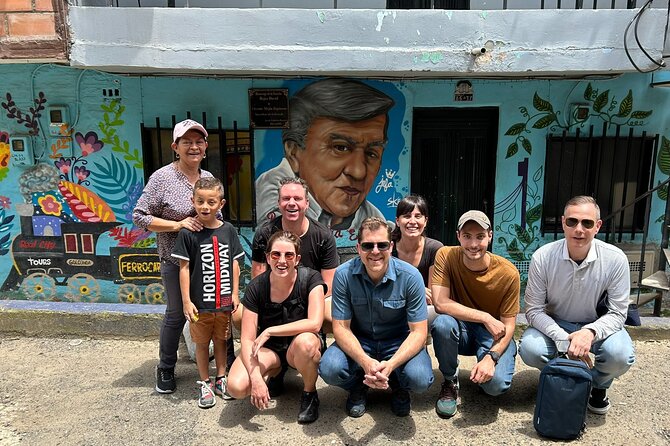
The final major stop is Moravia Cultural Center. With the community ambassador, you learn how local residents built the facility and what it means to the neighborhood.
This is where the tour’s themes come together. The community has faced outside pressure, yet it has also created its own institutions. A cultural center is more than a building. It offers a place for people to meet, organize, teach, and present an alternative to the idea that improvement must always arrive from outside.
The stop lasts around 30 minutes. You should expect another story-led visit rather than a formal museum tour. The value lies in learning how the community helped create the infrastructure and why that effort matters.
Several personal accounts praise the way Toto and Gladys work together. Toto brings energy and clear explanations, while Gladys gives the route a direct connection to Moravia’s past. That pairing is worth noting when you compare this tour with a larger group excursion led only by a guide.
What the $35 Price Really Covers
At about $35 per person, this is not the cheapest way to spend three and a half hours in Medellín. It is also not priced like a simple walk from one public attraction to another.
Your fee covers a professional bilingual guide, a local community leader, and a snack. The tickets at the listed stops are free, so you are mainly paying for interpretation, organization, and access to a carefully structured community experience.
I think the price is fair if you value small groups and serious local context. With a maximum of eight people, you should have more room to ask questions than you would on a large bus or crowded group walk. The community ambassador’s participation also adds something that a standard guide cannot provide.
The value depends on what you want. If your goal is a fast introduction to Medellín’s famous sights, spend your money elsewhere. If you want to understand Moravia’s place in the city and hear directly about its struggles, $35 is a reasonable cost.
Hotel pickup and drop-off are not included. You need to make your own way to the meeting point, and the tour returns there at the end. Confirmation is provided when you book, and free cancellation is available if you cancel at least 24 hours before the start time.
Pace, Group Size, and Practical Comfort
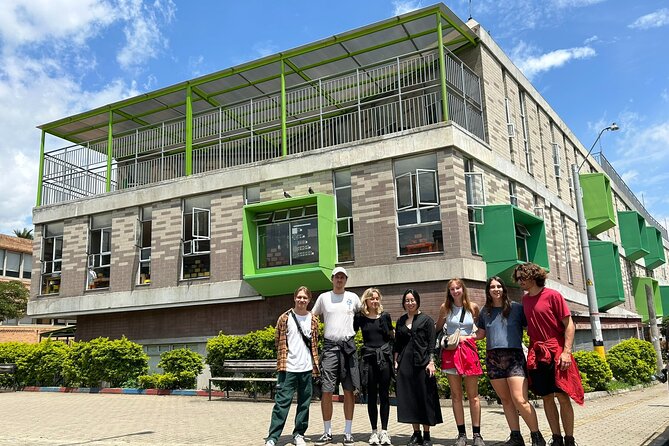
The experience lasts approximately 3 hours and 30 minutes. That includes several conversations and stops where you sit, not three and a half hours of nonstop walking. Even so, wear comfortable shoes and be ready to spend much of the morning or afternoon on foot.
The group limit of eight is a real advantage. Small groups allow the guide to adjust explanations and give the local ambassador room to speak. They also reduce the chance that personal stories get lost in a crowd.
The route includes quiet sitting areas and shaded pauses, but no detailed information is provided about restrooms, accessibility, or the exact walking distance. Most people can participate, and service animals are allowed. If you have mobility concerns, contact the operator before booking so you can ask about the route directly.
The experience is conducted with a professional bilingual guide. That makes it suitable for visitors who want the discussion in English or another supported language, though the supplied information does not specify every language offered.
Who Should Book This Moravia Walk?
I would recommend this tour to you if you want to understand Medellín beyond its polished transformation story. It suits curious visitors who are comfortable discussing inequality, informal work, public policy, housing, education, and displacement.
It is also a strong choice if you have already seen the standard city sights and want a more grounded neighborhood experience. The football graffiti, street empanadas, local football pitch, and cultural center keep the route connected to daily life.
You may want to skip it if you are looking for panoramic views, nightlife, shopping, or a lighthearted photo walk. The route includes difficult subjects, and the point is to listen rather than consume the neighborhood as a backdrop.
Approach the community with respect. You are entering a lived-in area, not a stage set. Listen carefully, ask thoughtful questions, and avoid treating hardship as entertainment. The best parts of the tour come from human contact and clear explanation, not from dramatic sightseeing.
Should You Book the Comuna 4 Walking Tour?
Yes, if your idea of a good tour includes honest history and direct community voices. The strongest reasons are the small group, the bilingual guide, and the chance to hear Gladys or another local ambassador explain Moravia from personal experience.
Book it especially if you want an alternative to a more commercial Comuna 13 visit. This route is less about murals and spectacle, and more about how people organize, resist relocation, and build useful places for themselves.
Before paying, confirm the exact meeting location because the information gives both Estación Metro Caribe and an address on Avenida Regional near Calle 78. Then allow three and a half hours, bring comfortable shoes, and arrive ready for a thoughtful conversation.
FAQ
How much does the Comuna 4 Walking Tour Medellín cost?
The tour costs $35 per person.
How long does the walking tour last?
The experience lasts approximately 3 hours and 30 minutes.
Where does the tour start?
The listed meeting information gives Barrio Transformation Tour at Avenida Regional near Calle 78 in Castilla, Medellín. The first stop is Estación Metro Caribe, so confirm the exact meeting point with the operator before the tour.
Where does the tour end?
The activity ends back at the meeting point.
What is included in the price?
The price includes a local community leader, a professional bilingual tour guide, and a snack.
Is hotel pickup included?
No. Hotel pickup and drop-off are not included.
How many people can join the tour?
The group has a maximum of eight participants.
Can service animals join the experience?
Yes. Service animals are allowed.
Can I cancel for a full refund?
Yes, if you cancel at least 24 hours before the experience start time. Cancellations or changes made less than 24 hours in advance are not accepted for a refund.
More Walking Tours
- Arvi Park Walking tour and city views from Metrocable.
★ 4.6 · 13 reviews - Medellín: Walking Tour with Cable Car and Botero Plaza
★ 4.7 · 6 reviews - Cartagena: Historic Center and Getsemaní Shared Walking Tour
★ 4.9 · 2,716 reviews - Bogotá: Guided La Candelaria Walking Tour
★ 4.8 · 1,229 reviews
More Comuna 13 and Street Art Tours
- Medellín: Private City Tour with Metrocable and Comuna 13
★ 4.9 · 330 reviews - Medellín: Comuna 13 Tour with Snacks And Your Own Graffiti
★ 4.9 · 311 reviews - Medellín: Comuna 13 and Graffiti Guided Tour with a Local
★ 4.9 · 239 reviews - Medellín: Private Pablo Escobar and Comuna 13 Tour
★ 4.9 · 233 reviews
Just added around Medellin
- Medellin: 4-Hour Zip-Line Adventure★ 5.0 · 3 reviews
- Medellin: Tour to The Cathedral – History of Pablo Escobar and his Impact★ 5.0 · 3 reviews
- Medellin: waterfalls and naturals poolls tour★ 3.7 · 3 reviews
- Guatapé & Coffee Farm, all in one day★ 5.0 · 3 reviews
- Comuna 13: Recorrido de Arte Urbano, Cultura y Resiliencia★ 5.0 · 3 reviews
- Shared Tour Medellin’s Violence & Post-conflict after Pablo★ 4.1 · 3 reviews
- Medellin: Coffee Farm Tour & Spa with Overnight Glamping★ 4.5 · 3 reviews
- Colombia: Official Pablo Escobar Meet the Family Museum Tour★ 5.0 · 3 reviews
Comuna 13 & Street Art Tours, compared.
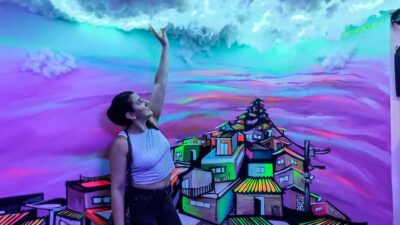
Comuna 13 Graffiti Tour, Cable Car & Street Food
Read our review →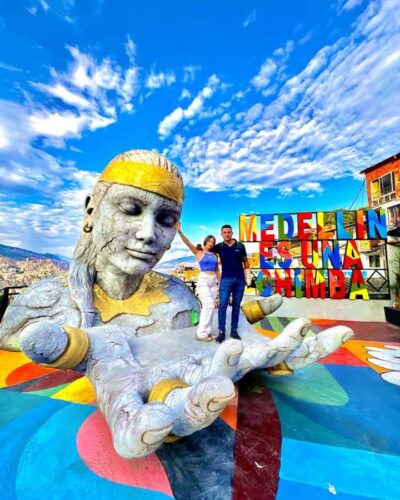
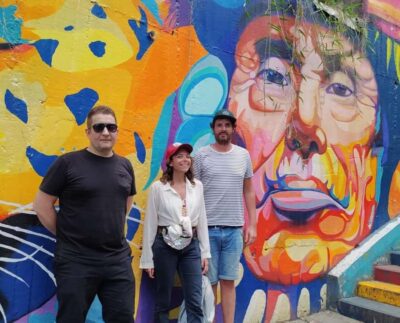
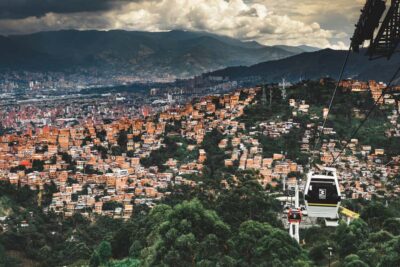
Private City Tour with Metrocable and Comuna 13
Read our review →
Comuna 13 Tour with Snacks And Your Own Graffiti
Read our review →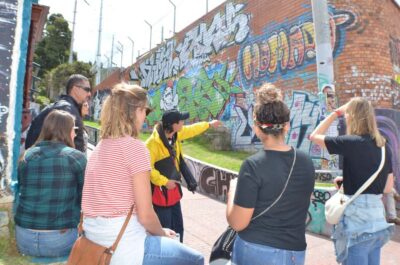
Comuna 13 and Graffiti Guided Tour with a Local
Read our review →
Browse the lists this tour appears in