
Reviewed · LA CANDELARIA TOURS
Candelaria Unveiled: Cool-tural Heritage Walking Tour
Bogotá’s oldest streets tell plenty of stories. This 150-minute walking tour links La Candelaria’s markets, churches, plazas, museums, and political landmarks into a compact introduction to the city. I especially like the route’s mix of grand places, such as Plaza de Bolívar, and smaller corners, such as Callejón del Embudo. I also like that the guides share practical suggestions for restaurants, clubs, and things to do after the tour.
The main consideration is reliability. One verified booking from February 2025 records that the guide did not arrive, while the other five reviews are positive and praise guides Jorge and Sharik. At $16 per person, the tour is affordable, but I would confirm the meeting details shortly before setting out.
In This Review
- Key Things to Know Before You Go
- Why This Short Tour Works in Bogotá
- Starting Beside Policarpa Salavarrieta
- La Concordia Market and the Everyday Side of La Candelaria
- Callejón del Embudo and the Story Beneath the Street
- Chorro de Quevedo, Bogotá’s Founding Point
- Teatro Colón and Bogotá’s Cultural Voice
- Plaza de Bolívar and the Center of Power
- The Gabriel García Márquez Cultural Center
- Manzana Cultural and the Botero Museum Finish
- The Guides Make the Difference
- Is $16 a Good Value?
- Who Should Book This Walking Tour?
- Should You Book Candelaria Unveiled?
- FAQ
- Where does the tour begin?
- Where does the tour finish?
- How long does Candelaria Unveiled last?
- Which languages are available?
- Is the tour wheelchair accessible?
- What is included in the price?
Key Things to Know Before You Go
- Start at Policarpa Salavarrieta’s monument: The meeting point connects immediately to Colombia’s independence story.
- See La Candelaria through several lenses: The route covers markets, colonial streets, churches, government buildings, museums, and cultural centers.
- Chorro de Quevedo anchors the story: This small plaza is linked to Bogotá’s Spanish foundation in 1538.
- The tour ends at the Botero Museum: You finish with one of Bogotá’s best-known art stops rather than being dropped at a random street corner.
- English and Spanish guides are available: Guides such as Jorge and Sharik have earned especially warm praise for clear explanations and friendly answers.
- The price is easy on a sightseeing budget: At $16, the tour offers a useful orientation before you spend more time exploring the city alone.
Why This Short Tour Works in Bogotá
La Candelaria can feel confusing at first. Streets change character quickly, major buildings sit beside small shops, and the city’s colonial past is mixed with modern art and student culture. A guided walk gives you a basic map in your head, along with the political and cultural context needed to understand what you are seeing.
This is not a single-monument tour. It is a connected walk through Bogotá’s origin story, independence movement, religious past, literary culture, and art scene. In only two and a half hours, you move from a farmers market to a historic plaza, from a former presidential residence to the Botero Museum.
That compact format is useful if you have just arrived in Bogotá. You can learn where the main sights are, ask about food and nightlife, then return later to the places that caught your attention. If you already know La Candelaria well, the tour may feel more like a refresher than a full discovery.
The activity is wheelchair accessible, and the guide leads the experience in English or Spanish. The route is on foot, so comfortable shoes are sensible. The supplied information does not give a group size, and the experience may feel different with a small group than with a full one. One particularly strong account describes a tour with only two participants, allowing Sharik to answer many questions and adjust the conversation easily.
More Walking Tours in Bogotá
- Bogotá: Guided La Candelaria Walking Tour
★ 4.8 · 1,229 reviews - Zipaquirá Salt Cathedral Private Tour + Walking Tour
★ 5.0 · 66 reviews - La Candelaria Walking Private Tour (3 Hrs.)
★ 5.0 · 51 reviews
Starting Beside Policarpa Salavarrieta
The walk begins at the monument to Policarpa Salavarrieta, commonly known as La Pola. This is a smart meeting point because it starts the tour with a person rather than a building.
Salavarrieta was a heroine of Colombia’s liberation campaign, and her former residence, Casa de La Pola, appears later in the route. That connection helps you follow the country’s independence story as a human drama, not just a list of dates and battles.
Your guide can also set the tone here. Jorge has been praised for creating a good route and explaining Bogotá in a lively way. Sharik received similar praise for answering many questions, which matters if you want more than a memorized speech.
I would arrive with the meeting point clearly checked. The tour description places the group in front of the monument, and the one serious negative account involved a guide who never appeared. That single incident does not erase the otherwise positive record, but it is a fair reason to check your confirmation and contact details before leaving your accommodation.
La Concordia Market and the Everyday Side of La Candelaria
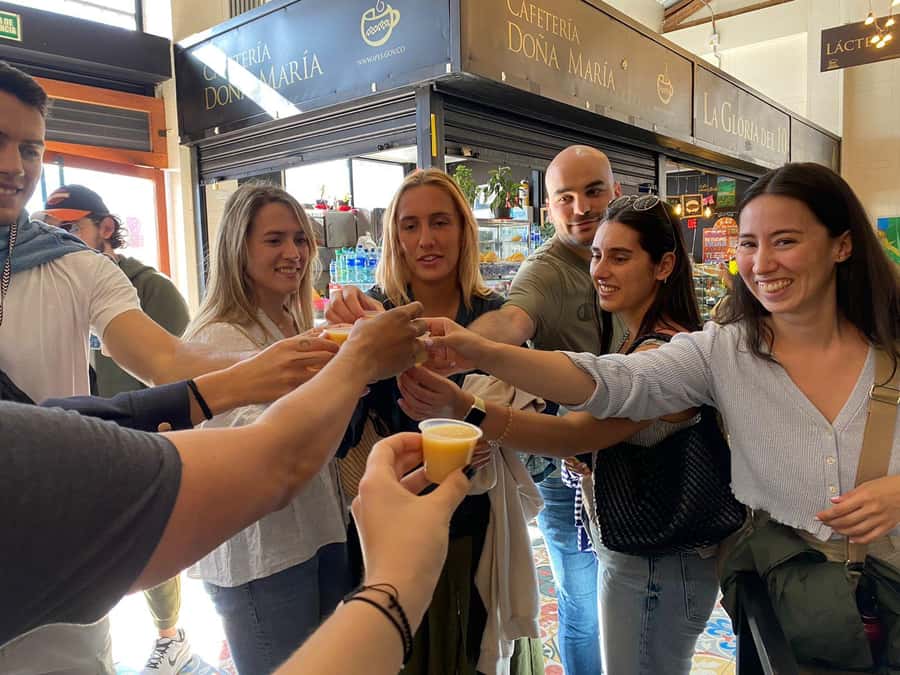
The first major stop is La Concordia Market, set in Plazoleta de la Concordia. This area brings together a farmers market and craft shops, giving the tour a more ordinary, local feel before it moves toward Bogotá’s grand civic buildings.
I like this early stop because it keeps the walk from becoming a parade of official monuments. You get a look at commerce, handmade goods, and neighborhood traditions. The guide can explain how the plaza fits into the district, while you get a chance to notice the colors, sounds, and small details that are easy to miss when walking alone.
The market may also help you decide how much time to reserve for La Candelaria later. If you enjoy crafts and local food, you might want to return after the tour. The schedule is only 150 minutes, so this is a guided look rather than a long shopping session.
You should not expect a full meal stop unless the guide specifically says otherwise. The tour promises recommendations for restaurants, clubs, and activities, so use this part of the walk to ask where to eat afterward.
Callejón del Embudo and the Story Beneath the Street
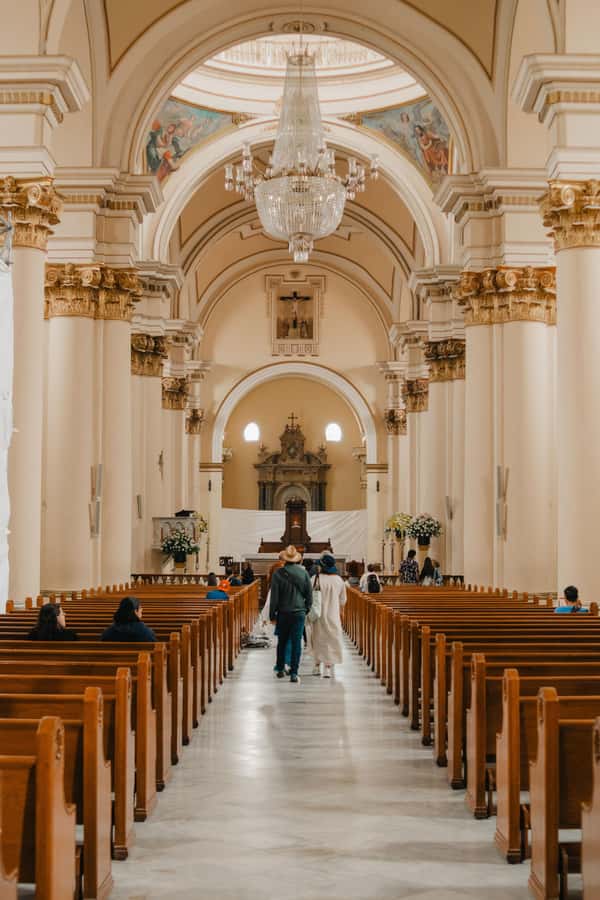
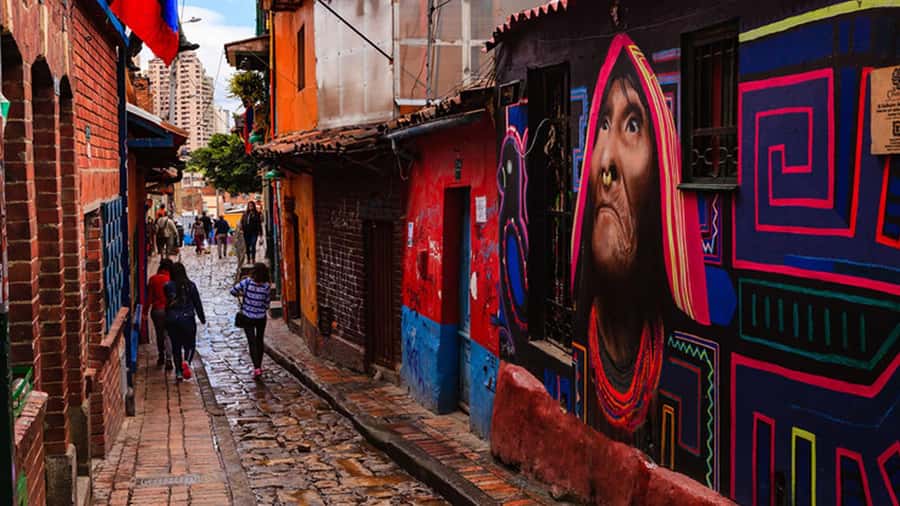
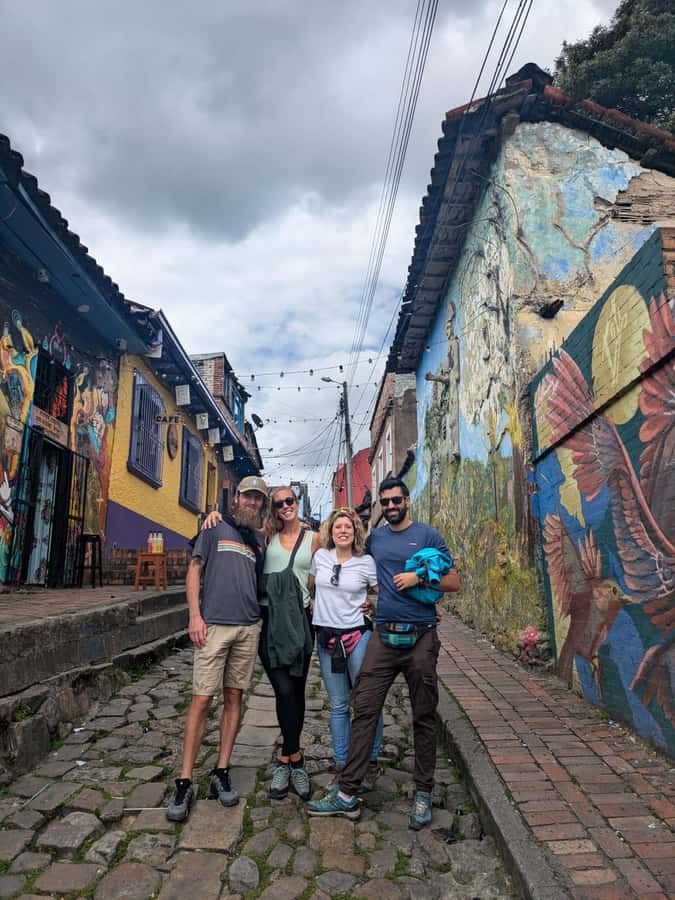
Callejón del Embudo is one of the route’s more distinctive locations. Its cobblestones follow a funnel-shaped street that once marked the edge of the ancient Quebrada de San Bruno.
That detail gives the lane more meaning than a quick photo stop. The shape of the street reflects an older watercourse and an earlier version of the settlement. A good guide can help you picture how natural features influenced the city before Bogotá developed into a large capital.
The lane also offers a change of pace. After the market, you move into a narrow passage with a strong colonial feel. I would pay attention to the street surface here. Cobblestones can be uneven, even though the experience is identified as wheelchair accessible.
Callejón del Embudo is a good example of what this tour does best: it explains how a small physical detail connects to Bogotá’s past. You do not need a long lecture to understand the point. A clear explanation beside the street is enough.
More La Candelaria wanders:
- Bogotá: La Candelaria Graffiti & Urban Art Guided Tour
★ 4.7 · 250 reviews - Shared Tour of Bogota’s Historic Downtown (La Candelaria)
★ 4.7 · 100 reviews - Graffiti Tour in La Candelaria Bogotá with Transportation
★ 5.0 · 68 reviews - VIP Bogota City Tour: Farmers Market, Monserrate, Candelaria, 9hr
★ 5.0 · 66 reviews
Chorro de Quevedo, Bogotá’s Founding Point
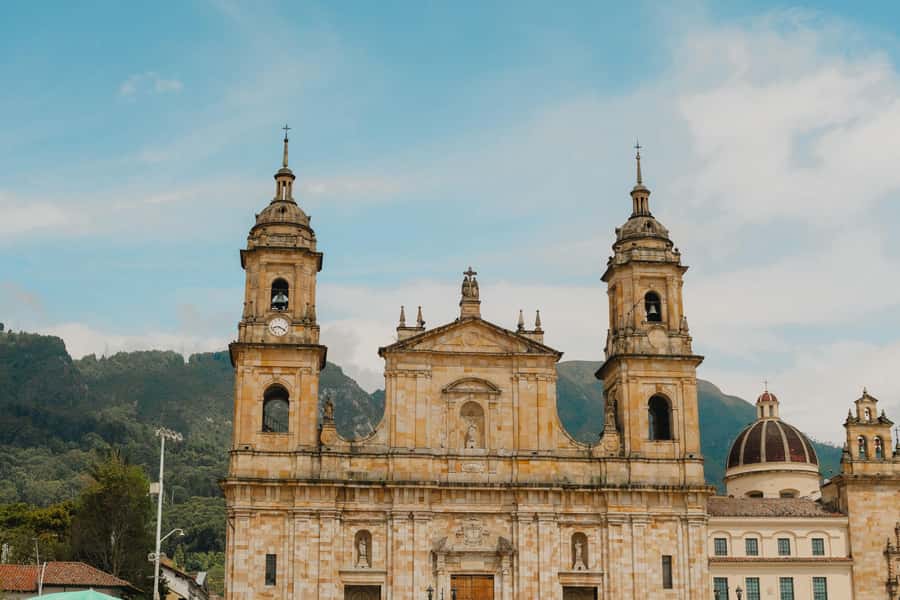
Chorro de Quevedo Plaza is one of the central stops. It is linked to Bogotá’s founding by the Spanish conquistador Gonzalo Jiménez de Quesada in 1538.
The plaza is important because it gives the city a beginning point in the tour’s story. From there, your guide can connect the Spanish foundation to the older geography of the area and to the colonial streets you have already walked.
The stop also shows why context matters in La Candelaria. A small plaza may look simple if you only pass through it, but its place in Bogotá’s origin story changes how you read the surrounding neighborhood. I would listen carefully here, especially if you want a clear explanation of how the capital developed.
This is also a useful place to ask your guide about places to return to at night or during a free afternoon. The activity specifically includes recommendations for clubs and other city activities, and Chorro de Quevedo is an ideal point to ask how the neighborhood changes after the daytime tour.
Teatro Colón and Bogotá’s Cultural Voice
The route continues to Teatro Colón, one of Bogotá’s major cultural landmarks. The guide provides a tour of the area, placing the theater within the city’s artistic and civic life.
The itinerary does not specify an interior performance or backstage access, so you should treat this as a guided exterior or area visit unless your guide confirms otherwise. That is not a flaw for a walking orientation. The theater adds another layer to the story, showing that La Candelaria is not only about colonial churches and political history.
It also helps balance the route. You have seen markets and historic streets, and now you get a clearer sense of Bogotá as a cultural capital. If you enjoy theater, ask the guide for current recommendations. The tour is designed to provide practical suggestions, not simply point out buildings.
Plaza de Bolívar and the Center of Power
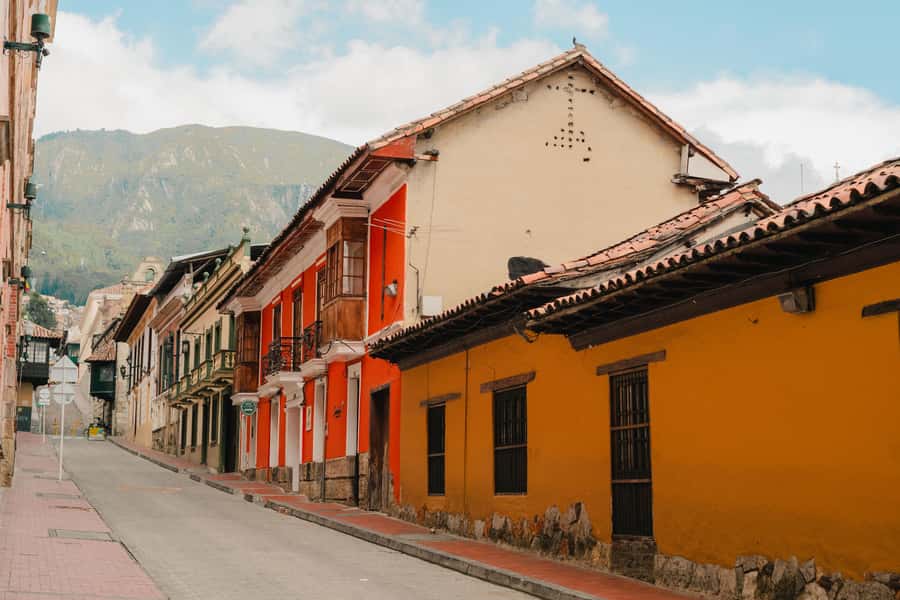
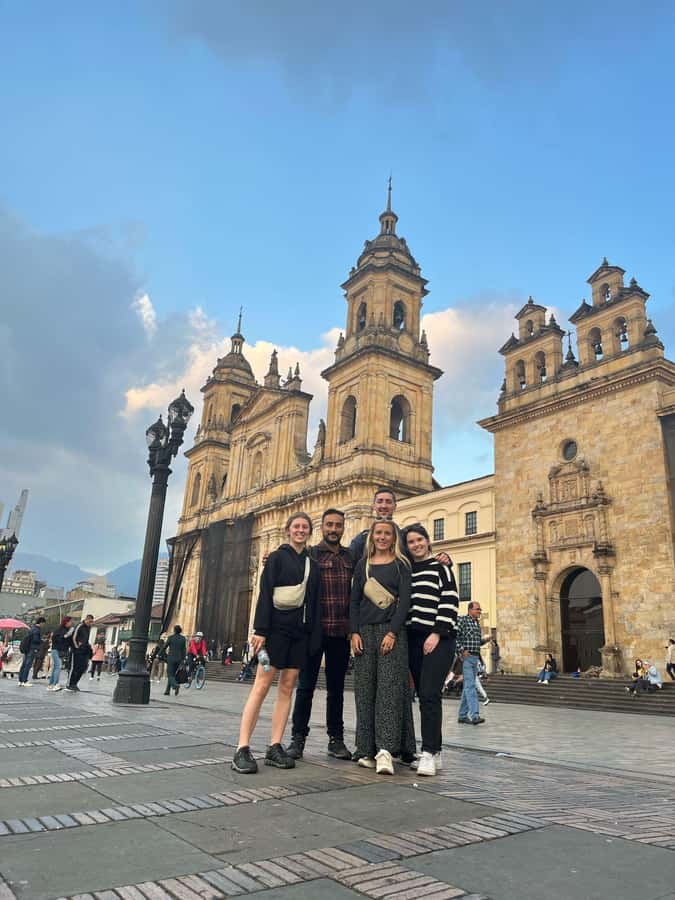
Plaza de Bolívar is the route’s biggest civic space and one of the most important places in Bogotá. It is surrounded by major buildings, including the Palace of Justice and the National Capitol.
This is where the tour’s historical and political threads come together. The square gives you a place to think about government, public life, and Colombia’s national story. It also provides a useful reference point for exploring central Bogotá on your own.
A guide adds real value here because the buildings can blur together when you first arrive. Knowing which structure houses the courts and which belongs to the national government helps you read the square instead of simply photographing it.
Do not expect a quiet, intimate stop. A major central plaza has a more public, formal feel than the narrow lanes near Chorro de Quevedo. Still, the contrast is useful. The tour moves from a small place associated with the city’s foundation to the broad square where national power is displayed.
The Gabriel García Márquez Cultural Center
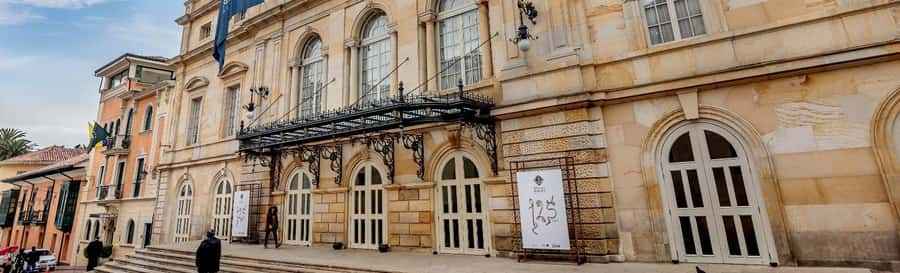
The Gabriel García Márquez Cultural Center brings literature and modern Colombian culture into the route. It is a fitting stop after the historic core because it shows that La Candelaria is not frozen in the colonial era.
The center gives the guide a chance to discuss Colombia’s cultural identity beyond monuments and independence heroes. It also helps connect the city to one of the country’s best-known writers without turning the entire tour into a literary program.
The description identifies this as a guided visit, but it does not specify exhibitions, workshops, or event access. I would listen to the guide’s explanation and ask what is happening there during your stay. If you want to return, the guide’s city advice may help you plan a separate visit.
Manzana Cultural and the Botero Museum Finish
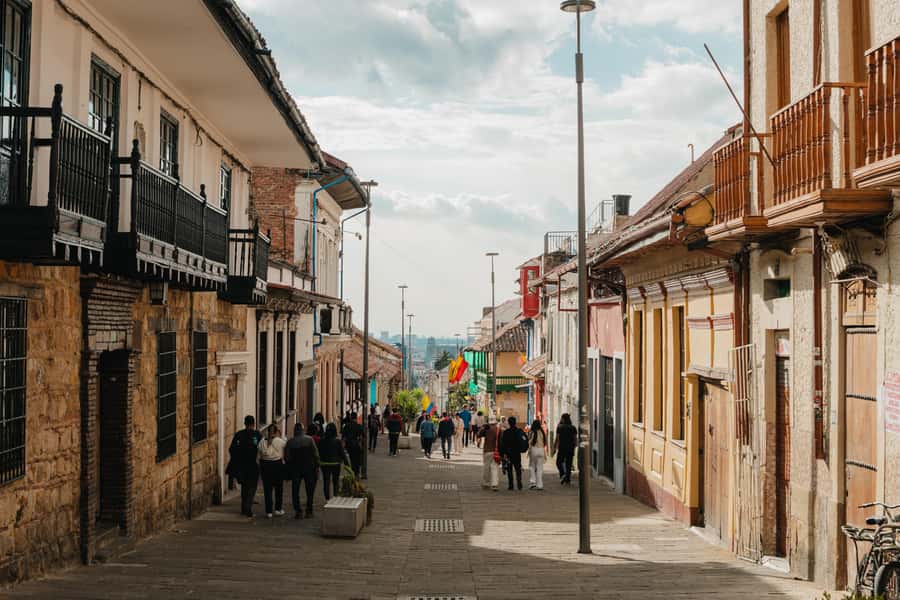
The final section focuses on Manzana Cultural, a cultural complex that houses three important museums, including the Botero Museum. The walk ends at the Botero Museum, where you have a museum visit rather than only an exterior explanation.
This ending is a strong choice. You finish with art after spending most of the walk on streets, plazas, churches, and government buildings. The shift gives the tour a clear final chapter and lets you continue exploring at your own speed once the guided portion ends.
The included information says entrance to some museums and churches is covered, but it does not spell out every admission detail. Since the route specifically includes a visit to the Botero Museum, confirm with the provider exactly what your $16 covers on the day. Do not assume that every museum in Manzana Cultural is included.
Even with that point to clarify, the museum finish improves the value of the tour. You are not simply told that Bogotá has an art scene. You are taken to a named museum and given a chance to see it as part of the experience.
The Guides Make the Difference
The strongest praise centers on the guides. Jorge is described as well informed about Bogotá and its history, with a good route through the neighborhood. Another account calls him the best guide in Bogotá and praises his informative, dynamic approach.
Sharik receives similarly warm attention for answering many questions and making a small tour enjoyable. That detail matters because La Candelaria raises plenty of natural questions. You may want to know how the city was founded, why a street has its odd shape, what role a building played in government, or where to go for dinner.
The guide’s personality will shape the experience more than the basic route. A lively explanation can make a church or plaza memorable. A rushed presentation could make the same stop feel like a checklist. The five positive ratings, including praise in Spanish and English, suggest a generally strong guiding experience, but the one no-show complaint deserves a practical response: confirm before you go.
Is $16 a Good Value?
At $16 per person, this is a low-cost way to get a first look at central Bogotá. The value comes from the route and the local advice, not from spending a long time inside each attraction.
You visit several important places in 150 minutes, including the Botero Museum, and you receive a guide in English or Spanish. Some museum and church entrances are included, though the exact admission coverage is not fully detailed. That makes the price attractive, but I would ask for clarification if admission costs are a deciding factor.
The tour is especially good value for a first day in Bogotá. You can use the recommendations for restaurants, clubs, and activities to shape the rest of your trip. It is less useful if your main goal is a long museum visit or detailed architectural study, since the schedule must keep moving.
Who Should Book This Walking Tour?
I would choose this tour if you want a broad introduction to La Candelaria without spending a full day on sightseeing. It suits first-time visitors, solo travelers who want a local point of contact, and anyone who likes mixing art, politics, religion, and neighborhood life.
It also fits travelers who want to ask questions. Sharik’s small-group experience shows how much more useful the tour can be when you have room to speak with the guide. Families and older visitors should note that the activity is wheelchair accessible, but the route includes cobblestones and walking between stops.
You may want something else if you prefer private touring, a slow museum visit, or guaranteed access inside every building. The activity does not state that the group is private, and not every interior detail is specified.
Should You Book Candelaria Unveiled?
I would book it for $16 if you want a practical first orientation to Bogotá, especially early in your stay. The mix of Chorro de Quevedo, Plaza de Bolívar, Teatro Colón, the Gabriel García Márquez Cultural Center, and the Botero Museum gives you more range than a simple colonial-street walk.
The best reason to go is the guide. Jorge and Sharik have received especially strong praise for clear, friendly, active guiding. The one no-show account means I would confirm the appointment before heading to the Policarpa Salavarrieta monument, but the overall rating of 4.4 from six reviews remains encouraging.
Choose it for context, local suggestions, and a well-packed route. Skip it only if you want a much slower, museum-focused visit or a private experience with every admission detail fixed in advance.
FAQ
Where does the tour begin?
The meeting point is in front of the Monument to Policarpa Salavarrieta in Bogotá.
Where does the tour finish?
The tour finishes at the Botero Museum.
How long does Candelaria Unveiled last?
The walking tour lasts 150 minutes, or two and a half hours.
Which languages are available?
The live tour guide is available in English and Spanish.
Is the tour wheelchair accessible?
Yes, the activity is identified as wheelchair accessible.
What is included in the price?
The price includes an expert guide and entrance to some museums and churches. Anything not specifically listed is not included.
More Walking Tours
- Bogota Walking Tour Teusaquillo, a different part of the city
★ 5.0 · 41 reviews - Bogota Walking Tour Teusaquillo a different part of the city
★ 4.2 · 26 reviews - Bogotá: Private Candelaria Walking Tour and Gold Museum
★ 5.0 · 17 reviews - Bogotá: Private Candelaria Walking Tour with Gold Museum
★ 5.0 · 11 reviews
More Historical Tours
- Historical tour Bogota
★ 5.0 · 72 reviews - 7-hour City Tour of Historic Bogotá with Monserrate
★ 4.7 · 47 reviews - From bogota: Salt Cathedral tour a Cultural Heritage Tour
★ 4.5 · 23 reviews - Bogota’s Historic Center and Monserrate in one day
★ 4.9 · 8 reviews
Just added around Bogota
- Zipaquirá: Private Salt Cathedral Mine and Walking Tour★ 4.8 · 3 reviews
- Walking tour José Celestino Mutis Botanical Garden 3 hrs★ 5.0 · 3 reviews
- Bogota: East Hills Mountain Hike★ 4.2 · 3 reviews
- Bogota: Explore the forest and bird watching at Chicaque Natural Park★ 5.0 · 3 reviews
- Fun Graffiti Workshop: The Art of Aerosol and Color★ 5.0 · 3 reviews
- Bogota: Downtown City and Monserrate Hill Private Tour★ 3.7 · 3 reviews
- Bogotá: La Candelaria Food Tour with Tastings★ 4.2 · 3 reviews
- Bogotá: Candelaria Tour with Cacao and Coffee Workshop★ 5.0 · 3 reviews
La Candelaria Tours, compared.
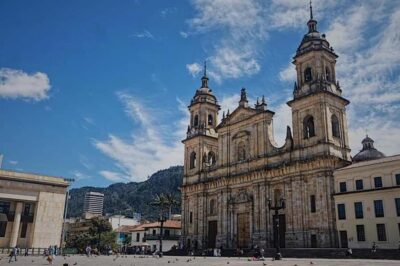
Shared Tour of Bogota’s Historic Downtown (La Candelaria)
Read our review →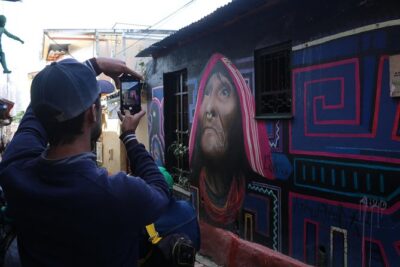
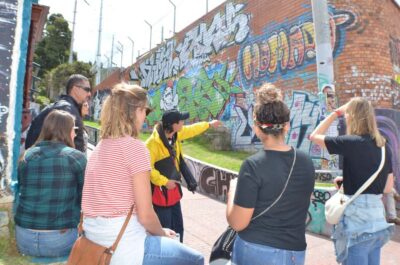
Graffiti Tour in La Candelaria Bogotá with Transportation
Read our review →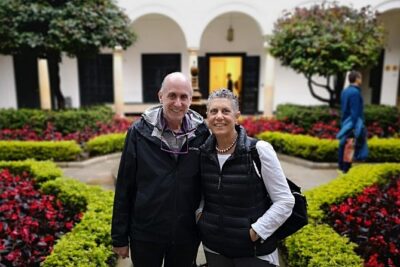
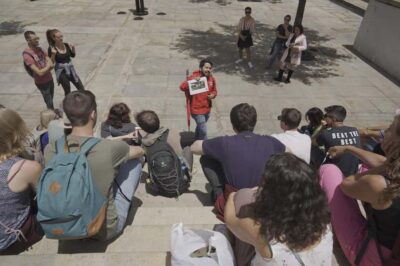
VIP Bogota City Tour: Farmers Market, Monserrate, Candelaria, 9hr
Read our review →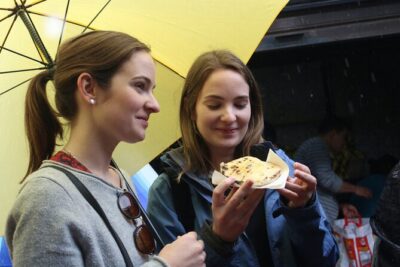
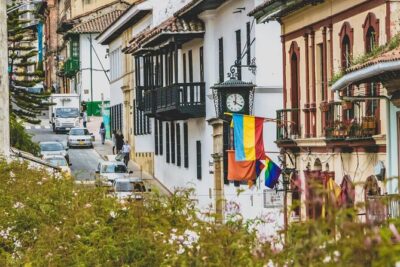
VIP Layover Bogota City Tour: Monserrate, Candelaria, Coffee, 6hr
Read our review →Browse the lists this tour appears in