
Reviewed · HISTORICAL TOURS
Commune 13, Graffitour street food. History.All inclusive
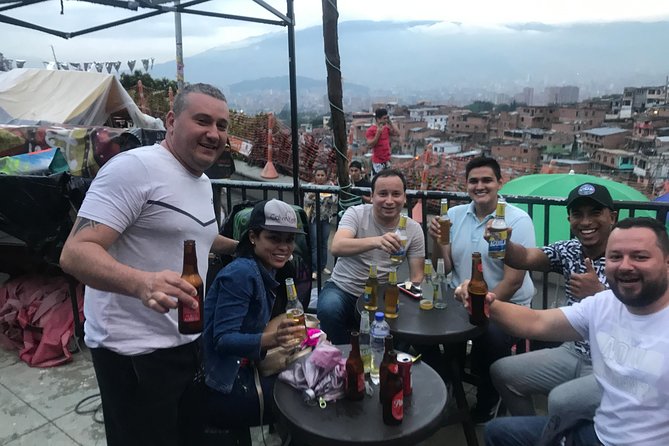
See Medellín from above, then walk its living story. This three-hour tour combines the cable-car ride over San Javier and Comuna 13 with street art, neighborhood history, local viewpoints, shops, and a mango ice cream stop. At $25 per person, it offers a useful introduction to one of Medellín’s most talked-about districts without asking you to arrange several pieces yourself.
I like the way the tour connects the city’s public transport with the neighborhood, rather than treating Comuna 13 as a quick photo stop. I also like the chance to hear from local guides such as Sebastián, who grew up in and still lives in the area. The main consideration is physical: expect stairs, hills, and plenty of walking, so this is not a good match for anyone with chronic knee problems.
In This Review
- Key points to know before booking
- Why Comuna 13 matters to your Medellín visit
- Starting at San Javier and seeing the city by cable car
- From the bus to Independencia neighborhood
- The outdoor escalators and the street-art route
- Street food, mango ice cream, and small local stops
- Guides who shape the experience
- Group size, timing, and the value of $25
- Who will enjoy this tour most
- Should you book the Comuna 13 Graffitour?
- FAQ
- Where does the tour start?
- Where does the tour end?
- How long does the tour last?
- How much does the tour cost?
- What transport is included?
- Is the cable car guaranteed to operate?
- What food is included?
- How much walking is involved?
- Is the tour suitable for people with knee problems?
- What is the cancellation policy?
Key points to know before booking
- The cable car gives you an unusual first view: You see Comuna 13 from above before walking through its streets.
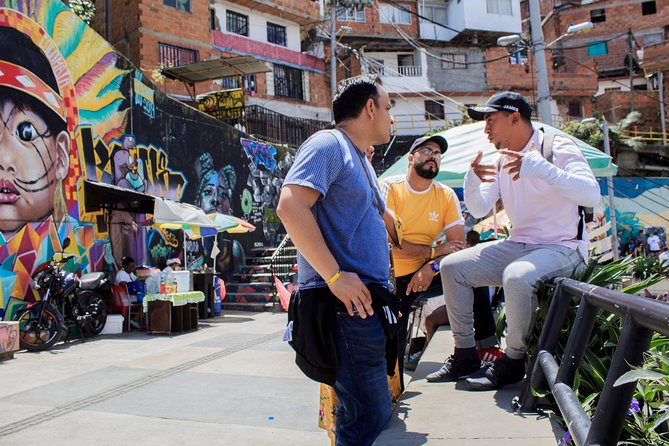
- Local guides add personal context: Sebastián, Manuela, Luis, Andrés, Mergie, and Leidy have all led tours connected with this experience.
- Graffiti is treated as history, not just decoration: Guides explain symbols, music, hip hop, conflict, and neighborhood change.
- The tour includes a mango ice cream stop: It is a small but welcome taste of local street food.
- The group can reach 20 people: Smaller departures may feel more personal, and one departure became a private tour after other bookings canceled.
- The route requires effort: Hills, steps, and walking are part of the experience, not an optional extra.
Why Comuna 13 matters to your Medellín visit
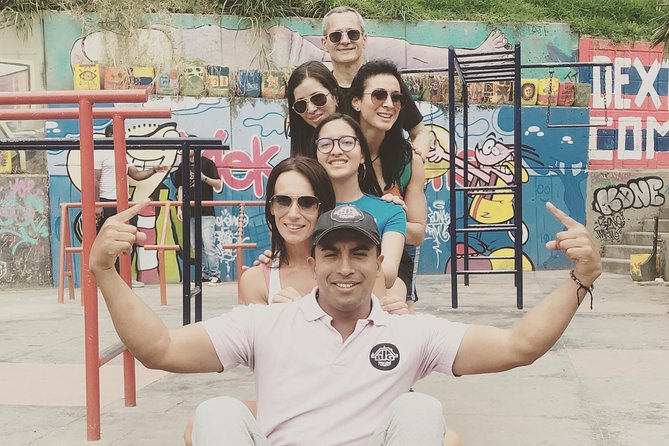
Comuna 13 is often presented through its colorful murals and famous outdoor escalators. Those are certainly part of the visit, but the place means more when you understand the changes behind the paint.
Your guide explains how local people lived through difficult periods and how art, hip hop, public projects, shops, and community activity helped reshape the neighborhood’s public identity. That makes the tour more than a sightseeing walk. You are not simply looking at walls. You are hearing how residents connect those walls with memory, struggle, pride, and hope.
I appreciate that this experience does not reduce Comuna 13 to a dramatic before-and-after story. The strongest guide comments describe the neighborhood from an insider’s point of view, especially when the guide has grown up there or still lives there. Sebastián received especially warm praise for his clear English, easy manner, and ability to answer questions about local life. Other guides, including Luis and Manuela, were also praised for explaining the area with care.
You should still keep your expectations realistic. A three-hour tour cannot explain every part of Comuna 13 or Medellín. It gives you a focused introduction, with enough history to make the art and views more meaningful.
More Food & Drink Tours in Medellín
- Medellin: Comuna 13 Graffiti Tour, Cable Car & Street Food
★ 4.8 · 9,046 reviews - Medellín: Comuna 13 True Story and Street Food Tour
★ 4.9 · 1,779 reviews - Medellín: Pablo Escobar Tour with beer included
★ 4.7 · 612 reviews
Starting at San Javier and seeing the city by cable car
The meeting point is at Estación Metro San Javier, at Cra. 95 #96-29 in San Javier II. This is a practical place to begin because the tour uses Medellín’s public transport as part of the experience.
From the meeting point, the group takes the cable car. This is one of the best parts of the outing because it changes your view of the neighborhood before you walk through it. From the air, you can see how Comuna 13 occupies the hills and how daily life is shaped by steep terrain.
The ride also gives your guide time to introduce the area and explain what you are seeing. Several people specifically valued this opening section, saying the cable car made the tour feel more complete. That makes sense. If you begin only at street level, it is harder to understand the physical setting. From above, the slopes and tight arrangement of homes become much easier to read.
Bring your camera, but listen as much as you photograph. The views are attractive, yet the real value comes from pairing the view with an explanation of how people live in a hilly urban district.
There is one practical warning. Cable car service can occasionally be affected by closures or temporary problems. One departure had to replace the ride with a bus and walking. The neighborhood visit still worked well, but the change caused confusion at the meeting point. Check your messages before leaving and allow a little patience if public transport plans change.
From the bus to Independencia neighborhood
After the cable-car portion, the group returns to the meeting point and takes a public bus to the Independencia neighborhood. This transition is useful because it shows you how the tour area connects to the wider city.
You are not being driven straight to a prepared attraction. You are using regular transport and then entering the neighborhood as part of its normal urban setting. That can feel less polished than a private vehicle, but it is also more grounded.
The bus ride adds some uncertainty. Public transport depends on conditions at the time, and the route may not feel as smooth as a private transfer. Still, I think it suits the purpose of this tour. You get a better sense of how the area functions beyond the main visitor route.
Once you arrive, the focus shifts to the walking portion. This is where comfortable clothing and shoes matter. The route includes hills, steps, and the famous outdoor escalators. The walking is manageable for most people according to the tour information, but it is not a flat city stroll.
The outdoor escalators and the street-art route
The escalators of Comuna 13 are a major feature of the visit. They are described as unique in Latin America for their location within a neighborhood, and they make it possible to move through the steep district more easily.
The escalators also symbolize practical change. They are not merely a novelty for photographs. They form part of the neighborhood’s public infrastructure and help connect streets at different heights. Your guide can place them within the wider story of the area instead of presenting them as a stand-alone attraction.
From there, you follow the graffiti route through murals, art galleries, shops, and viewpoints. The paint is the most obvious attraction, but the explanations are what give the route substance. Luis was praised for discussing the meaning of symbols in detail, while Sebastián was praised for connecting the art with the area’s past and the community’s changes.
Hip hop receives special attention in the experience. One participant found the discussion of its effect on the neighborhood especially meaningful. That is an important detail because the music is not simply background atmosphere. It is part of how residents express identity and tell their own stories.
You should not expect every mural to be explained in the same way on every departure. The route and guide may shape the emphasis. If a symbol or image catches your eye, ask about it. The guides are there to answer questions, and the strongest feedback repeatedly praised their ability to keep the group engaged.
More Food Tours in Medellín
- Medellin: Street Food and Poblado Rooftop Tour with a Local
★ 4.8 · 317 reviews - Medellin: Party Bus with DJ & Street Food Tastings
★ 4.5 · 112 reviews - Medellín: E-bike and Foodie Tour
★ 4.8 · 102 reviews - Street Food Tour in Medellín with Tastings
★ 5.0 · 76 reviews
Street food, mango ice cream, and small local stops
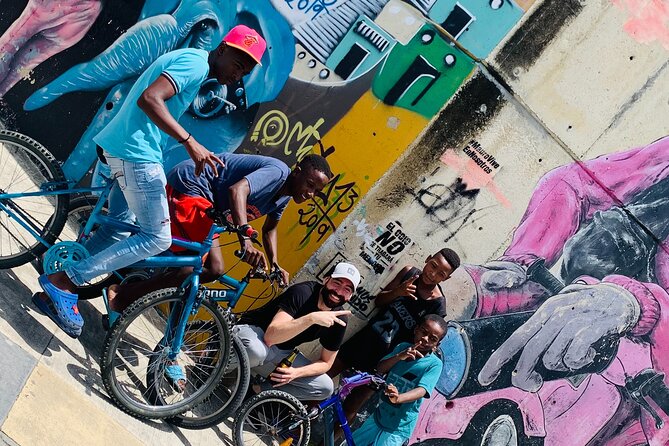
The food element is modest but pleasant. The planned tasting is a mango ice cream, enjoyed during the neighborhood visit. Other accounts of the experience also describe trying different desserts, so you may encounter more than one sweet taste depending on the day and the route.
I would not book this as a full food tour. The phrase street food may suggest a long series of tastings, but the confirmed itinerary centers on mango ice cream rather than a complete meal. Think of the food as a refreshing break that adds local flavor to a history and art walk.
Mango gives the stop a clear Colombian character, and the pause comes at a useful time. After the uphill walking, a cold dessert is welcome. It also gives you a chance to look around the shops and galleries instead of moving from one explanation to the next.
If you have dietary concerns, ask the operator before booking because the available information does not list ingredients or alternatives. The tour does allow service animals, but no other food or animal details are provided.
Guides who shape the experience
This tour depends heavily on the person leading it. That is not a criticism. It is simply how neighborhood history works. A local guide can explain small details and personal connections that a script cannot provide.
Sebastián appears to be a particularly strong choice if you can request him. He was described as friendly, relaxed, clear in English, and deeply familiar with Comuna 13. His local perspective helped people connect the murals and transport system with the area’s past.
Manuela was praised for an insightful and memorable visit. Luis received credit for careful explanations of the graffiti and its symbols. Andrés was remembered for bringing energy and warmth to the outing, while Mergie and Leidy were praised for detailed storytelling and local knowledge.
Guide availability is not guaranteed, so I would not treat a specific name as part of the booking promise. But you can ask for Sebastián or another local guide when arranging the tour. The experience is at its best when your guide welcomes questions rather than simply moving the group from one photo stop to the next.
The guide also helps with the practical end of the visit. If you choose to leave from Comuna 13 rather than return with the group, you can ask for directions. One guide helped explain how to get back to a hostel after the route, which is useful if you plan to continue exploring independently.
Group size, timing, and the value of $25
The tour lasts about three hours and allows a maximum of 20 people. That is a reasonable group limit for a walking route with frequent stops. A full group may make it harder to hear in crowded areas, but the cap prevents the experience from becoming an enormous procession.
At $25, the value is good if you want transport, a guide, the cable-car experience, neighborhood interpretation, and the food stop in one short outing. You are paying less for luxury and more for structure. The tour gives first-time visitors a clear way to approach Comuna 13 without having to work out every connection alone.
I would compare the price with what you actually need. If you already know the neighborhood, speak confidently with local residents, and plan to walk there independently, you may prefer a self-guided visit. But if this is your first time in Medellín, the guide’s context is likely to be worth the fee.
The experience is booked an average of 17 days ahead, so it is sensible to reserve early if your schedule is fixed. Confirmation is provided at booking. The tour is also weather dependent. If poor weather cancels the outing, you are offered another date or a full refund.
Free cancellation is available until 24 hours before the start time. Within 24 hours, refunds and changes are not accepted. Keep the local cut-off time in mind.
Who will enjoy this tour most
I would recommend it to first-time visitors who want a meaningful introduction to Comuna 13 without spending an entire day on the visit. It suits solo visitors, couples, and families who can manage hills and stairs.
It is also a good choice if you care about local voices. The best moments come from hearing how residents understand their own neighborhood, not from checking off murals as if they were museum objects.
You may want another option if you have chronic knee problems or find uphill walking difficult. The route includes steps and slopes, and the escalators do not remove all the walking. You should also reconsider it if you expect a large, meal-sized food tour or a fully private experience.
Service animals are permitted, and the activity is near public transportation. Most people can participate, but the physical demands deserve honest attention before you book.
Should you book the Comuna 13 Graffitour?
I would book this tour if you want history, art, public transport, and local perspective in one compact outing. The cable-car ride makes the route more distinctive, and the guides can turn the murals into a readable story about change in Medellín.
Book with realistic expectations about the food. You are likely getting a mango ice cream and possibly other dessert tastings, not a full meal. Also wear comfortable shoes, check for transport updates, and ask whether Sebastián or another local guide is leading your departure.
For $25, this is a strong-value introduction to Comuna 13. It is especially worthwhile when you want to understand the neighborhood rather than simply photograph it.
FAQ
Where does the tour start?
It starts at Estación Metro San Javier, at Cra. 95 #96-29, San Javier II, Medellín.
Where does the tour end?
The activity ends back at the meeting point. You may also choose to remain in Comuna 13 or arrange transport from there.
How long does the tour last?
The tour lasts approximately three hours.
How much does the tour cost?
The listed price is $25 per person.
What transport is included?
The route includes a cable-car ride and a public bus ride as part of the experience.
Is the cable car guaranteed to operate?
No. Cable-car service can be affected by temporary closures. If it is unavailable, the route may use a bus and walking instead.
What food is included?
The itinerary specifically includes a mango ice cream. Other dessert tastings may be available during some departures, but a full meal is not specified.
How much walking is involved?
The tour includes walking through the neighborhood, along with hills and stairs near the escalators, galleries, shops, and viewpoints.
Is the tour suitable for people with knee problems?
It is not recommended for people with chronic knee problems.
What is the cancellation policy?
You can cancel at least 24 hours before the start time for a full refund. Cancellations or changes made less than 24 hours before the start time are not accepted, and poor-weather cancellations offer another date or a full refund.
More Food and Drink Tours
- Medellin: tasting Street Food with Rooftops of El Poblado
★ 4.4 · 61 reviews - E-Bike City Tour Medellin with Local beer and Snacks
★ 4.9 · 55 reviews - Bike Tour Medellin with Snacks and Local Beer
★ 4.7 · 49 reviews - Walking tour, cable car & fruit tasting
★ 5.0 · 33 reviews
More Historical Tours in Medellín
- Medellín: History & Local Life Essentials Tour on an E-Bike
★ 4.9 · 130 reviews - Medellin Historic Walking Tour
★ 4.9 · 86 reviews - From Medellín: Private Pablo Escobar History Tour
★ 4.9 · 84 reviews - Pablo Escobar Historic Tour and Cable car
★ 5.0 · 38 reviews
Just added around Medellin
- Medellin: 4-Hour Zip-Line Adventure★ 5.0 · 3 reviews
- Medellin: Tour to The Cathedral – History of Pablo Escobar and his Impact★ 5.0 · 3 reviews
- Medellin: waterfalls and naturals poolls tour★ 3.7 · 3 reviews
- Guatapé & Coffee Farm, all in one day★ 5.0 · 3 reviews
- Comuna 13: Recorrido de Arte Urbano, Cultura y Resiliencia★ 5.0 · 3 reviews
- Shared Tour Medellin’s Violence & Post-conflict after Pablo★ 4.1 · 3 reviews
- Medellin: Coffee Farm Tour & Spa with Overnight Glamping★ 4.5 · 3 reviews
- Colombia: Official Pablo Escobar Meet the Family Museum Tour★ 5.0 · 3 reviews
Historical Tours, compared.
Historic Center and Getsemaní Shared Walking Tour
Read our review →
History & Local Life Essentials Tour on an E-Bike
Read our review →
Historical Shared Tour Salsa, Graffiti & Resistance in Cali
Read our review →
Shared Tour of Bogota’s Historic Downtown (La Candelaria)
Read our review →
Browse the lists this tour appears in